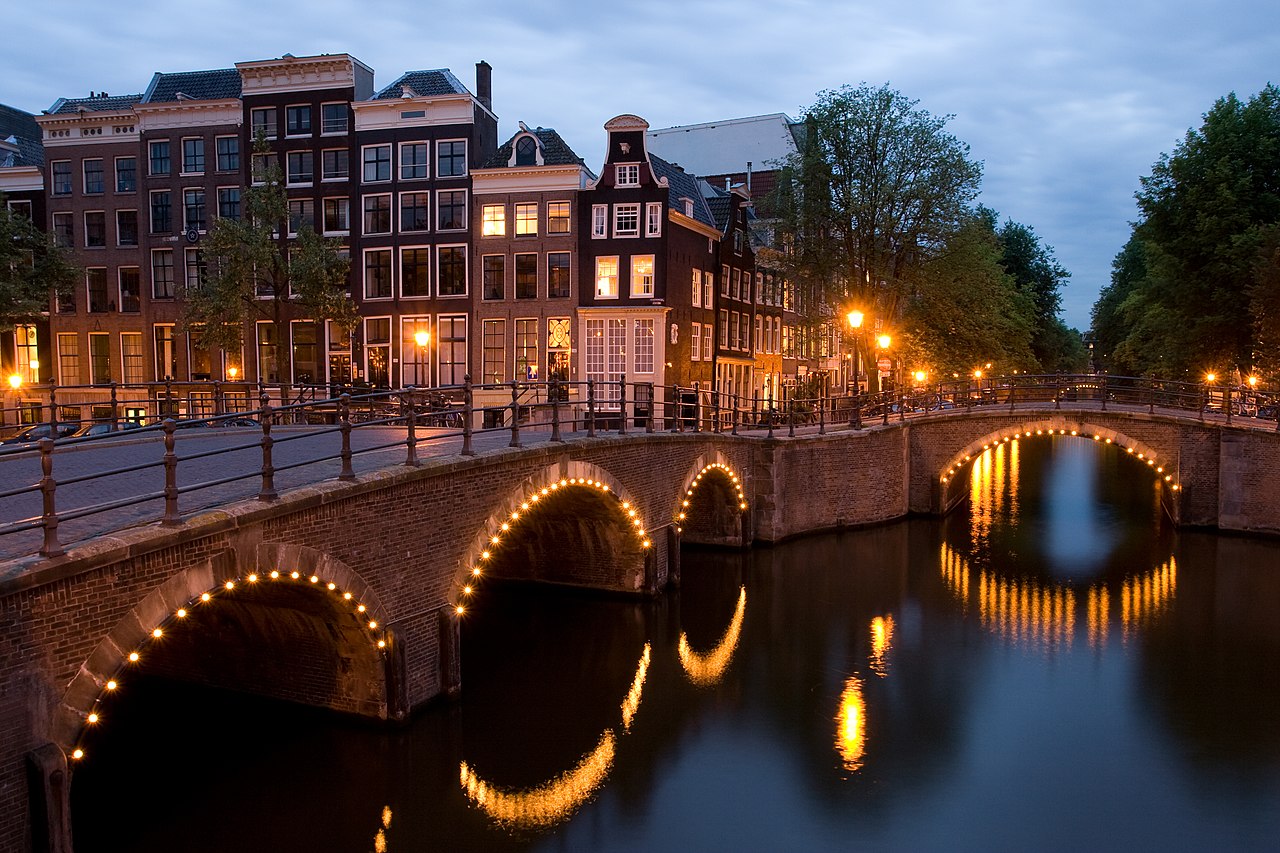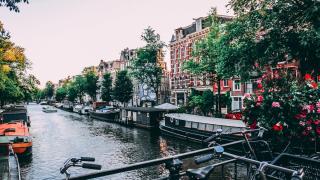


The Netherlands is small enough that most of its best towns are an easy train ride from Amsterdam Centraal. Haarlem is 15 minutes away, Utrecht under half an hour and Leiden about 35 minutes, and none of them needs a tour bus. This guide covers ten day trips, each with a route for the day, the train or bus to take, what a 2026 ticket costs, and which sights close on which days. We checked them against the operators' and museums' own sites in October 2026.
Most day trips go wrong in one of three ways: a Monday (most Dutch museums close), a Sunday (some churches close to sightseers), or a trip planned from an old guide. Since late 2024 the fast Intercity Direct to Rotterdam no longer leaves from Centraal. The public Waterbus to Kinderdijk stopped in October 2025. Delft's Prinsenhof is closed until 2027 and the Binnenhof courtyard in The Hague until 2031. Each section below says what is open and what is not.
Which trip, which day
- Monday: Leiden (three big sights open daily), Kinderdijk, Zaanse Schans or Rotterdam's Markthal and Cube Houses. Avoid Haarlem's museums and Utrecht's Museum Speelklok and Centraal Museum.
- Sunday: Utrecht, Zaanse Schans, Rotterdam or Waterland. Avoid Delft (both big churches close to visitors) and Haarlem's Grote Kerk, which is also closed on Sundays.
- Friday, late March to late September: Alkmaar's cheese market.
- Mid-March to early May: Keukenhof. In 2027 it opens 18 March to 9 May.
- Winter (November to March): Utrecht, Leiden, Rotterdam and Haarlem hold up best. Zaanse Schans keeps three mills open, Marken's museum is shut, and the Kinderdijk boat runs Friday to Sunday only.
 The Grote Kerk rising over the Spaarne in Haarlem, 15 minutes by train from Amsterdam Centraal. Image: Torsade de Pointes, CC0, via Wikimedia Commons.
Haarlem: the easiest day trip, best Tuesday to Saturday
Getting there: Intercity or Sprinter from Amsterdam Centraal, about 15 minutes by Intercity, several trains an hour. A single costs €5.50 (€11 return). From Haarlem station it is about a 10-minute walk down the Kruisweg to the Grote Markt.
Haarlem is what many visitors hope Amsterdam will be: canals, almshouse courtyards and a market square, at a slower pace. It also has three museums that would stand out in any capital.
10:00 — Grote Kerk (St.-Bavokerk). The Grote Kerk dominates the Grote Markt. It is open Monday to Saturday 10:00–17:00 and closed on Sundays and public holidays. Entry is €4. Inside is the Müller organ, built between 1735 and 1738. Mozart played it in 1766, aged 10, and Handel played it before him. From late May to early October there are paid concerts on it on Tuesday evenings and Thursday afternoons. Allow 30–45 minutes.
11:00 — Frans Hals Museum. The Frans Hals Museum is on two sites. The Hof (Groot Heiligland 62) holds the Golden Age paintings, including Hals's large group portraits of civic guards and almshouse regents. The Hal on the Grote Markt shows modern art. One ticket of €18.50 covers both, and visitors under 19 go free. It is closed on Mondays. Allow 90 minutes at the Hof.
 Haarlem's Grote Markt with the town hall. The Frans Hals Museum's modern-art site, the Hal, is on this square. Image: This Photo was taken by Wolfgang Moroder. Feel free to use my photos, but please, CC BY-SA 4.0, via Wikimedia Commons.
14:00 — Teylers Museum. The Teylers Museum opened to the public in 1784, which makes it the oldest museum in the Netherlands. Its Oval Room of fossils, minerals and scientific instruments has barely changed since. It is on the Spaarne, a five-minute walk from the Grote Markt. It is open Tuesday to Sunday 10:00–17:00 and costs €18.50.
The one to book months ahead — Corrie ten Boom House. At Barteljorisstraat 19 is the watchmaker's house where the ten Boom family hid Jews and resistance workers until their arrest in 1944. The Corrie ten Boom House is free, but entry is by guided tour only: about 75 minutes, 12 people per tour, Tuesday to Saturday. The museum advises booking 3–4 months ahead online, and you must book a tour in your own language. It recommends a minimum age of 10.
Alternative: if the museums are closed (Monday), walk the Spaarne to the reconstructed windmill De Adriaan and take the train back early, or go to Leiden instead.
Zaanse Schans: windmills in half a day
Getting there: Sprinter from Amsterdam Centraal to Zaandijk Zaanse Schans (not Zaandam), 17 minutes, €4.20 single. Then walk about 15 minutes over the Julianabrug. Bus 391 also runs from Centraal all year, in about 25 minutes.
Zaanse Schans is a collection of green wooden houses, workshops and working windmills moved here from around the Zaan region from the 1960s on. It is free to enter. A €17.50 visitor fee was approved in 2025 and was due in April 2026, but the council postponed it in January 2026 and it has not been introduced. Many websites still report it as fact.
What to pay for:
- A windmills ticket (€7.50 adults, €3.75 ages 4–17) covers every mill currently open. The all-in-one ticket adds the Windmill Museum for €15.
- De Kat, a mill that grinds pigments for paint, is the one to see. It is open daily, including in winter.
- De Zoeker and De Bonte Hen are closed from November to March.
- Het Pink is under restoration until the end of 2026.
- De Gekroonde Poelenburg and De Ooievaar never open to visitors.
The Zaans Museum, with the Verkade chocolate and biscuit factory exhibition, is at the entrance. It is open daily 10:00–17:00 for €16. The clog workshop is free.
When to go: at opening time (about 09:00 for the mills) or after 15:00. April is the busiest month, because coach tours combine Zaanse Schans with Keukenhof. Allow 3–4 hours, which leaves the afternoon for Haarlem or Amsterdam.
Summer link: in season (in 2026, mid-March to 18 October), MeerPlus bus 801 runs between Zaanse Schans and Volendam every 30 minutes. That lets you join the Waterland trip below on the same day.
Edam, Volendam and Marken: Waterland by bus and boat
Getting there: MeerPlus bus 316 from the bus station on the IJ side of Amsterdam Centraal (upstairs, behind tracks 14–15). It runs about every 15 minutes in the daytime. It takes about 25–30 minutes to Volendam and about 37 to Edam. Tap in with a contactless bank card, one card per person, or buy the MeerPlus day ticket (€13.50).
Three very different villages lie around the old Zuiderzee shore north of Amsterdam. A full loop takes a day.
 A wooden drawbridge over a canal in Edam, with the town's carillon tower behind. Image: Gouwenaar, CC0, via Wikimedia Commons.
09:30 — Edam. Ride the 316 to the end. Edam is the quietest of the three: drawbridges, a cheese-weighing house from 1778 and the large Grote Kerk (St. Nicholas). The cheese market runs only on eight Wednesday mornings in July and August (in 2026: 1 July to 19 August, 10:30–12:30, free). At any other time, the square is simply a square.
12:00 — Volendam. Take the 316 back a few stops to Volendam. It is a former fishing harbour and now the busiest of the three, with a crowded harbour front of fish stalls and costume photo studios. The Volendams Museum (daily 10:00–17:00, €8) explains the costume and fishing history behind the souvenirs.
 The harbour front at Volendam on a summer afternoon. This is the busiest of the three Waterland villages. Image: Txllxt TxllxT, CC BY-SA 4.0, via Wikimedia Commons.
14:00 — Marken Express to Marken. The ferry crosses from Volendam harbour to Marken in about 30 minutes, sailing roughly every 45 minutes in season. Check the current price and the winter timetable on markenexpress.nl. If it is not sailing, bus 610 links Volendam and Marken. Marken was an island until the causeway opened in 1957, and its wooden houses stand on mounds against floods.
- The Marker Museum (€4) is open from late March to October and closed in winter.
- The white lighthouse at the east tip, the Paard van Marken, dates from 1839. It is lived in and not open, but the dyke walk out to it, roughly 2 km each way from the harbour, is the best part of the day.
Back to Amsterdam: bus 111 runs from Marken every 30 minutes to Amsterdam Station Noord, not Centraal. From there, metro 52 takes you to Centraal in a few minutes. Bus 315 does not go to Marken, whatever older guides say.
 The Paard van Marken lighthouse, built in 1839 at the eastern tip of the former island of Marken. Image: Txapisotegi, CC BY-SA 4.0, via Wikimedia Commons.
Utrecht: the Dom Tower and a canal on two levels
Getting there: Intercity from Amsterdam Centraal, about 27 minutes, several trains an hour. A single costs €10 (€20 return). From Utrecht Centraal it is about 15 minutes on foot to the Dom.
Utrecht is a university city with a medieval centre and a canal unlike Amsterdam's. Along the Oudegracht, the quays sit a storey below the street. The vaulted cellars under the street were storerooms where goods came off the boats. Today they are cafés and workshops, and you can eat at water level.
 The Oudegracht in Utrecht with the Dom Tower behind. The wharf cellars open onto the lower quay. Image: Jan dijkstra, CC BY-SA 4.0, via Wikimedia Commons.
10:00 — Dom Tower. The Dom Tower is 112 metres tall, the tallest church tower in the Netherlands. Its restoration finished in 2024 and the scaffolding is gone. It can be climbed only on a guided tour, which starts at the tourist information centre at Domplein 9. The tour climbs 465 steps and costs €13.50 for adults. Book online, because tours fill up at weekends. Bags are not allowed in the tower; lockers are free.
11:30 — Domkerk and Domplein. The empty square between the tower and the church was once the nave. A storm brought it down on 1 August 1674, and it was never rebuilt. That is why the tower stands apart from the Dom Church. The church is free to enter. From April to October it is open Monday to Friday 10:00–17:00, and from November to March 11:00–16:00. On Saturdays it closes at 15:15, and on Sundays it opens at 12:30. The Museum Speelklok is a short walk away. Its collection of street organs and music boxes is played to visitors every half hour. It is open Tuesday to Sunday, also on Mondays in school holidays, and costs €18.50.
14:00 — Rietveld Schröder House or the Centraal Museum. The Rietveld Schröder House (1924, UNESCO World Heritage since 2000) can only be visited in a booked slot: eight people per slot, slots released three months ahead, €19. The Centraal Museum, which runs it, costs €18 and is closed on Mondays.
Alternative: Kasteel de Haar is a Gothic Revival castle on the city's western edge. It is open daily, and a castle-and-gardens ticket costs €21.50 in a timed slot. Take the train from Utrecht Centraal to Vleuten, then bus 127 (towards Breukelen) to the stop "Brink" in Haarzuilens, and walk about 15 minutes. The castle's own advice is not to get off at "Eikslaan". It fills half a day and doesn't fit alongside a Dom climb plus a museum.
Leiden: the trip that works on a Monday
Getting there: Intercity from Amsterdam Centraal, about 35 minutes, up to eight trains an hour. A single costs €12 (€24 return).
Leiden is the country's oldest university town (1575) and Rembrandt's birthplace (1606). It is the best choice for a Monday, because three of its main sights open every day. Note that on 3 October, the city's relief-of-the-siege holiday, most of them close.
 The Rapenburg in Leiden, lined with 17th- and 18th-century houses and university buildings. Image: Roger Veringmeier, CC BY 4.0, via Wikimedia Commons.
10:00 — Rijksmuseum van Oudheden. The national museum of antiquities, the Rijksmuseum van Oudheden, is open daily 10:00–17:00 for €14, with under-18s free. In its entrance hall stands the Temple of Taffeh, a first-century AD Egyptian temple given to the Netherlands for helping save the Nubian monuments.
12:00 — Hortus botanicus. The Hortus botanicus, founded in 1590, is one of the oldest botanical gardens in Europe. It is open daily, 10:00–17:00 from late September to March, and costs €14. It is a few minutes' walk from the museum along the Rapenburg.
14:00 — Choose by interest. Naturalis, the natural history museum, has dinosaurs including a T. rex. It is open daily for €18, and booking a time slot is recommended. Two more sights are closed on Mondays:
- Museum De Lakenhal, with paintings by Leiden's Golden Age artists, €16.
- Molen De Valk, a windmill museum five minutes from the station, €6, with steep stairs.
 Molen De Valk seen across the water from the Blauwpoortsbrug in Leiden. Image: Michielverbeek, CC BY-SA 4.0, via Wikimedia Commons.
Pilgrims and poems. The Pilgrims who sailed on the Mayflower lived in Leiden from 1609 to 1620. The Leiden American Pilgrim Museum moved in 2025 to Kloksteeg 16, next to the Pieterskerk. It is open Wednesday to Friday 14:00–17:00 and weekends 12:00–17:00, costs €7.50 and takes cards only. While walking, look for the more than 110 poems painted on the city's walls in their original languages.
Delft and The Hague in one day
Getting there: direct Intercity from Amsterdam Centraal to Delft, about an hour, €17.30 single. Delft and The Hague are a short train ride apart. Return from Den Haag Centraal to Amsterdam Centraal costs €15.30, about 50 minutes.
Morning — Delft. Delft's Markt is framed by the town hall at one end and the Nieuwe Kerk at the other. William of Orange, the founder of the Dutch state, is buried in the Nieuwe Kerk, as are members of the royal family since.
- Churches: one ticket (€10) covers both the Nieuwe Kerk and the Oude Kerk, whose tower visibly leans. They are open Monday to Saturday only, closed to visitors on Sundays. From November to January the hours are Monday to Friday 11:00–16:00 and Saturday 10:00–17:00. Expect renovation work inside the Nieuwe Kerk.
- Nieuwe Kerk tower: 376 steps to a platform at 85 metres, €7.50 extra. Tickets are sold only at the church desk. Children under 6 are not allowed up, and the tower closes in bad weather.
 Delft's Markt with the Nieuwe Kerk, where William of Orange is buried. Image: Jan Geerling, CC BY-SA 4.0, via Wikimedia Commons.
What is closed: Museum Prinsenhof is where William of Orange was shot on 10 July 1584, and the bullet holes are in the stairwell wall. It closed for renovation in January 2025 and is due to reopen in 2027. The Vermeer Centrum is open daily for €15, but it shows full-size reproductions only. None of Vermeer's paintings are in Delft. The nearest are in The Hague.
Afternoon — The Hague. From Den Haag Centraal it is a short walk to the Mauritshuis. It has Vermeer's Girl with a Pearl Earring and View of Delft and Rembrandt's Anatomy Lesson of Dr Nicolaes Tulp. It is open Monday 13:00–18:00 and Tuesday to Sunday 10:00–18:00, with timed tickets, and under-19s go free. Girl with a Pearl Earring was on loan in Osaka until late September 2026, so check that it is back on display before you go.
 The Mauritshuis beside the Hofvijver in The Hague at night. Image: Quistnix, CC BY-SA 3.0, via Wikimedia Commons.
The Binnenhof and the Peace Palace:
- The Binnenhof, the parliament complex beside the Mauritshuis, is under renovation until summer 2031 and its courtyard is closed. A free viewing tower at Buitenhof 30 (09:00–17:00, until December 2027) looks over the building site.
- The Peace Palace can be toured inside only on weekends from May to October (€17.50). The rest of the year, the free Visitors Centre (Wednesday to Sunday 12:00–17:00) is all you can see.
- The Kunstmuseum has the world's largest Mondrian collection, including Victory Boogie Woogie. It costs €22 and is closed on Mondays.
- Alternative: if you'd rather end at the sea, take tram 9 from Den Haag Centraal to Scheveningen beach (stop Kurhaus).
Rotterdam and Kinderdijk
Getting there, read this first: since December 2024 the fast Intercity Direct no longer stops at Amsterdam Centraal. You have two options:
- From Centraal: the regular Intercity via Schiphol, Leiden and The Hague takes about 70 minutes. A single costs €20.20 with no supplement.
- From Amsterdam Zuid: the Intercity Direct reaches Rotterdam in under 40 minutes, plus a supplement of €3.20 at peak times or €1.92 off-peak.
From a hotel in the centre, the two options take about the same time door to door.
Morning — Rotterdam. Bombed flat in May 1940, Rotterdam rebuilt as the country's architecture city.
- Around Blaak station: the Markthal (2014) is a food hall inside an arch of apartments. Across the road are the tilted Cube Houses, and the show cube is open daily 10:00–18:00 for €3.50.
- Museumpark: Depot Boijmans Van Beuningen (2021) is the first art storage building the public can walk through. It costs €20 with an online timed ticket and is closed on Mondays. The main Boijmans museum is shut until 2030.
- Erasmus Bridge: walk across it on the way to the boat.
 Delfshaven in Rotterdam, the old harbour that survived the 1940 bombing. The Pilgrims sailed from here in 1620. Image: Michielverbeek, CC BY-SA 4.0, via Wikimedia Commons.
Afternoon — Kinderdijk. The 19 windmills at Kinderdijk (UNESCO World Heritage since 1997) were built in the 1730s and 1740s to drain the polder. The public Waterbus line that older guides send you on was dropped in October 2025.
- By boat: the commercial WaterShuttle leaves from the north side of the Erasmus Bridge, takes about 30 minutes and costs €9.75 single or €19.50 return. A combi ticket with Kinderdijk entry costs €32.50. It sails daily until 25 October 2026, then Friday to Sunday only until the end of February 2027. The last winter boat back leaves Kinderdijk at 16:35.
- By bus: R-net bus 489 runs all year from Rotterdam and takes about 50 minutes.
- At the site: the €21 ticket (10% off online) covers the two museum mills, the canal boat, the Wisboom pumping station and a film. The dyke paths past the mills are public and free to walk. From November to December the site is open 10:30–16:00.
 Mills of the Nederwaard at Kinderdijk, built in the 1730s and 1740s to keep the polder dry. Image: Michielverbeek, CC BY-SA 4.0, via Wikimedia Commons.
Alternative: if you skip Kinderdijk, spend the afternoon in Delfshaven, the old harbour from which the Pilgrims sailed on the Speedwell in July 1620. Or go up the Euromast, where the glass Euroscoop lift rises to 185 metres (from €18.50).
Alkmaar: the Friday cheese market (late March to late September)
Getting there: Intercity from Amsterdam Centraal, about 35 minutes, €10 single. From Alkmaar station it is about a 15-minute walk to the Waagplein.
Every Friday from 26 March to 24 September 2027, from 10:00 to 13:00, the Alkmaar cheese market fills the Waagplein. Wheels of cheese are laid out in rows, then carried on wooden barrows by porters in white with straw hats. It is free to watch. In July and August 2027 there are also Tuesday evening markets (19:00–21:00).
- The square fills quickly, so arrive well before 10:00.
- After the market, the Hollands Kaasmuseum in the Waag building costs €7.
- In the afternoon, walk the canals around the Waagplein or visit the Grote Kerk.
Outside the season there is no market, and Alkmaar is a pleasant but ordinary small town.
 Cheese porters at the Friday market on Alkmaar's Waagplein. Image: G.Lanting, CC BY 4.0, via Wikimedia Commons.
Keukenhof: tulips, 18 March to 9 May 2027
Keukenhof in Lisse is a 32-hectare spring garden planted with millions of bulbs. It opens for about eight weeks a year: in 2027 from 18 March to 9 May, daily 08:00–19:00.
- Tickets: €21 online or €27 at the gate. Tickets are for a timed arrival slot, and the gate sells them only if the slot has room.
- Getting there: in 2026, bus 852 ran from Europaplein near Amsterdam RAI, with a combined bus-and-entry ticket for €38.50. Bus 858 from Schiphol did not run in 2026. Bus routes and combi tickets for 2027 go on sale in mid-January.
- When to go: tulips usually peak around mid-to-late April, depending on the weather. Arrive before 10:30 or after 16:00 to avoid the coach tours.
- The bulb fields: the fields around Lisse are farmland. Photograph them from the road and do not walk into them. Bikes can be rented at the P1 car park without booking.
 Tulip beds at Keukenhof, open about eight weeks each spring. Image: Yazle, CC0, via Wikimedia Commons.
Giethoorn: worth it only on your terms
Giethoorn, the village of canals and thatched farmhouses, is the day trip people ask about most and the hardest by public transport.
- Getting there: train to Steenwijk (€29 single), then bus 70. That is about 2–2.5 hours each way, so you spend 4.5–5 hours travelling for 3–4 hours there.
- Crowds: about 1.5 million visitors a year come to a village of about 2,600 people. The main canal is one-way for boats.
- Our verdict: go only on a weekday, early and outside July and August. Rent a whisper boat and take it out onto the lake or into the Weerribben-Wieden national park rather than just round the village canal. For the same travel time, Utrecht or Leiden gives you more.
Two shorter options
- Gouda: a Thursday-morning cheese market from April to August (10:00–12:30). The Sint-Janskerk has 72 stained-glass windows, costs €11 and is closed to visitors on Sundays. The train takes about an hour, usually changing in Utrecht, and costs €15.10 single.
- Naarden: a star-shaped fortress town 20–25 minutes away by Sprinter to Naarden-Bussum (€6.40). The Vestingmuseum costs €13.50 and is closed on Mondays. It suits a quiet half day, not a first trip.
The trips at a glance
| Trip | From Amsterdam Centraal | Single fare 2026 | Best days | Watch out |
|---|---|---|---|---|
| Haarlem | Train, ~15 min | €5.50 | Tue–Sat | Museums closed Mon; Grote Kerk closed Sun; book Corrie ten Boom months ahead |
| Zaanse Schans | Sprinter, 17 min + 15 min walk | €4.20 | Any, early or late | Some mills closed Nov–Mar |
| Edam–Volendam–Marken | Bus 316 / ferry / bus 111 | MeerPlus day ticket €13.50 | Apr–Oct | Marker Museum closed in winter; return to Station Noord |
| Utrecht | Train, ~27 min | €10.00 | Tue–Sun | Dom Tower by guided tour only |
| Leiden | Train, ~35 min | €12.00 | Any, incl. Mon | Most sights closed 3 Oct |
| Delft + The Hague | Train, ~1 h | €17.30 out, €15.30 back | Mon–Sat | Delft churches closed Sun; Prinsenhof closed until 2027 |
| Rotterdam + Kinderdijk | Train, ~70 min | €20.20 | Fri–Sun in winter | Intercity Direct leaves from Amsterdam Zuid |
| Alkmaar | Train, ~35 min | €10.00 | Fri, Mar–Sep | No market off-season |
| Keukenhof | Train/metro + bus 852 | Combi ticket | Mid-March to early May | Timed tickets |
| Giethoorn | Train + bus 70, 2–2.5 h | €29.00 | Weekdays, not Jul–Aug | Long day, crowded canal |
Practical notes
- Paying by card: you can tap in and out on NS trains and MeerPlus buses with a contactless Visa, Mastercard or Maestro card (OVpay). It charges full 2nd-class fares, with no surcharge. Use the same card to tap out, and one card per person. American Express does not work at the gates.
- Return tickets: a day return costs exactly twice a single. A disposable paper ticket from a machine adds €1.60.
- Children: a RailRunner ticket for ages 4–11 travelling with an adult costs €2.50 per journey. Under-4s travel free.
- Groups: the NS Groepsticket costs €38.50 for 2–3 people plus €4.50 for each extra person, up to 7. It is one-way and off-peak only, so you need one each way.
- Day passes: the NS Dagkaart (€66.60) is not worth it for any trip here. The Amsterdam & Region Travel Ticket (€23 for a day) covers NS trains within the region, MeerPlus buses and Amsterdam's trams and metro. It suits the Zaanse Schans and Waterland trips. The cheaper Amsterdam Travel Ticket does not cover MeerPlus buses.
- Museum card: visitors staying a week or more can save with the Museumkaart, which covers most Dutch museums in this guide.
Prices and opening times are as published by the operators in October 2026. 2027 dates are given where they have been announced.