
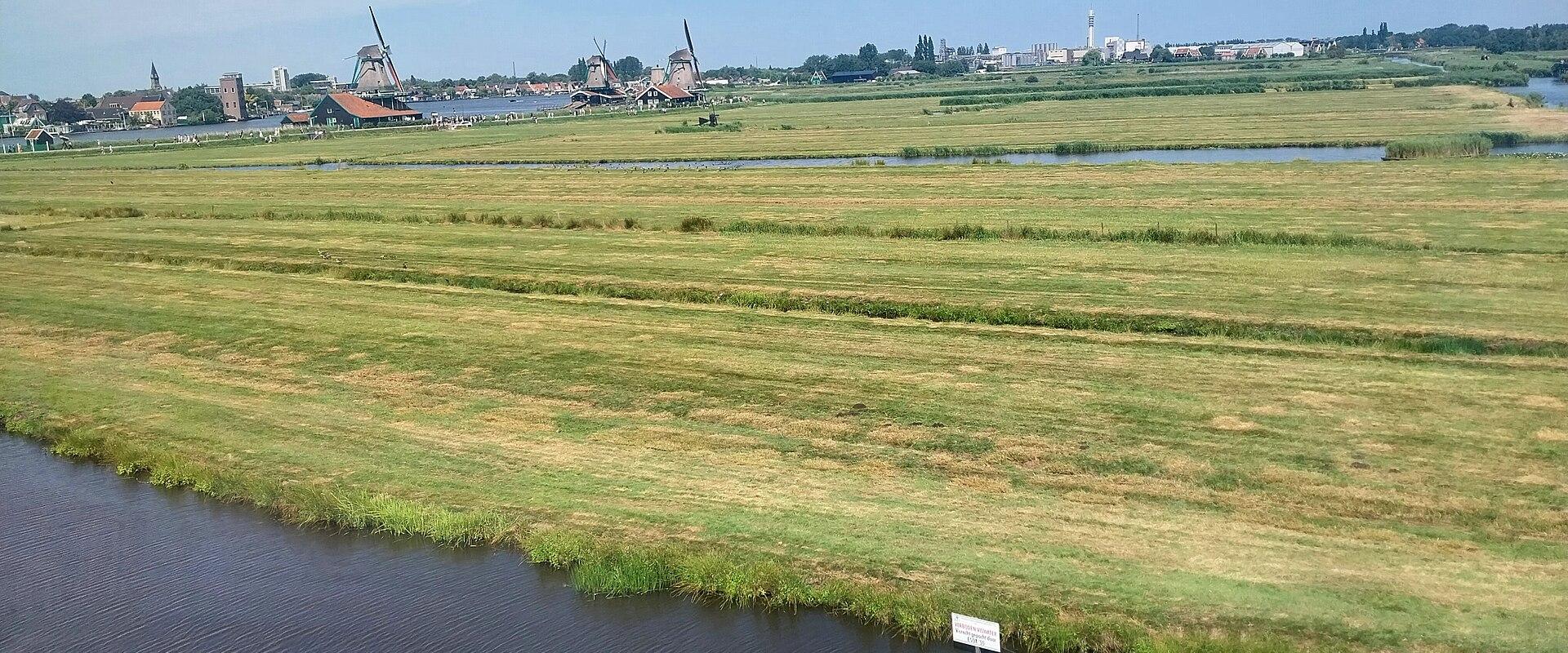
Zaanse Schans is a small, protected village scene on the banks of the River Zaan, a short distance north of Amsterdam. The name combines the river's name with schans, the Dutch word for a defensive earthwork, because a sconce stood here during the Eighty Years' War against Spain. The area belongs to Zaanstad, the municipality that includes Zaandam and Zaandijk, and it forms part of a long, narrow settlement of dykes, canals and polders known as the Zaanstreek.
The history of the Zaan region explains why the village exists. In the seventeenth and eighteenth centuries the Zaanstreek was one of the first industrial regions in Europe. The wind blew steadily across open polders, the river gave easy transport, and timber from the Baltic arrived by ship. Several hundred windmills worked here at the height of the industry, sawing wood for the shipyards of Amsterdam, pressing oil from seeds, grinding pigments and spices, and making paper and mustard. Wind-driven sawmills allowed the Zaan shipwrights to build vessels faster and more cheaply than their rivals, and their ships helped power the Dutch trading empire of the Golden Age.
Industrialisation in the nineteenth and twentieth centuries brought steam and electricity, and most of the windmills vanished. To preserve what remained, the authorities of the region decided to concentrate surviving buildings and mills in one place. From 1961 to 1974 houses, shops and mills were moved to Zaanse Schans by trailer from villages around the Zaan, and the site opened as a planned ensemble of the traditional Zaanse timber architecture. The houses are painted in a particular dark green, which is a regional tradition, with white window frames and decorative gables. Only two mills still stand on their original sites.
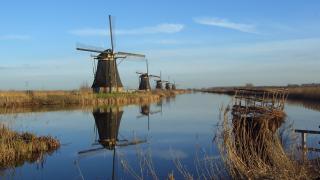
The windmills are the main attraction. Several different types are open to visitors, and you can see the machinery at work when the wind is blowing. De Kat is a paint mill that grinds natural pigments, and De Zoeker is an oil mill that presses oil from seeds. Het Jonge Schaap and De Gekroonde Poelenburg are sawmills, in which the wind turns a saw frame that cuts logs into planks, and De Huisman is a mustard mill that grinds mustard seed. Visitors can climb the outer galleries of most of them, enjoy views over the polder and river, and watch millers explain their craft. A ticket is required for entry to the working mills, and opening hours depend on the weather and the season.
Crafts and workshops fill the lanes between the mills. A clog workshop shows how a wooden shoe is carved from a block of poplar or willow and finished, with demonstrations of the old hand tools and the modern machines, and a shop sells clogs in many sizes. A pewter foundry demonstrates casting, and there are small makers of bread, sweets and souvenirs. The cheese farm, with its tasting counter, introduces the different ages and flavours of Gouda and other Dutch cheeses, and. Some of these places keep winter hours, so check before travelling.
Several museums stand in the complex. The Zaans Museum tells the story of the Zaan region and its industries, and the Verkade pavilion shows the history of a famous Dutch biscuit and chocolate maker that began in Zaandam. A museum devoted to Albert Heijn, the supermarket chain founded in 1887 in the nearby village of Oostzaan, includes a reconstructed shop of the original type. Cafes and pancake houses in the complex serve lunch.
Visitors should plan with crowds in mind. Zaanse Schans receives millions of visitors a year, many on short coach tours from Amsterdam that arrive around midday. For a calmer experience, arrive early in the morning or in the late afternoon, outside the school holidays, and walk along the dyke and the river to see the houses and mills from a distance.
The walking area is compact and flat, and a visit can take as little as two or three hours, although the museums and mills can fill a full day.
The best months are April to October, when the mills are most likely to be working and daylight is long. Autumn light is soft. Winter is cold and quiet, and some mills and shops close.
The simplest way to reach Zaanse Schans is the train from Amsterdam Centraal to Koog-Zaandijk station, a ride of about twenty minutes, followed by a walk of roughly fifteen minutes across the bridge. Buses run from Zaandam station, and the site has a car park for those who drive.
Best time to visit
April to October for open mills and long days; go early or late in the day to avoid the midday tour groups.
What to see in Zaanse Schans
Our picks first.
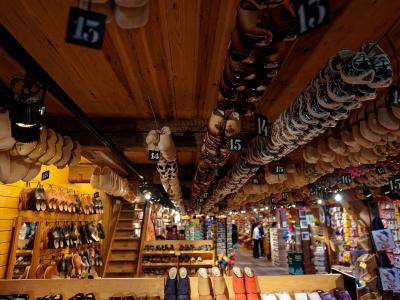
Zaanse Schans Clog Making Workshop
18th-century clog factory with antique museum
Free Guided Tours · History Museums
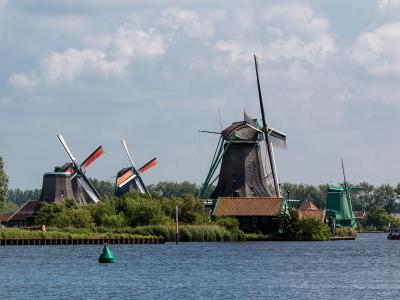
Zaanse Schans Park Area
Historic 18th-century windmills and wooden houses
Cultural Experiences · Urban Exploration
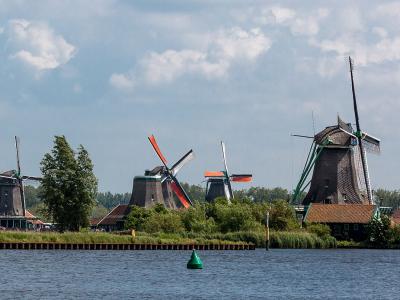
Zaanse Schans Windmill Tours
Historic windmill village on the Zaan River
Free Boat Tours · Guided Tours

Zaanse Schans
Historic Dutch windmills and traditional wooden houses
Cultural Experiences · Urban Exploration

Zaanse Schans Cheese Farm
1987 farm with daily cheese demonstrations
Free History & Heritage · Guided Tours
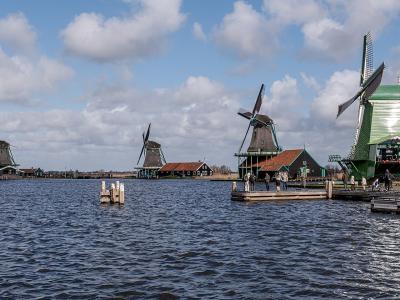
Zaanse Schans Traditional Crafts Demonstrations
Historic windmill village with traditional clog and soap ...
Free Guided Tours · History Museums
Zaanse Schans by interest
The same sights, grouped by what you came for.
Planning a visit to Zaanse Schans
Good to know
- Currency
- EUR
- Language
- Dutch