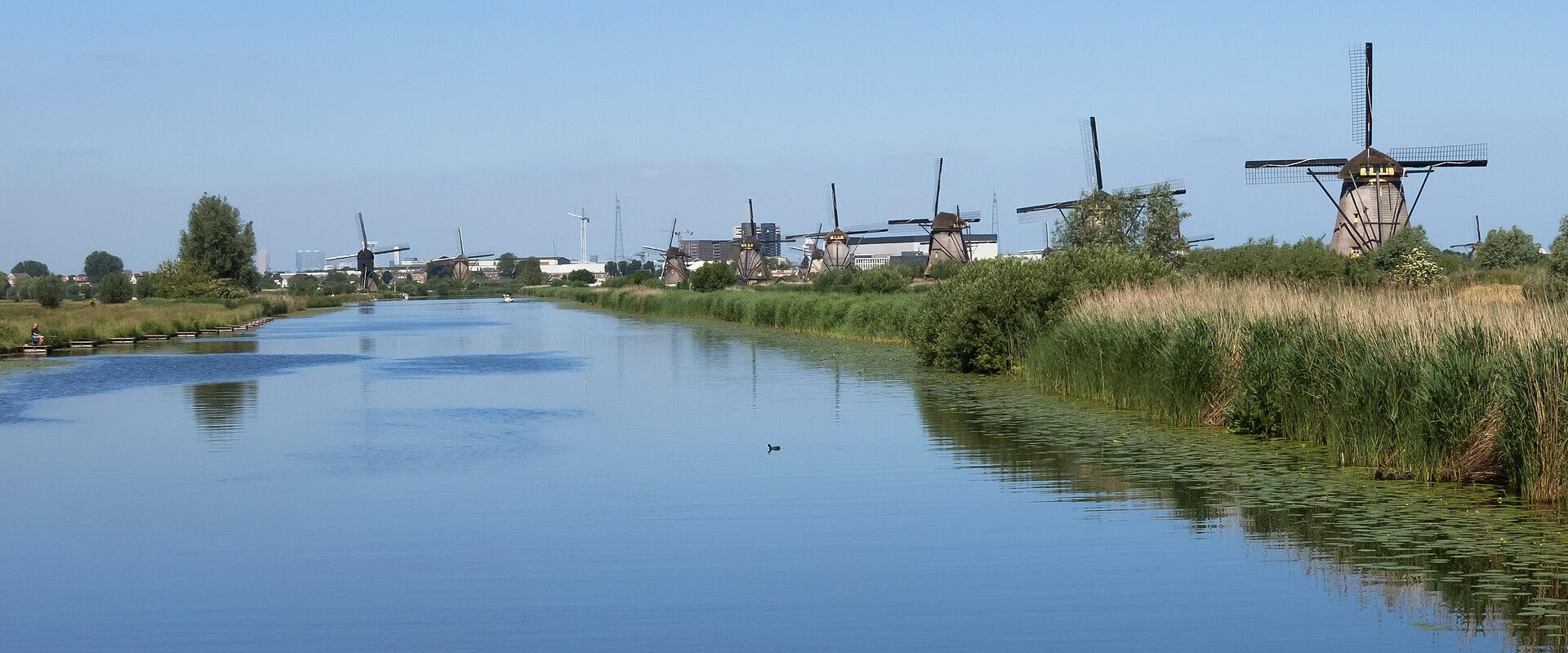
Kinderdijk lies about 15 kilometres east of Rotterdam, in the province of South Holland, in the low-lying Alblasserwaard, and is among the best-known and most photographed places in the Netherlands. The village name means “Children’s Dike” and is tied to a local legend about a cradle that floated here during a flood in 1421, with a cat inside keeping it balanced. The story of Kinderdijk is one of persistence and invention: for more than 750 years, the Dutch have worked to keep their land dry through a system of dikes, canals and windmills. The 19 windmills of Kinderdijk, built around 1740, are the largest group of old windmills in the country and since 1997 have been a UNESCO World Heritage Site because of their importance in the history of water management.
The main attraction is the row of windmills along the waterways and polder fields. Two of them are open to the public as museum mills and give a view of the lives of the millers and of how water was managed. Visitors can climb inside, see the living quarters and learn how the sails and gears pumped water from the low land into the river. The Wisboom pumping station is another highlight, showing the development of Dutch water technology from wind power to steam and electricity. The Secondary Pumping Station De Fabriek adds a film and exhibition, and a floating exhibition aboard the barge Alles Heeft een Tijd tells the story from a different angle.
Kinderdijk offers several ways to see its landscape. Walking and cycling paths run along the canals and give views of the windmills, reed beds and grazing animals. Boat tours let visitors glide past the windmills and see them from the water, and audio tours through the free Kinderdijk app bring the history to life. The visitor centre has interactive displays and films.
The site is also a place for nature lovers and photographers. The interplay of water, sky and old structures creates a quiet atmosphere, especially at sunrise and sunset. Birdwatchers will find waterfowl and marsh birds in the wetlands, and the Bird Theater is a pleasant stop, while seasonal wildflowers add colour to the meadows. The calm setting makes it a favourite for families, couples and solo visitors who want both learning and rest.
Getting to Kinderdijk is easy. The site can be reached from Rotterdam by waterbus, car or bicycle, with clear signs and ample parking nearby. By public transport, trains run to Rotterdam or Dordrecht, followed by a short waterbus or bus ride. The flat terrain and well-kept paths make Kinderdijk suitable for visitors of all ages and abilities.
Seasonal advice is useful when planning a visit. The best time for Kinderdijk is from May to September, when the weather is mild, the windmills are often turning and the landscape is green. Spring and autumn offer quieter conditions and fine light for photography, while summer brings the most visitors and lively outdoor events. Early mornings and late afternoons are good for avoiding crowds and enjoying the calm. Winters can be cold and damp, but the windmills and waterways keep their charm through the year.
In short, Kinderdijk is a must-see for anyone interested in Dutch ingenuity, perseverance and the long relationship between people and water. Whether exploring the windmills, cruising the canals or learning about water management, visitors will find a memorable and instructive stop in the Netherlands.
Best time to visit
May to September offers mild weather, lush scenery, and ideal conditions for walking, cycling, and enjoying Kinderdijk’s windmills and polder landscape.
What to see in Kinderdijk
Our picks first.

Audio Tours (Kinderdijk app)
Audio tours of Kinderdijk’s historic windmills and waterways
Cultural Experiences · Guided Tours
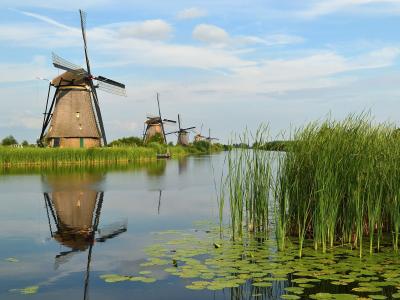
Museum Mills
UNESCO site with 19 historic Dutch windmills
History & Heritage · History Museums
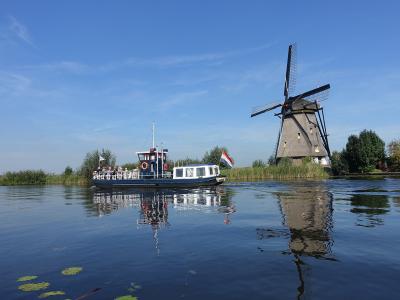
Tour Boat
Boat tours through UNESCO-listed windmills
Coastal & Maritime · Boat Tours

Wisboom Pumping Station
Historic pumping station preserving Dutch waterways
History & Heritage · Guided Tours
Kinderdijk by interest
The same sights, grouped by what you came for.
Did you know?
Checked facts about Kinderdijk, each with its source.
-
History
Kinderdijk Has Another Verifiable Detail
Visitors are drawn to the serene beauty of the canals, dikes, and meadows, as well as the opportunity to explore working windmills, pumping stations, and interactive exhibitions.
Source: Kinderdijk - Wikipedia -
Record
Kinderdijk Has UNESCO-Linked Heritage
Kinderdijk is a UNESCO World Heritage Site in the Randstad region of the Netherlands, world-famous for its iconic row of 19 historic windmills set amid a picturesque polder landscape.
Source: Kinderdijk windmills -
Record
Nineteen Windmills, One World Heritage Skyline
The 19 windmills of Kinderdijk were built around 1740 to pump water out of the low-lying Alblasserwaard polder, and together they form the largest concentration of old windmills in the Netherlands. The system worked in stages, lifting water into reservoirs before releasing it into the river. UNESCO recognized this remarkable feat of Dutch water management by inscribing Kinderdijk-Elshout as a World Heritage Site in 1997.
Source: Wikipedia
Planning a visit to Kinderdijk
Itineraries that include Kinderdijk
Good to know
- Currency
- EUR
- Language
- Dutch