Luxury accommodation in the Netherlands is concentrated in Amsterdam, where historic grand hotels and canal-house conversions dominate, with smaller clusters in The Hague, Rotterdam and Limburg. Outside the cities, the high end means castle and country-estate hotels, often with restaurants that are the main reason to visit.
What luxury looks like here
Dutch luxury tends to be understated. Rooms in historic buildings are often smaller than in purpose-built hotels elsewhere, and many of the best addresses are converted canal houses, palaces, monasteries or company headquarters rather than new towers. Expect excellent service in English, serious attention to food, and in the countryside a focus on landscape and quiet rather than resort facilities.
Amsterdam
Amsterdam has the largest choice. Well-known examples include:
- InterContinental Amstel Amsterdam, a 19th-century grand hotel on the Amstel river.
- Hotel De L'Europe, on the water next to the Munttoren in the old centre.
- Waldorf Astoria Amsterdam, in a row of 17th-century canal palaces on the Herengracht.
- Pulitzer Amsterdam, spread over a series of connected canal houses between the Prinsengracht and Keizersgracht.
- Conservatorium Hotel, in the former music conservatory building next to Museumplein.
Location matters as much as the hotel. The canal belt (Grachtengordel) is the classic setting; the Museum Quarter is quieter and close to the Rijksmuseum, Van Gogh Museum and Concertgebouw; the old centre around Dam Square is busiest.
The Hague, Scheveningen and Rotterdam
- Hotel Des Indes in The Hague occupies a 19th-century building on the Lange Voorhout, close to the government quarter and the Mauritshuis.
- Grand Hotel Amrâth Kurhaus in Scheveningen is the large 19th-century seaside hotel on the beach promenade, a short tram ride from The Hague centre.
- Hotel New York in Rotterdam is in the former head office of the Holland America Line on the Kop van Zuid, with views across the Maas. It is more historic character than formal luxury, but one of the city's most popular addresses.
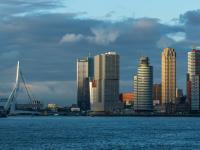
Rotterdam's modern skyline also has newer high-rise hotels with river views, a contrast to the historic buildings elsewhere.
Limburg and the countryside
South Limburg, around Maastricht and the Geul valley, has the highest concentration of country-house and castle hotels.
- Château St. Gerlach near Valkenburg is an estate with a hotel, restaurant and spa in a manor house and farm buildings in the Geul valley, a short drive from Maastricht.
- Kruisherenhotel Maastricht is a design hotel in a 15th-century monastery and church in the city centre. It paused operations at the end of July 2026 for a renovation and is reopening in phases from autumn 2026; check the status before booking.
Elsewhere, the Veluwe forests in Gelderland and the Utrechtse Heuvelrug have castle and estate hotels set in parkland, good for walking and cycling breaks. In Zwolle, De Librije, one of the most decorated restaurants in the country, shares a former prison complex with its own hotel.
Rooms in historic buildings
Because so many top hotels occupy old buildings, rooms within the same hotel can differ a lot. Points worth checking when you book:
- Room size and shape. Canal-house rooms can be long and narrow, with sloping ceilings on upper floors.
- Lifts and stairs. Most large hotels have lifts, but in smaller canal-house hotels some rooms are reached only by steep Dutch stairs.
- Noise. Rooms facing busy streets can hear tram bells and late-night cyclists; courtyard or garden rooms are quieter.
- Views. Canal-view and river-view rooms are priced higher; decide whether the view matters more than space.
- Bathrooms. Bathrooms in listed buildings are sometimes smaller than the room category suggests.
Food as a reason to travel
For many visitors the top end of Dutch hospitality is as much about restaurants as rooms. Several luxury hotels have restaurants with Michelin stars, and some of the most acclaimed restaurants are in small towns rather than Amsterdam, which makes a one-night stay part of the plan. Reserve the restaurant first and the room second; tables are often harder to get.
Booking and costs
- Taxes are now a significant part of the bill. Since 1 January 2026, VAT on hotel stays has been 21%, up from 9%. Amsterdam adds a municipal tourist tax of 12.5% of the room price in 2026. Check whether quoted rates include both.
- Busy periods push prices up: King's Day (27 April), the tulip season in spring, the Amsterdam Dance Event in October and major conferences. In Maastricht, the TEFAF art fair in March fills the top hotels.
- Canal views often cost extra and rooms facing the canal can be noisier. Ask about the room's position and floor.
- Book direct for flexible rates, room upgrades and package offers that include dinner or spa access.
- Parking in central Amsterdam is very limited and expensive; many hotels offer valet parking at a daily rate, or you can use a P+R car park and public transport.
Making the most of a stay
- Arrive by train. Amsterdam Centraal, Den Haag Centraal, Rotterdam Centraal and Maastricht stations are close to most city hotels, and Schiphol has direct trains to all of them.
- Ask the concierge for museum timeslots. The Rijksmuseum, Van Gogh Museum and Anne Frank House require timed tickets, and Anne Frank House tickets sell out weeks ahead.
- Use the water. Several Amsterdam hotels have their own jetties and can arrange private canal boat trips.
- Combine city and countryside. A few nights in Amsterdam followed by an estate hotel in Limburg or the Veluwe gives two very different sides of the country, linked by direct trains or a two to three-hour drive.