The cheapest way to stay in the Netherlands is to avoid central Amsterdam at weekends: hostels, budget hotel chains and hotels in other cities cost noticeably less, and fast trains make a base elsewhere practical. Prices everywhere rose in 2026 when VAT on accommodation went from 9% to 21%, so the extra taxes matter more than before.
Budget options at a glance
| Type | What you get | Best for |
|---|---|---|
| Hostel dorm | A bed in a shared room, shared bathrooms, lockers | Solo travellers, short city stays |
| Hostel private room | A small room, sometimes with private bathroom | Couples, families on a budget |
| Budget hotel chain | Small, functional rooms, often outside the centre | Short stays, late arrivals |
| Motorway and edge-of-town hotels | Larger rooms, free or cheap parking | Road trips |
| Holiday park bungalow | Self-catering house sleeping four to six | Families and groups staying a week |
| Campsite or camping cabin | Pitch or simple cabin | Summer, cyclists |
Hostels
The Netherlands has a well-developed hostel scene. Stayokay, the Dutch member of Hostelling International, runs hostels in Amsterdam, Rotterdam, Utrecht, The Hague, Haarlem, Maastricht, Eindhoven and several coastal and countryside locations including Texel and Terschelling. Amsterdam also has large independent hostels. Many hostels offer private rooms and family rooms as well as dorms, which can be cheaper than a hotel for three or four people sharing.
Budget hotels and chains
- International budget chains have hotels in and around the main cities, often near ring roads, business districts or Schiphol.
- Van der Valk is a Dutch family-run chain known for its hotels next to motorways, which suit drivers.
- Fletcher Hotels is a Dutch chain with mid-priced hotels in smaller towns and rural areas.
- The Social Hub (formerly The Student Hotel) combines student housing with hotel rooms in several Dutch cities; rooms are compact and modern.
Hotels near Amsterdam Sloterdijk, Zuid or in Amsterdam Noord, or in Zaandam just north of the city, are usually cheaper than the canal belt and have quick train or metro links to the centre.
Where to stay to save money
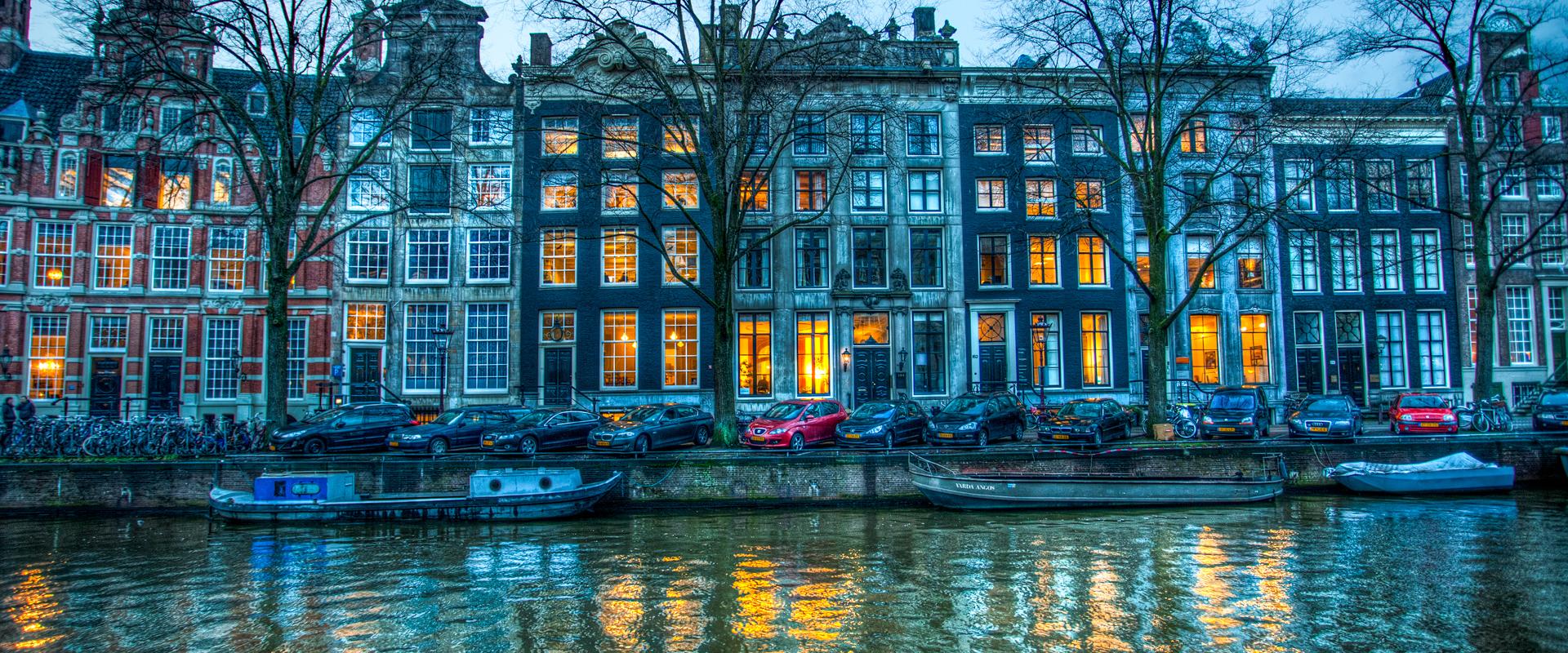
Amsterdam is consistently the most expensive city to sleep in, partly because of the 12.5% municipal tourist tax in 2026. Some practical alternatives:
- Haarlem: a historic city with direct trains to Amsterdam Centraal in roughly 15 minutes.
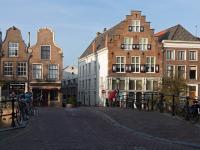
- Utrecht: a canal city with direct trains to Amsterdam in under half an hour.
- Leiden and Delft: university towns between Amsterdam and Rotterdam, convenient for day trips in both directions.
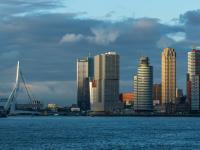
- Rotterdam and The Hague: larger cities with more hotel competition and often lower weekend prices than Amsterdam.
Before choosing, add up the return train fare for each day trip; for a long stay with daily trips to Amsterdam, the saving can shrink. All trains, trams, buses and metros accept contactless bank cards through OVpay, so there is no need to buy a separate travel card.
Timing: when prices rise
Weekend nights are usually more expensive than weekdays in the cities, and the opposite can be true in business-oriented hotels near offices. Prices climb sharply around big events:
- King's Day (27 April, or 26 April when the 27th is a Sunday), especially in Amsterdam.
- Tulip season (roughly mid-March to mid-May, when Keukenhof is open) in Amsterdam, Leiden and the bulb region.
- Amsterdam Dance Event in October.
- Summer school holidays for the coast, islands and holiday parks.
- Major trade fairs and conferences, for example in Amsterdam, Utrecht and Maastricht.
Booking well ahead is the main defence for these periods. Outside them, last-minute deals on weekday nights are common.
Costs that are easy to miss
- Tourist tax. Charged by every municipality that levies it. Amsterdam uses a percentage of the room price; most other places charge a fixed amount per person per night. Check whether the quoted price includes it.
- VAT. Since 1 January 2026, VAT on overnight stays is 21% (camping pitches remain at 9%). Most quoted prices include it, but compare like with like.
- Breakfast. Often not included in budget hotels; a supermarket breakfast is much cheaper.
- Parking. City-centre parking is costly, particularly in Amsterdam. Park and Ride (P+R) car parks on the edge of cities are far cheaper if you combine them with public transport.
- Bed linen and towels. Some holiday parks and simple accommodation charge extra or expect you to bring your own.
Holiday parks and cabins for groups
For families and groups, the cheapest option per person is often not a hotel at all. Bungalow parks run by operators such as Center Parcs, Landal GreenParks and Roompot rent houses for four to eight people, with kitchens, usually by the week or for a midweek (Monday to Friday) or weekend (Friday to Monday) stay. Off-season midweek breaks are the cheapest. Many campsites also rent simple cabins and trekkershutten, small wooden huts with beds, which suit cyclists and walkers who do not want to carry a tent. Self-catering cuts the biggest variable cost: Dutch supermarkets such as Albert Heijn, Jumbo and Lidl are much cheaper than eating out.
Booking checklist
- Compare the total price including tourist tax, not the headline rate.
- Check the distance to the nearest train, tram or metro stop, not just to the city centre.
- For hostels, check the age policy, whether lockers are provided and whether breakfast and bed linen are included.
- Read the cancellation policy; the cheapest non-refundable rates rarely allow changes.
- For groups of four or more staying a week, price a holiday park bungalow or apartment against several hotel rooms.