The Hague, or Den Haag, is a city of national and international importance, with centuries of history and a cosmopolitan modern life. It is the seat of the Dutch government, the residence of the royal family, and home to many international organisations, among them the International Court of Justice and the International Criminal Court. Its origins go back to the 13th century, when Count Floris IV of Holland built a hunting lodge on the site that became the Binnenhof, now the centre of Dutch political life. The Hague never received city rights, which is why it is still sometimes called the largest village in the Netherlands, although it is the third-largest city.
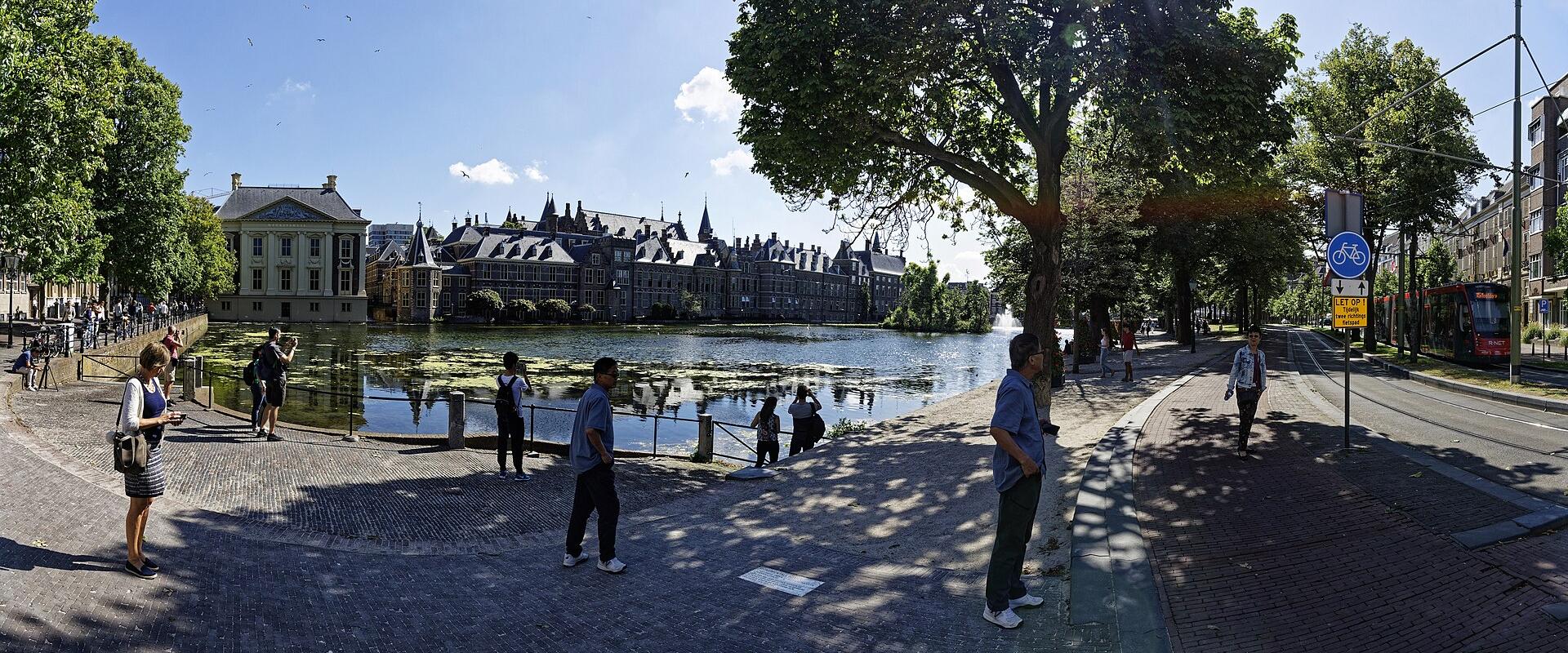
The historic core is dominated by the Binnenhof, a complex of Gothic and later buildings that has been the centre of Dutch government for centuries. Guided tours allow visitors to see its halls and learn about the political history of the country. Nearby, the Mauritshuis houses a renowned collection of Dutch Golden Age paintings, including Vermeer’s Girl with a Pearl Earring and works by Rembrandt and Frans Hals. Art lovers will also enjoy the Escher Museum, devoted to the work of M. C. Escher, the Kunstmuseum Den Haag with its large collection of works by Piet Mondrian, and Panorama Mesdag, a cylindrical painting that gives a 360-degree view of 19th-century Scheveningen. The Prison Gate, the Gevangenpoort, is a museum in a medieval gate that was later a prison.
The cultural offering extends beyond the museums. The city has elegant squares, such as the Plein and the Grote Markt, where locals and visitors gather at cafes and restaurants. The Noordeinde Palace, one of the royal working palaces, sits among shopping streets and galleries. Amare is an international centre for music and dance, and street art can be found in many neighbourhoods. For families, Madurodam offers a miniature version of the Netherlands, and the historic tram gives a nostalgic ride through the city.
One of The Hague’s most distinctive features is its closeness to the North Sea. The beach district of Scheveningen is a busy resort with a long sandy beach, a pier and many attractions, including the SEA LIFE aquarium and beachside restaurants. In summer Scheveningen hosts festivals, concerts and fireworks, which makes it a favourite with locals and tourists alike.
The Hague is also a green city, with many parks and gardens such as the Haagse Bos, a surviving piece of ancient woodland in the middle of the city, and the Westbroekpark. These are good for relaxed walks and picnics. The multicultural population is reflected in the varied food scene, from traditional Dutch dishes to international cuisine, with a strong Indonesian influence.
Getting to The Hague is easy, with good train connections to Amsterdam, Rotterdam and other major Dutch cities. The compact centre is best explored on foot, by bicycle or by the efficient network of trams and buses. International visitors can arrive via Amsterdam Schiphol or Rotterdam The Hague Airport.
The climate is temperate, with mild summers and cool winters. The best time to visit is from late spring to early autumn, especially from May to September, when the weather is pleasant and the outdoor attractions and beaches are at their best. The museums, cultural events and historic sites make The Hague a destination through the year.
Whether the interest is art, history, politics or simply the seaside, The Hague offers a rich and varied visit that reflects Dutch culture and an international outlook.
Best time to visit
May to September offers mild weather, long days, and lively beach life, ideal for exploring The Hague’s museums, parks, and coastal attractions.
What to see in The Hague
Our picks first.
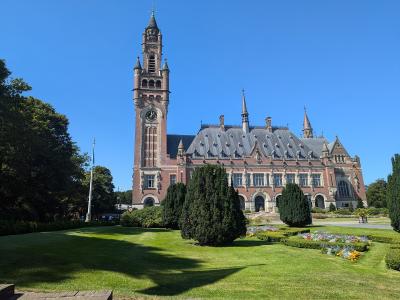
The Peace Palace
Home to global courts for peace and justice
Cultural Experiences · History & Heritage

Amare
Largest cultural hub for music and dance in NL
Cultural Experiences
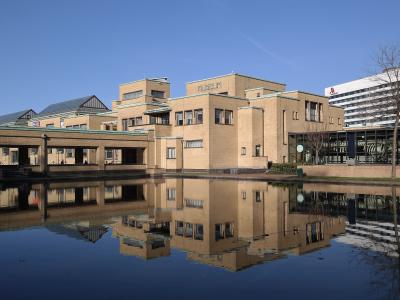
Haags Kunstmuseum
Home to Mondrian, Monet, Picasso, and Delftware
Cultural Experiences · History & Heritage

Mauritshuis
Dutch Golden Age paintings in a historic palace
Cultural Experiences · History & Heritage

Prison Gate
Historic prison showcasing The Hague’s justice legacy
History & Heritage · Guided Tours

The Binnenhof
Historic Dutch Parliament complex since the 13th century
Cultural Experiences · History & Heritage

Spot street art
Cat-themed murals enliven The Hague’s Kattensteeg
Urban Exploration
The Hague by interest
The same sights, grouped by what you came for.
Did you know?
Checked facts about The Hague, each with its source.
-
History
Carnegie-backed Peace Palace Opened in The Hague in 1913
The Hague's Peace Palace (Vredespaleis) was ceremonially opened on 28 August 1913, with American steel magnate and philanthropist Andrew Carnegie — whose donation made the building possible — present as the key was handed over. More than a century later, it houses the International Court of Justice (the principal judicial organ of the United Nations), the Permanent Court of Arbitration, the Hague Academy of International Law, and the Peace Palace Library. That makes this one building a big part of why The Hague is known worldwide as the "city of peace and justice."
Source: Peace Palace official website
Planning a visit to The Hague
Itineraries that include The Hague
Good to know
- Currency
- EUR
- Language
- Dutch