







Audio Tours (Kinderdijk app)
Audio tours of Kinderdijk’s historic windmills and waterways
- Where
- Kinderdijk, Randstad
- Directions
- Directions
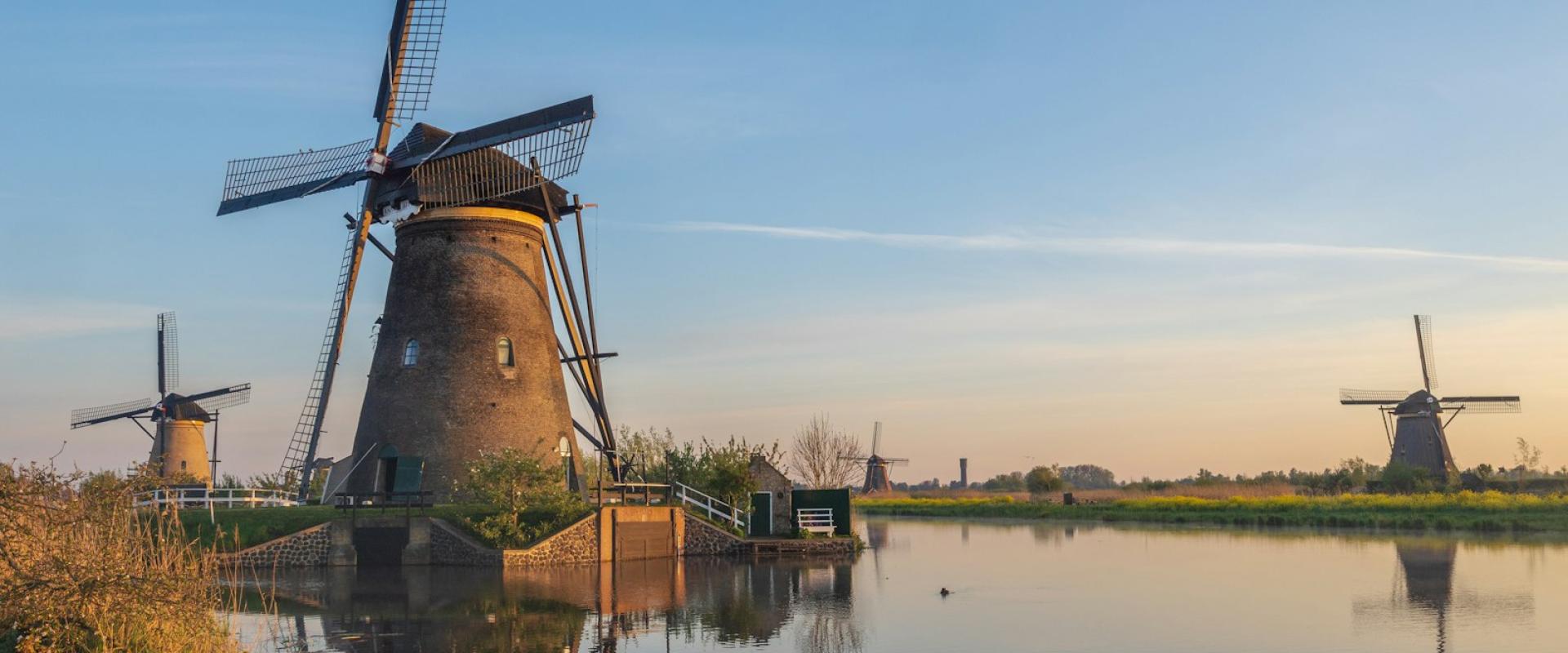
Kinderdijk is the best known group of windmills in the Netherlands, nineteen mills strung along the water channels of the Alblasserwaard polder, east of Rotterdam, and it has been a UNESCO World Heritage site since 1997. The place is a living demonstration of how the Dutch have kept their land dry, and the audio tours available through the Kinderdijk app are a way of making sense of what you are looking at as you walk or cycle between the mills. Using the app, visitors move at their own pace, following a route and listening to commentary about the mills, the dikes and the people who worked here.
The background matters. The name Kinderdijk means child dike, and it is traditionally linked to the St Elizabeth's flood of 1421, after which, according to a well-known legend, a cradle with a baby and a cat was found floating against the dike. The polder lies below sea level, and from the Middle Ages it was kept dry by a system of dikes, channels and pumps. The nineteen mills, built mostly in the eighteenth century, in 1738 and 1740, pumped water from the low fields up into a higher reservoir, from which it flowed to the river. Later, steam and diesel pumping stations took over, among them the Wisboom pumping station, which dates from the nineteenth century and is open to visitors. Today the mills are not needed for drainage, but they are preserved and some are still occupied by millers' families.
The audio tours cover the main attractions. They guide you to the museum mills, two of which can be entered to see how a miller lived and worked, with living quarters, gears and sails, and they take in the boat trip along the waterways, the pumping station and the viewpoints along the dike. The content is available in several languages, with shorter and longer tours, so you can choose depending on how much time you have, and interactive maps help with the route.
Practical tips make the experience smoother. Bring headphones or earbuds and make sure that your phone is charged, as the app uses a good deal of battery. Access is by walking or cycling, since cars are kept out of the site, and the paths are flat and easy. The weather is changeable, and the polder is exposed to wind, so dress appropriately. Tickets for the museum mills and the boat are bought separately, and prices change, so check before you go.
The tours suit families, curious visitors and those who like to understand the story behind a landscape. Allow two to four hours for a visit, and go early or late in the day to avoid crowds.
Categories
More photos coming soon
Nearby Attractions
Other places to visit in Kinderdijk

Questions people ask
Quick Facts
Best Time to Visit
May to September offers mild weather, lush scenery, and ideal conditions for walking, cycling, and enjoying Kinderdijk’s windmills and polder landscape.