







- Where
- Kinderdijk, Randstad
- Directions
- Directions
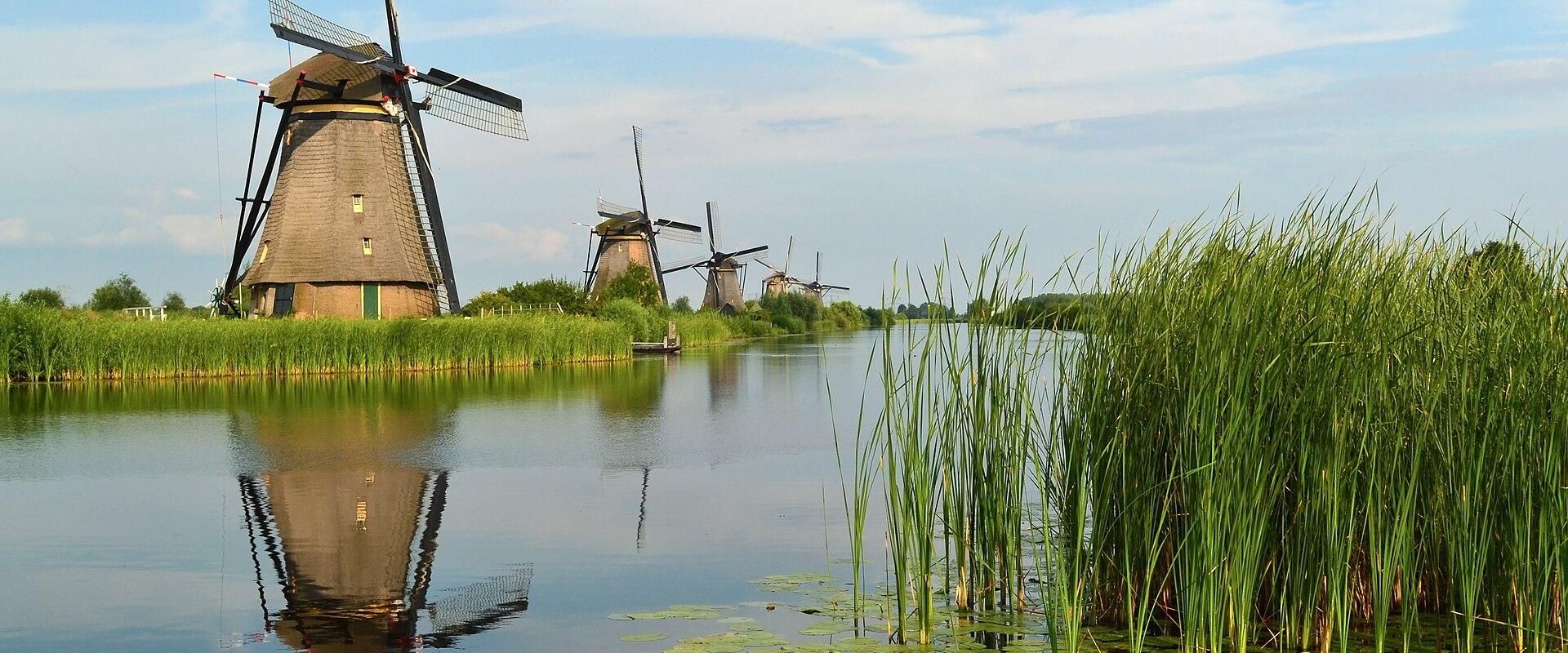
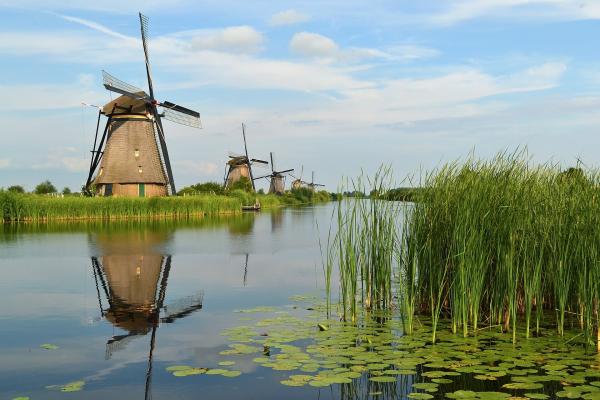
Kinderdijk is the best-known windmill site in the Netherlands, a group of nineteen mills standing along the canals in the polder landscape east of Rotterdam. The mills were built in the middle of the eighteenth century to keep the low-lying Alblasserwaard dry, and they work in pairs and chains, each lifting water a short distance into the next higher channel until it can be released into the river. The whole system has been recognised as a UNESCO World Heritage site since 1997, as a masterpiece of human ingenuity in water management.
The place takes its name from a legend. After a catastrophic flood in 1421, so the story goes, a cradle with a baby in it was seen floating on the water, kept balanced by a cat that jumped from side to side. The tale gives the area its name, which means child dyke, and is retold to visitors with some pride. Whatever its truth, it conveys how deeply the people here felt the threat of water.
Two of the mills are open as museums, and they give a vivid idea of life inside a mill. Visitors climb narrow wooden stairs, look at the machinery of gears and shafts and see the rooms where millers and their families lived, with box beds, cooking stoves and furniture. Because the miller's family lived in the mill, the building was home and workplace at once. Staff and volunteers explain how the sails were set and turned to catch the wind, how the signals worked and how a miller read the weather. In some mills, the huge sails and the creak of the wood are a thrilling sensory experience.
The site has other attractions. A visitor centre explains the history and engineering of the polder, and the Wisboom pumping station, a steam-powered station from the nineteenth century, shows how the technology of drainage changed. Boat tours run along the canals, giving a different view of the mills from the water, and an audio guide in several languages is available through an app. The footpaths and cycle routes along the canals are flat and pleasant.
The mills suit families, photographers and anyone interested in engineering or the landscape. The site can be busy at midday in summer, so an early start or a late afternoon visit is quieter. Allow three hours or more, wear comfortable shoes and check opening times and ticket details before going. Rotterdam is a short trip by water bus.
Categories
More photos coming soon
Nearby Attractions
Other places to visit in Kinderdijk

Audio Tours (Kinderdijk app)
Audio tours of Kinderdijk’s historic windmills and waterways
Cultural Experiences · Guided Tours
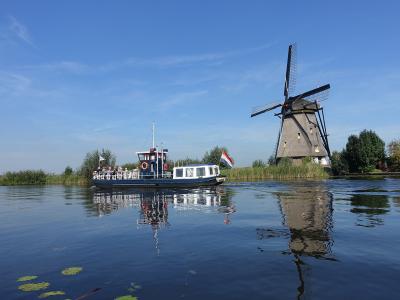
Tour Boat
Boat tours through UNESCO-listed windmills
Coastal & Maritime · Boat Tours

Wisboom Pumping Station
Historic pumping station preserving Dutch waterways
History & Heritage · Guided Tours
Questions people ask
Quick Facts
Best Time to Visit
May to September offers mild weather, lush scenery, and ideal conditions for walking, cycling, and enjoying Kinderdijk’s windmills and polder landscape.