







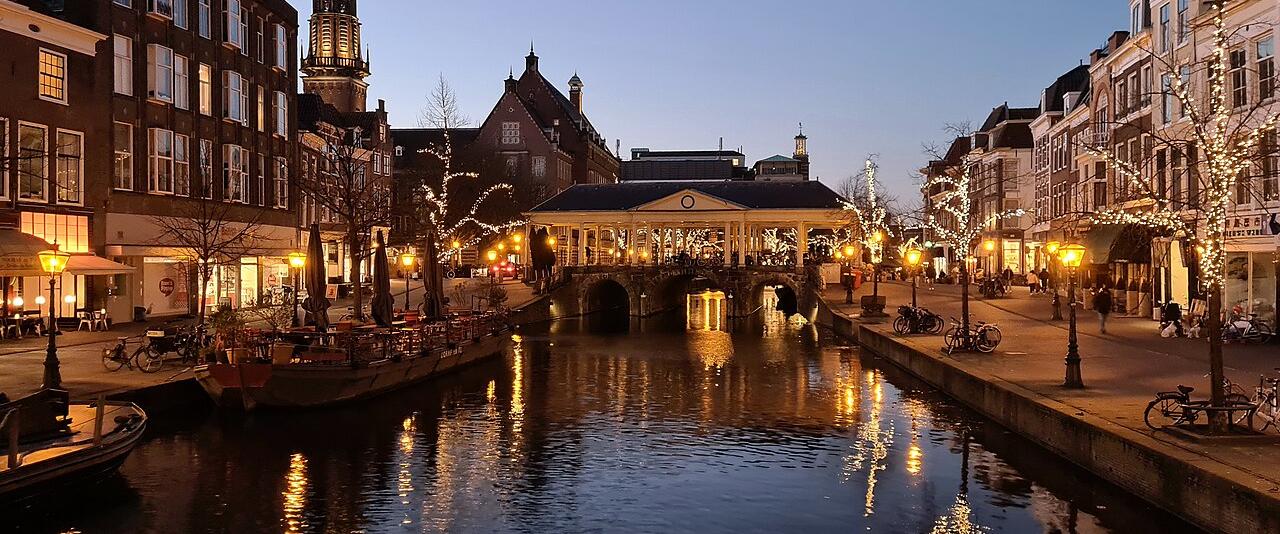
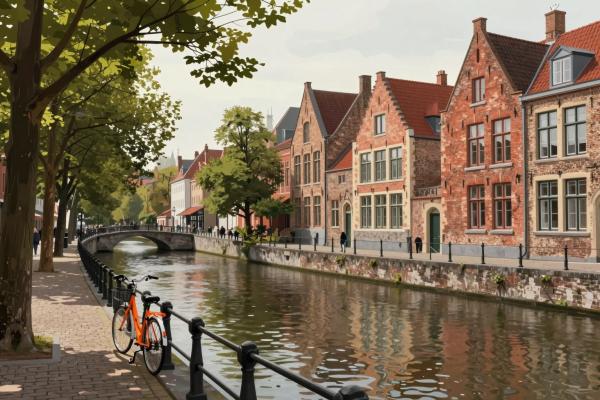
Leiden is a small city of canals and almshouse courtyards half an hour from Amsterdam, and many visitors see it only from the train. Yet this is where a starving town held out against a Spanish army, where the Netherlands' first university was founded, where tulips first flowered in a Dutch garden, where the Pilgrims lived before the Mayflower, where helium was first turned into a liquid, and where a law professor stood up in 1940 to defend a Jewish colleague.
This is Leiden's bright side, in roughly the order it happened. Some of its favourite stories are legends, and we say so where they are. Every chapter ends with something you can go and see.
1462 Onwards: The Hofjes
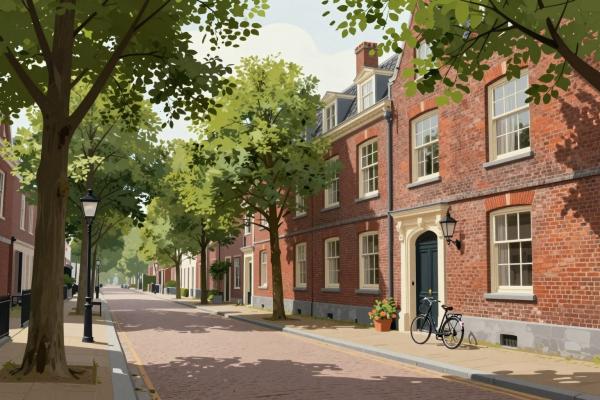
Leiden is full of hofjes, small courtyards of almshouses built around a garden by wealthy citizens for the poor, the elderly and single women, so that they could live in dignity for free. The oldest date from the 15th century; Leiden has about 35 of them, and most are still lived in.
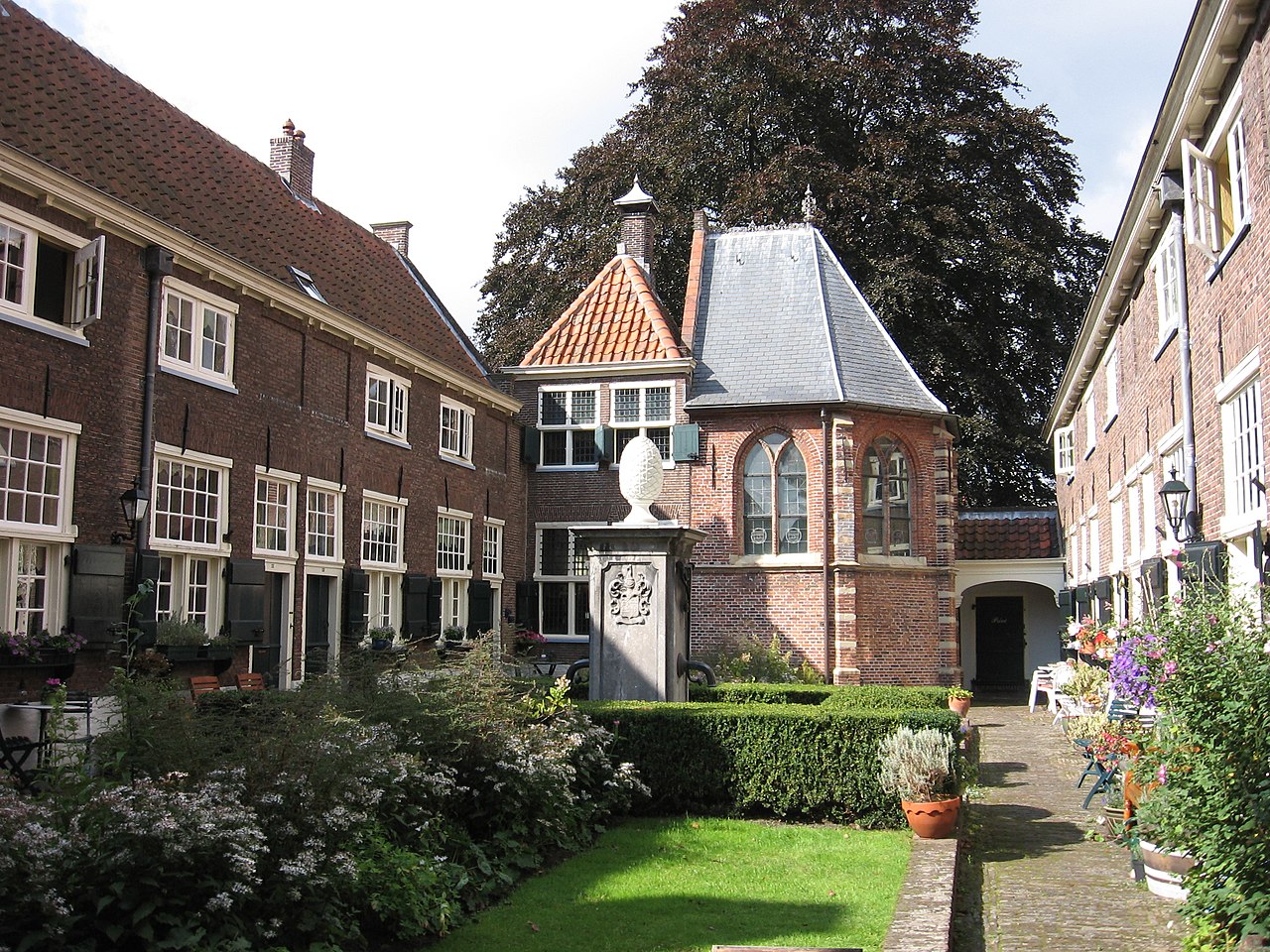 The St Annahofje, founded in 1492, one of Leiden's oldest almshouse courtyards. Image: Michiel1972, CC BY-SA 3.0, via Wikimedia Commons.
Where to see it today: many hofjes open their gates to visitors during the day. The St Annahofje on Middelweg, founded in 1492, has its own small chapel, open on Saturday afternoons. The tourist office sells a map of a 5 km courtyard route. People live here, so go quietly.
 The Pieter Loridans Hofje, one of about 35 almshouse courtyards in Leiden. Image: Vera de Kok, CC BY-SA 4.0, via Wikimedia Commons.
1574: The Siege and the Relief
In 1573, during the Dutch revolt against Spain, a Spanish army laid siege to Leiden. After a break the siege resumed in May 1574, and the city began to starve. Between two and six thousand people, out of about 14,000, died of hunger and plague.
William of Orange decided on a desperate plan: to cut the dikes and flood the land between the sea and the city, so that ships could sail to Leiden across the fields. The water rose slowly. At last, on 3 October 1574, after the Spanish had withdrawn in the night, a fleet of flat-bottomed boats carrying the Sea Beggars reached the city with herring and white bread.
Two stories from the siege are legends. The mayor, Pieter van der Werff, is said to have offered his own body to the starving people to eat rather than surrender; historians think the scene was invented afterwards. And a boy is said to have found a pot of stew, hutspot, left in the abandoned Spanish camp. The pot is real and is in the Lakenhal museum; it was found by a privateer, and the boy came later.
 The Famished People after the Relief of the Siege of Leiden, by Otto van Veen. Image: Otto van Veen, CC0, via Wikimedia Commons.
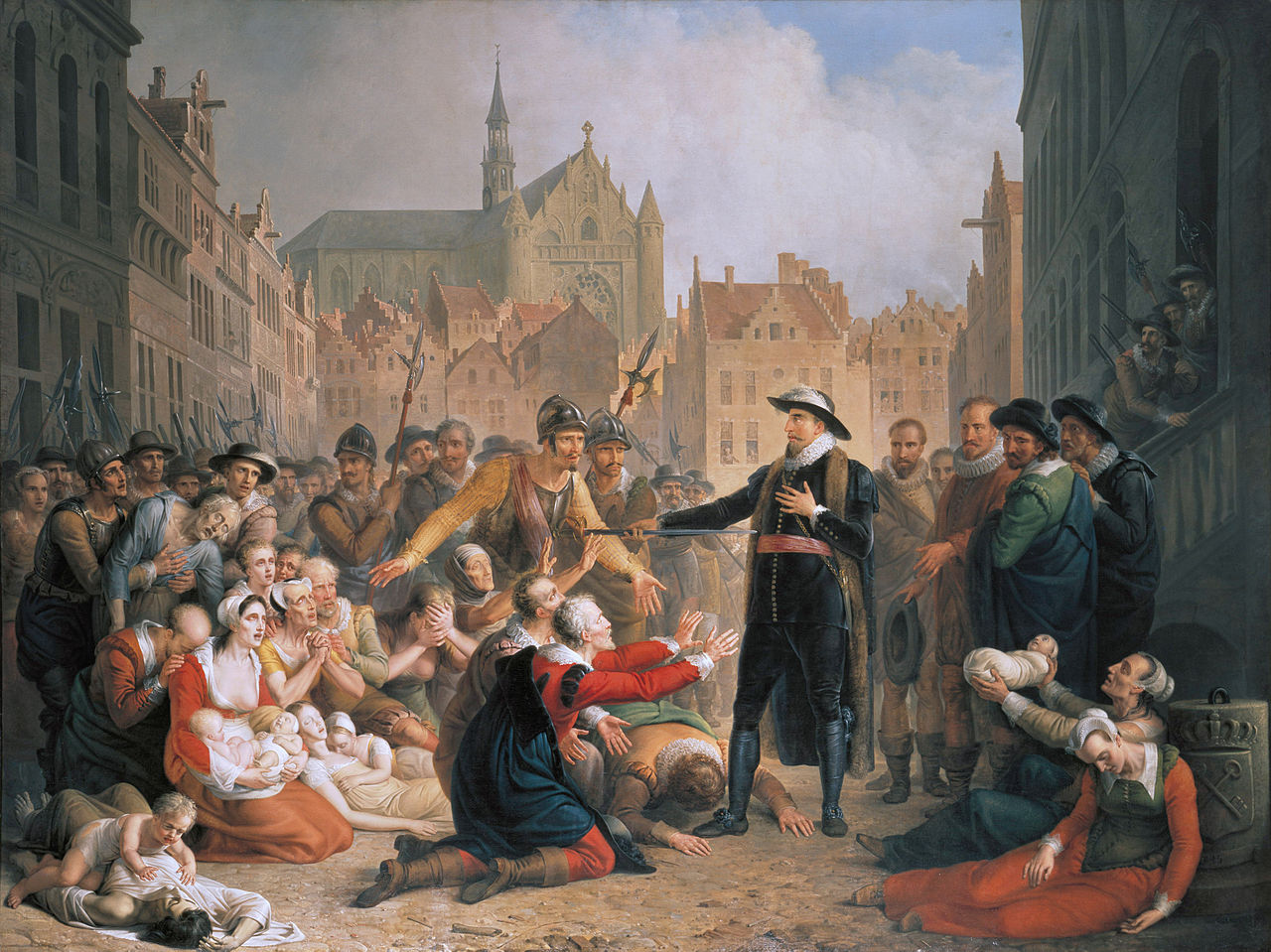 Mayor van der Werff offering himself to the people of Leiden, in an 1817 painting of a scene that is probably legend. Image: Mattheus Ignatius van Bree, Public domain, via Wikimedia Commons.
Where to see it today:
- 3 October in Leiden: the city's biggest festival, with free herring and white bread handed out at the Waag in the morning, a mass sing-along, a parade, a funfair and hutspot for everyone the night before.
- The Van der Werffpark, with a statue of the mayor.
- The siege pot in Museum De Lakenhal.
1575: A University, and a Garden
On 8 February 1575 William of Orange founded the University of Leiden, the first in the Dutch Republic, as a reward for the city's courage. A popular story says Leiden was offered a choice between ten years without taxes and a university, and chose the university; there is no document to prove it. Its motto is Libertatis Praesidium, bastion of freedom. Since 1581 it has been housed in a former convent chapel on the Rapenburg canal.
In 1590 the university founded the Hortus Botanicus, the oldest botanical garden in the Netherlands. Its first director, the botanist Carolus Clusius, brought tulip bulbs from Vienna and planted them in 1593. When they flowered in 1594, they were among the first tulips in the Dutch Republic. Some forty years later the country was gripped by tulip mania.
 The tower of the Academiegebouw, the university's home since 1581. Image: Rudolphous, CC BY-SA 4.0, via Wikimedia Commons.
 The gate of the reconstructed Clusius garden in the Hortus Botanicus. Image: Gemeente Leiden Afdeling Monumentenzorg (Primaire vervaardiger), CC0, via Wikimedia Commons.
Where to see it today: the Academiegebouw on the Rapenburg, and the Hortus Botanicus behind it, Rapenburg 73, open daily, where a reconstruction of Clusius's garden of 1594 opened in 2009.
1606: Rembrandt
Rembrandt van Rijn was born in Leiden on 15 July 1606, the son of a miller, and learned to paint here before moving to Amsterdam. The house where he was born has gone, but a stone marks the spot.
 The stone marking Rembrandt's birthplace in the Weddesteeg. Image: Sneeuwvlakte, CC BY-SA 4.0, via Wikimedia Commons.
Where to see it today:
- The birthplace stone in the Weddesteeg, near the windmill De Valk.
- Museum De Lakenhal, Oude Singel 32, the city museum in the 1640 cloth hall, with early Rembrandts and Lucas van Leyden's Last Judgement. It reopened in 2019 after a major renovation.
 Museum De Lakenhal on the Oude Singel. Image: Michiel1972, CC BY-SA 3.0, via Wikimedia Commons.
1609–1620: The Pilgrims
In 1609 a group of English Puritans who had fled religious persecution came to Leiden, where the city allowed them to live and worship freely. Their minister, John Robinson, bought a house near the Pieterskerk, and their elder, William Brewster, printed books that were banned in England. In 1620 part of the congregation sailed for America on the Mayflower; the rest stayed. Robinson died in 1625 and is buried in the Pieterskerk.
One historian argues that Leiden's own thanksgiving on 3 October helped inspire the Pilgrims' harvest feast of 1621, the origin of Thanksgiving; others are not convinced.
 The memorial to John Robinson and the Pilgrim Fathers on the Pieterskerk. Image: Dqfn13, CC BY-SA 4.0, via Wikimedia Commons.
Where to see it today:
- The Pieterskerk, with plaques to Robinson and the Pilgrims.
- The Pilgrim Museum, Kloksteeg 16a, next to the church, in rooms furnished as a 17th-century home. It reopened at this new address in 2025 and is open Wednesday to Sunday afternoons.
 Inside the Pilgrim Museum next to the Pieterskerk. Image: Vysotsky, CC BY-SA 4.0, via Wikimedia Commons.
1633 and After: Looking at the Sky
In 1633 the university built an observatory on the roof of the Academiegebouw. Leiden Observatory is the oldest university observatory in the world still in operation. In 1860 it moved to a new building in the Hortus, which was restored in 2012 and is open for tours.
 The Old Observatory of 1860, in the Hortus Botanicus. Image: AWossink, CC BY-SA 4.0, via Wikimedia Commons.
1660–1663: Spinoza
The philosopher Baruch Spinoza, expelled from Amsterdam's Jewish community, lived from about 1660 to 1663 in a cottage in Rijnsburg, just outside Leiden, grinding lenses for a living. There he began writing the Ethics, his great argument for reason and freedom of thought.
 The Spinozahuis in Rijnsburg, where Spinoza lived from about 1660 to 1663. Image: Gerard Dukker, CC BY-SA 4.0, via Wikimedia Commons.
Where to see it today: the Spinozahuis, Spinozalaan 29, Rijnsburg, a short bus ride from Leiden, open in the afternoons.
1714–1746: Teaching Medicine, and the Leyden Jar
In the early 18th century the physician Herman Boerhaave made Leiden famous across Europe for medicine, bringing students to the bedside of patients to learn. In 1746 the Leiden professor Pieter van Musschenbroek described a glass jar that could store electricity: the Leyden jar, the first capacitor. A German, Ewald von Kleist, had made the same discovery independently a few months earlier, but it is Leiden's name the device carries.
 Leyden jars in the Rijksmuseum Boerhaave. Image: Prof. Jos van den Broek, CC BY-SA 3.0, via Wikimedia Commons.
Where to see it today: the Rijksmuseum Boerhaave, Lange St. Agnietenstraat 10, the national museum of science and medicine, with Leyden jars, a pendulum clock by Christiaan Huygens, and the apparatus used to make liquid helium.
1807: Rebuilding After the Explosion
On 12 January 1807 a ship carrying gunpowder exploded in the Steenschuur canal in the middle of Leiden, killing 151 people and destroying about 220 houses. King Louis Bonaparte came to help in person, gave money and exempted the city from taxes for ten years, and a national collection raised nearly two million guilders. Part of the ruined area later became the Van der Werffpark. On another part, the university built its physics laboratory, where a century later helium was turned into a liquid.
 The ruins on the Steenschuur after the explosion of 1807. Image: Rijksmuseum, CC0, via Wikimedia Commons.
Where to see it today: the Van der Werffpark on the Steenschuur, and the memorial stone in the quay marking where the ship was moored.
1908–1920: Cold and Light
On 10 July 1908, in the laboratory on the Steenschuur, the physicist Heike Kamerlingh Onnes turned helium into a liquid for the first time, at a temperature just a few degrees above absolute zero. In 1911 his team discovered superconductivity, the ability of some metals to carry electricity with no resistance at all. He won the Nobel Prize in Physics in 1913 for his work at low temperatures.
At the same time Leiden's physicists, led by Hendrik Lorentz, made it one of the centres of the new physics. Albert Einstein was a visiting professor here from 1920 and often stayed with his friend Paul Ehrenfest; guests at Ehrenfest's house signed their names on a wall, which is now kept at the university.
Where to see it today: the apparatus Kamerlingh Onnes used is in the Rijksmuseum Boerhaave.
1940: The Cleveringa Speech
On 26 November 1940, six months into the German occupation, the university was ordered to dismiss its Jewish staff. One of them was the law professor Eduard Meijers. That morning, his colleague Rudolph Cleveringa, dean of the law faculty, spoke to a packed hall in the Academiegebouw instead of Meijers's class. He praised Meijers as a scholar and a man and condemned his dismissal as against all law and decency. The speech was relayed by loudspeakers to the crowd outside. The students sang the national anthem and went on strike.
Cleveringa was arrested the next day and imprisoned for eight months. The Germans closed the university, and it did not reopen until 1945. Meijers survived the Theresienstadt camp, came back to Leiden in 1945, and went on to draft the new Dutch civil code.
 The stone lectern outside the Academiegebouw commemorating the protest speeches of 1940. Image: Rudolphous, CC BY-SA 4.0, via Wikimedia Commons.
Where to see it today: the stone lectern outside the Academiegebouw, inscribed Libertatis Praesidium. Every year on or around 26 November, a Cleveringa lecture is given in the same hall, and in many places around the world.
1979: A Temple From Egypt
In the 1960s the Netherlands helped UNESCO save the ancient monuments of Nubia from the waters of the Aswan dam. As thanks, Egypt gave the country a small Roman-era temple from Taffeh, built around the time of Augustus. It was rebuilt inside the National Museum of Antiquities and opened in 1979.
 The Temple of Taffeh in the National Museum of Antiquities. Image: Hans van Dijk for Anefo, CC0, via Wikimedia Commons.
Where to see it today: the Rijksmuseum van Oudheden, Rapenburg 28, where the temple stands in the entrance hall.
1992–2005: Poems on the Walls
In 1992 two artists painted a poem by the Russian poet Marina Tsvetaeva, in Russian, on a wall at Nieuwsteeg 1. They did it without permission; the city gave it after the second poem. By 2005 there were 101 wall poems across Leiden, in their original languages, from Tsvetaeva to the last one, by Federico García Lorca, in 2005.
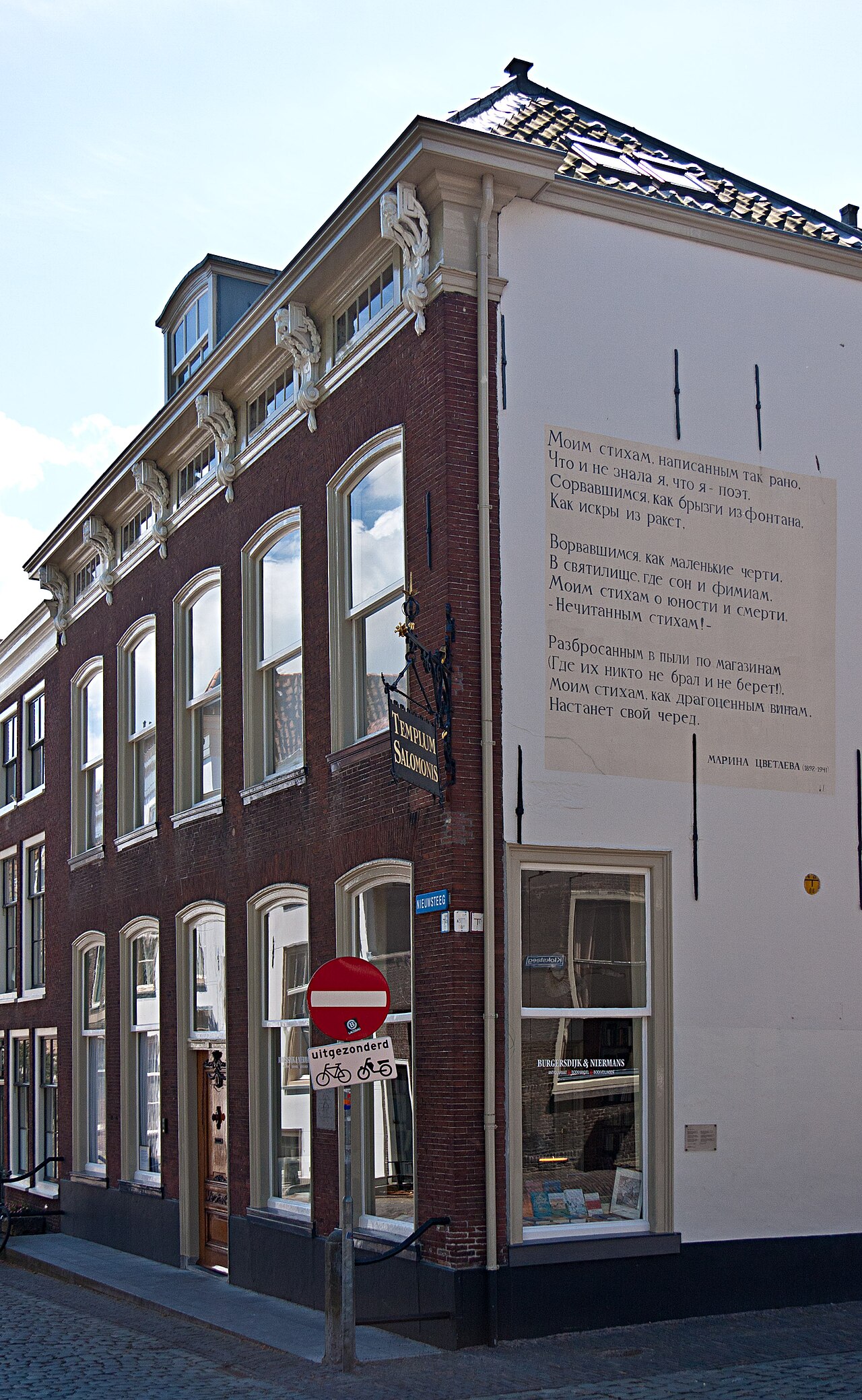 A wall poem on a Leiden house. Image: David Eppstein, CC BY-SA 3.0, via Wikimedia Commons.
Where to see it today: walk the old town and look up. Start with Tsvetaeva's poem at Nieuwsteeg 1.
How to See Bright Leiden
A self-guided walk, about 4 km. Start at the windmill De Valk and Rembrandt's birthplace stone in the Weddesteeg. Walk along the Rapenburg past the Rijksmuseum van Oudheden, the SieboldHuis and the Academiegebouw with the 1940 lectern, into the Hortus Botanicus. Continue to the Pieterskerk and the Pilgrim Museum, then the Rijksmuseum Boerhaave and the Van der Werffpark, finishing at Museum De Lakenhal. Look for wall poems and hofje gates all the way.
 The windmill De Valk on the old city walls. Image: C messier, CC BY-SA 4.0, via Wikimedia Commons.
Further afield:
- The Spinozahuis in Rijnsburg.
- The St Annahofje and the courtyard route.
Dates to know:
- 3 October: Leidens Ontzet, the relief of the siege.
- 26 November: the Cleveringa lecture.
- Spring: the tulips in the Hortus.


_na_de_Leidse_buskruitramp,_1807,_RP-P-1944-1919.jpg)


