





- Where
- Diever, Drenthe
- Directions
- Directions
Drenthe, in the north-east of the Netherlands, is the country's home of the hunebedden, the megalithic tombs left by the earliest farming communities. Most of the surviving examples in the Netherlands lie in this province, and they are numbered in a catalogue, which is why a monument can carry a name such as D52. The one in Diever lies near the village, on the edge of the wooded landscape of West Drenthe. It belongs to a family of monuments that are among the oldest man-made structures in the country.
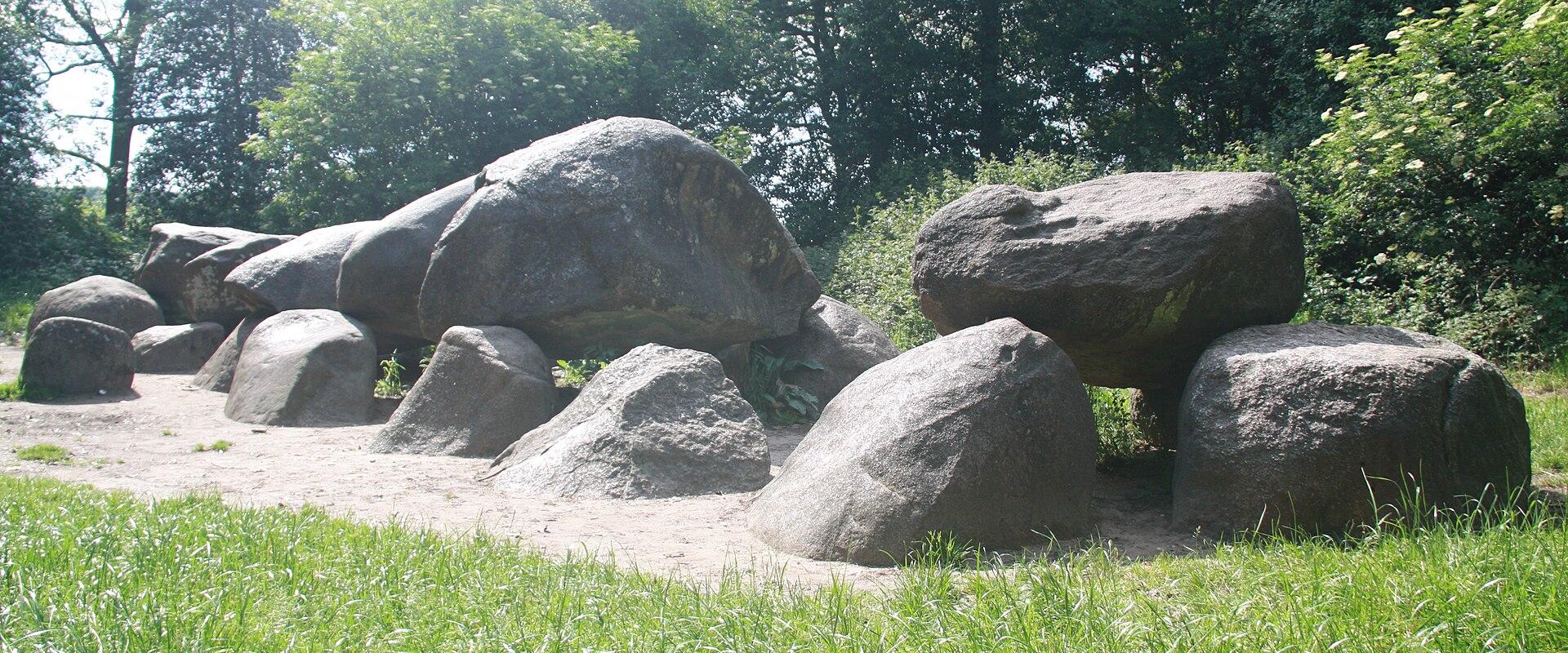
Hunebedden were built roughly five thousand years ago by the people of the Funnelbeaker culture, who farmed, kept animals and buried their dead in communal tombs. The builders used large boulders of granite and other rock, which had been carried to the region from Scandinavia by ice sheets in an earlier glacial period and left scattered across the landscape when the ice melted. Capstones were laid on top of upright stones to make a chamber, which was covered by a mound of earth that has since mostly disappeared. How the builders moved and lifted such weights is still debated.
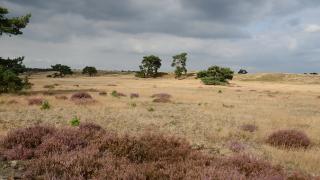
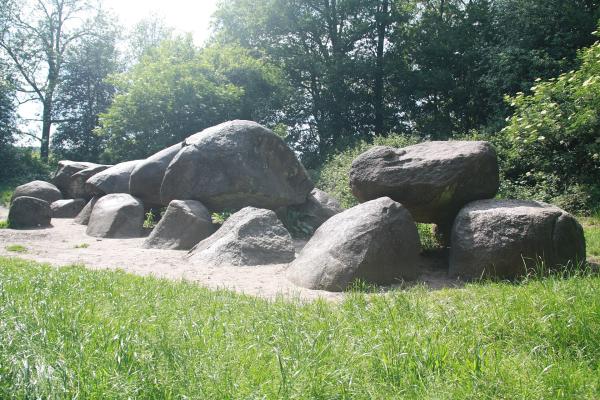
What visitors see today is the bare skeleton of the tomb, a row of heavy stones with huge capstones resting on them, standing in a clearing. Information boards beside the monument explain how it was built, who built it and what it was used for, and a protective barrier keeps people from climbing on the stones. The site is free to see and is generally accessible at any time, and the surroundings of pine and birch woodland, with heather, add to the sense of age.
Diever has a good deal to add to a visit. The OERmuseum West-Drenthe tells the story of the region's prehistory and nature, and the village itself, with its tree-lined streets, is a pleasant stop. The surrounding heathland and forest, including the Dwingelderveld and the Drents-Friese Wold, are criss-crossed by walking and cycling routes, and hunebed visits are often part of a longer cycle tour.
The monument suits families, history lovers and anyone who likes quiet outdoor sights. A visit takes only a few minutes, but its context rewards a slower approach, ideally combined with a walk in the woods. Take care on any wet ground near the stones, and keep to the paths.
Categories
More photos coming soon
Nearby Attractions
Other places to visit in Diever

Questions people ask
Quick Facts
Best Time to Visit
Visit between April and September for mild weather, blooming heather, and optimal conditions for outdoor exploration.