Zeeland, the southwestern corner of the Netherlands, is a province of former islands and peninsulas held together by dikes, dams and bridges. It is flat, well signposted and quiet outside the summer beach season, which makes it one of the best regions in the country for riding alone. The scenery is the story of the Dutch fight with the sea: you cycle along the dikes that protect the land and over the dams built after the North Sea flood of 1953.
Why Zeeland Works for Solo Cyclists
- Navigation is simple. Like the rest of the Netherlands, Zeeland has a dense network of numbered cycling junctions (knooppunten). You note a list of numbers, follow the green-and-white signs, and rarely need to look at a phone.
- The cycle paths are separated from traffic on most main routes, including across the large dams.
- Distances are manageable. Towns, ferries and train stations are spread evenly, so you can plan days of almost any length and bail out to a train at Vlissingen, Middelburg, Goes or other stations on the line to Roosendaal.
- It is calm. Outside July and August, many dike paths see few other riders, which suits people who enjoy riding at their own pace.
The Delta Works by Bike
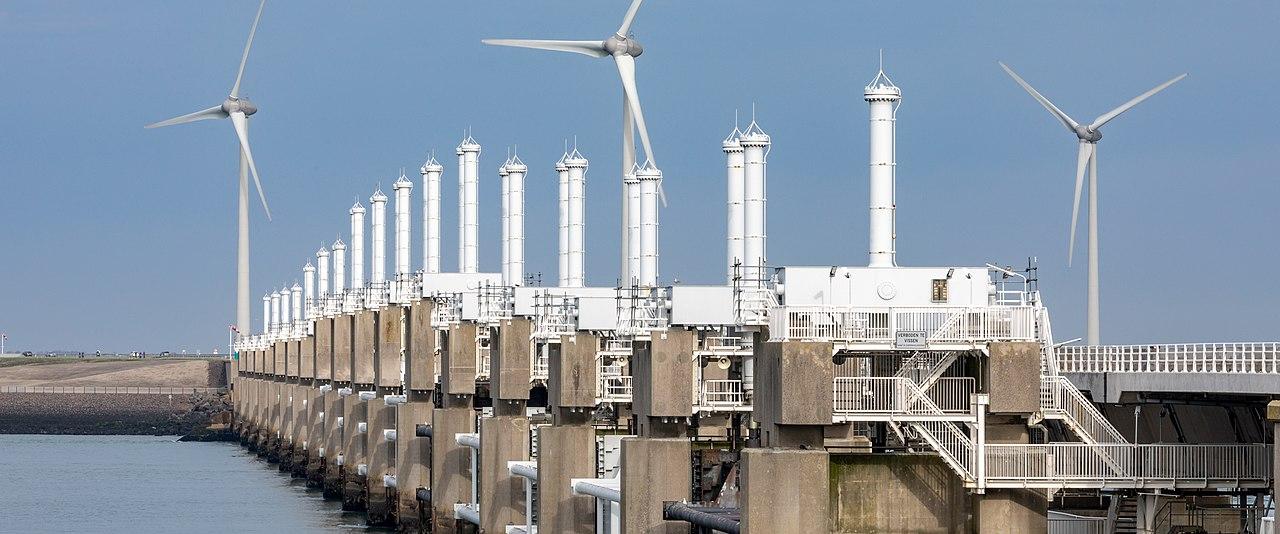
After the 1953 flood, which killed more than 1,800 people in the Netherlands, the government built the Delta Works: a chain of dams, sluices and storm surge barriers that shortened the coastline and closed or controlled the sea inlets. Several of them carry cycle paths.
- The Oosterscheldekering, the largest structure, is a storm surge barrier about 9 km long between Schouwen-Duiveland and Noord-Beveland. Its gates stay open in normal conditions so the tides keep the Oosterschelde estuary alive, and close only in severe storms. Cycling across it is one of the highlights of the region.
- Neeltje Jans, an artificial island in the middle of the barrier, has a visitor park with exhibits about the Delta Works.
- The Brouwersdam and the Veerse Gatdam are other dams with cycle routes, the Brouwersdam being popular with kitesurfers.
For the human side of the story, the Watersnoodmuseum in Ouwerkerk is housed in caissons that were used to close the dike breaches in 1953.
Riding the Dikes
Dikes are the defining feature of a Zeeland ride, but not every dike top is a cycle path. Many sea dikes are grazed by sheep and closed to bikes, with the cycle path running along the inland foot or on a parallel road. Where you can ride on top, you get views over the water on one side and the polders on the other. Expect cattle grids and gates, and close any gate you open.
The Zeelandbrug, a bridge of about 5 km across the Oosterschelde between Schouwen-Duiveland and Noord-Beveland, has a cycle path and gives another long crossing over open water.
Wind: The Real Hill of Zeeland
There are no climbs, but the wind makes up for it. Zeeland is exposed to the North Sea, and on the dams and dikes there is no shelter at all. The prevailing wind in the Netherlands is from the southwest, though it varies day to day.
- Check the forecast each morning and plan the day so the hardest headwind comes early, when you are fresh, with a tailwind home.
- On the dams, a strong crosswind can push a bike sideways. Hold your line and avoid riding close to the edge.
- An e-bike makes Zeeland much easier if you are not used to riding into wind for hours. Plenty of rental shops in the main towns offer them.
Towns Worth Stopping In
- Middelburg, the provincial capital, has a large abbey complex and a well-preserved historic centre.
- Veere, a small former trading town on the Veerse Meer, has a harbour and a large Gothic church.
- Zierikzee, on Schouwen-Duiveland, is a historic harbour town with old city gates.
- Vlissingen sits on the Westerschelde, where large ships pass close to the boulevard.
Ferries and Logistics
- The fast ferry between Vlissingen and Breskens carries foot passengers and cyclists across the Westerschelde to Zeeuws-Vlaanderen, the strip of Zeeland bordering Belgium. Check the current timetable and bike fares on the operator's site.
- Trains run from the Randstad to Vlissingen via Goes and Middelburg. Bikes can be taken on Dutch trains with a bike day ticket outside rush hours; check the current NS rules.
- Accommodation ranges from campsites to small hotels and B&Bs. In summer, beach towns fill up, so book ahead.
Solo Safety Basics
- Carry a basic repair kit and a spare tube; distances between bike shops can be long on the dams.
- Take water and food for the dam crossings, where there are few facilities.
- Share your route with someone at home on longer days, and keep your phone charged for navigation and emergencies (112).
- Use lights after dark, as required by law, and avoid the dams in storm warnings.