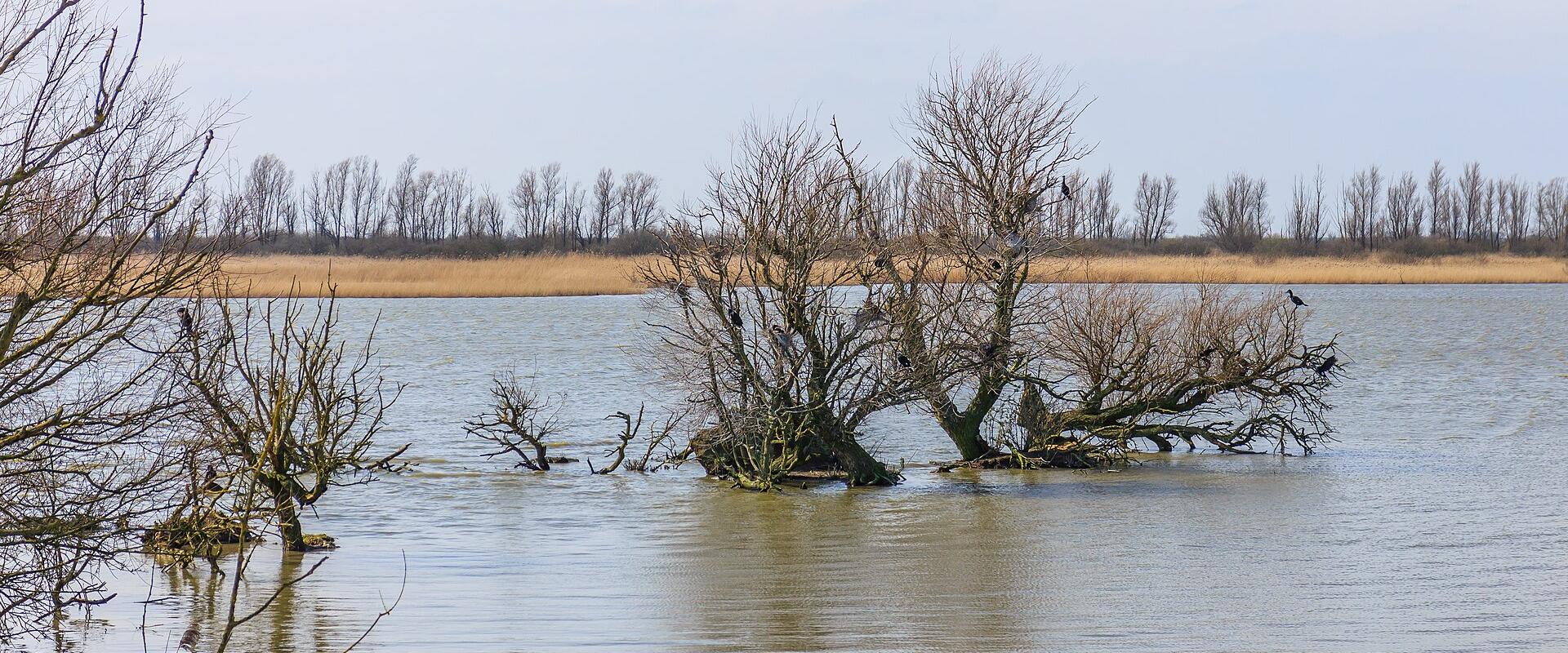
The Oostvaardersplassen lies in Flevoland, between the cities of Almere and Lelystad, and is a remarkable example of how the Netherlands handles land and water. The reserve of about 56 square kilometres arose almost by accident. The land was drained in the 1960s as part of the Flevopolder reclamation project, and it was meant for industry, but it stayed wet and was left alone, and birds and other wildlife moved in. It was designated a nature reserve in 1989. Over the decades it has become a pioneering example of rewilding, where limited human intervention has let natural processes shape the landscape. The reserve has also been the subject of public debate over how to manage its large grazing animals, a discussion that is part of its story.
The reserve has two main zones: a wet area of reed beds, marshes and shallow lakes, and a drier area of grassland and willow thickets. This mix of habitats supports a wide range of wildlife. The Oostvaardersplassen is internationally known for its birds and is a stopover and breeding place for migratory species such as spoonbills, white-tailed eagles, greylag geese and cormorants. The open grassland is home to large grazing animals, including herds of Konik horses, red deer and Heck cattle, which keep the landscape open by grazing.
Visitors can explore a network of walking and cycling routes that run through and around the reserve, with access to observation hides and viewpoints. The De Oostvaarders Nature Experience Centre near Almere is a good starting point, with interactive exhibits, guided tours and a cafe with wide views over the wetlands. Birdwatching is good all year, and the spring and autumn migration seasons bring thousands of birds. Wildlife safaris and ranger-led excursions give a deeper insight into the ecology and management of the reserve. Many routes are on flat paths and suitable for families.
The reserve is also part of Nieuw Land National Park, which brings together several nature areas in Flevoland, among them the Lepelaarplassen and the Marker Wadden. Together these places show the relationship of the province with water and its commitment to conservation. Nearby attractions include the city of Lelystad, the Bataviawerf shipyard, where a replica of a Dutch East India Company ship was built, and the shore of the Markermeer, which make the reserve a good base for exploring Flevoland’s natural and cultural heritage.
Getting to the Oostvaardersplassen is straightforward. The reserve is easy to reach by train from Amsterdam to Almere or Lelystad, followed by local buses or cycling routes to the main entrances. There is ample parking for those who come by car, and the visitor centres provide maps, information and facilities.
Seasonal advice is useful when planning a trip. The best time to visit is from late spring to early autumn, from May to September, when temperatures are mild, wildlife is most active and the landscape is green. Spring brings nesting birds and wildflowers, while autumn offers fine migration spectacles. Winter can be stark and cold, but the reserve’s quiet beauty and the chance to see large animals in the open appeal to dedicated nature lovers.
In short, the Oostvaardersplassen is a remarkable place for anyone interested in wildlife, ecology and natural processes. Its large open landscapes, rich animal life and unusual conservation history make it one of the Netherlands’ most distinctive nature destinations, and a good day out from Amsterdam.
Best time to visit
Late spring to early autumn (May–September) offers mild weather, lush landscapes, and peak wildlife activity, especially for birdwatching and outdoor exploration.
What to see in Oostvaardersplassen
Our picks first.

Oostvaardersplassen by interest
The same sights, grouped by what you came for.
Did you know?
Checked facts about Oostvaardersplassen, each with its source.
-
Film & TV
First Film Permitted in the Reserve
The production company EMS was the first to receive permission from the land manager, Staatsbosbeheer, to film within the Oostvaarderspassen nature reserve, a milestone that allowed the documentary 'De Nieuwe Wildernis' to be created.
Source: nl.wikipedia.org
Planning a visit to Oostvaardersplassen
Good to know
- Currency
- EUR
- Language
- Dutch