
Why Utrecht Instead of, or as Well as, Amsterdam
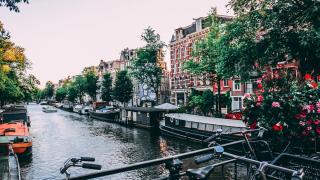
Utrecht is under half an hour from Amsterdam Centraal by direct train, yet it feels very different. Its old centre is smaller, and although it is busy with students and shoppers, it sees far fewer tourists than Amsterdam's canal belt. The canals themselves are also built differently: instead of houses rising straight from the water, the Oudegracht has a second street at water level, with medieval cellars opening onto it.
Utrecht is also older. A Roman fort stood here from around the middle of the first century AD, and the town received its city rights in 1122, long before Amsterdam grew into a major city.
The Oudegracht: Two Levels
The Oudegracht runs north to south through the old centre. It was dug in the 12th century, and from the 13th century wharves (werven) were built along the water as a lower street. Later, cellars were dug under the upper street to connect the canal houses with the wharf, so merchants could move goods directly from boats into storage.
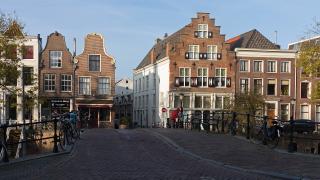
Today the result is two levels to explore. At street level you have shops, bridges and views down onto the water. Steps at many bridges lead down to the wharf, where the old cellars now house restaurants, cafés and bars, many with terraces right at the water's edge. In summer these terraces are one of the city's favourite places to sit.
The Nieuwegracht and Quieter Corners
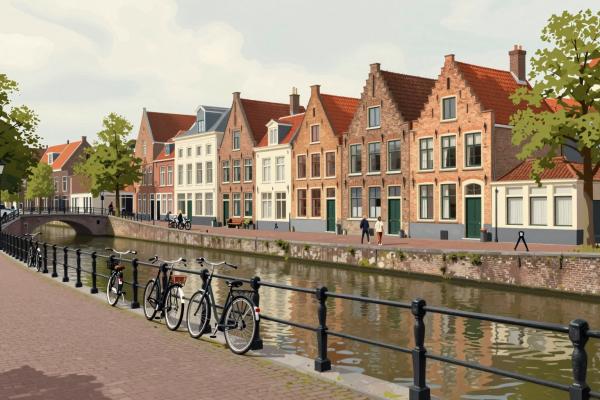
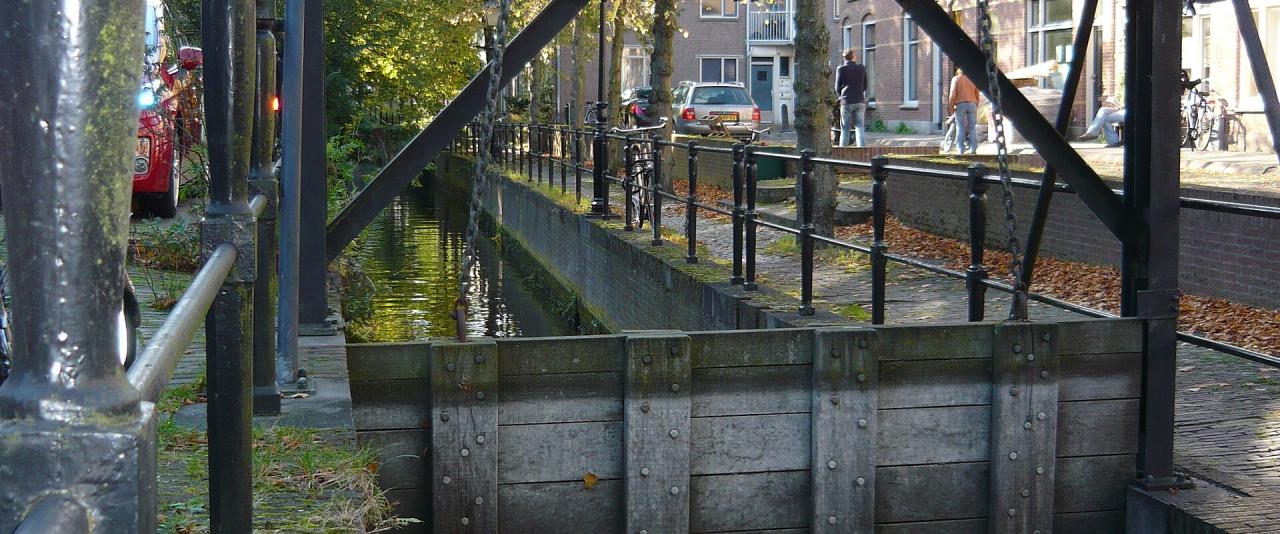
For a calmer walk, cross to the Nieuwegracht, east of the Oudegracht. It is narrower, lined with trees and mostly residential, with lower wharves and fine canal houses. The nearby Kromme Nieuwegracht and the streets around the Pieterskerk and Janskerk are among the quietest parts of the old town.
The Drift and Plompetorengracht in the north of the centre are also worth a detour, with canal houses and fewer crowds.
The Dom Tower and Domplein
The Dom Tower is the tallest church tower in the Netherlands, at about 112 metres. It can only be climbed on a guided tour, which takes about an hour and covers all 465 steps; tickets are sold online and at the tourist information centre on Domplein. The view shows the line of the Oudegracht through the old town and, on clear days, far across the surrounding countryside. The climb is steep and narrow and not suitable for people with limited mobility.
On the square, the gap between the tower and the remaining part of the cathedral marks where the nave collapsed in a storm in 1674. Below the square, DOMunder offers tours past archaeological remains of the Roman fort and the medieval cathedral.
Seeing the Canals From the Water
Canal boat tours on the Oudegracht give the best view of the wharf cellars and the height difference between water and street, and are a good option on a rainy day. Departures are from the city centre; schedules vary by season, so check ahead.
Museums Along the Way
- Centraal Museum: Art and design, including a large collection of work by Gerrit Rietveld.
- Miffy Museum (Nijntje Museum): Dedicated to Dick Bruna's rabbit, aimed at young children.
- Museum Speelklok: Mechanical musical instruments in a medieval church.
- Rietveld Schröder House: A UNESCO-listed modernist house from 1924, a short bike ride from the centre; visits must be booked in advance.
Planning a Day Trip
- Getting there: Direct trains from Amsterdam Centraal take under 30 minutes and run frequently. Utrecht Centraal is a short walk from the Oudegracht via the Hoog Catharijne shopping centre.
- Timing: Weekday mornings are calmest. The wharf terraces are busiest on warm evenings and weekends.
- Getting around: The old centre is easily walkable. Bikes are an option, but traffic is heavy around the station.
- Eating: Try at least one meal or drink on the wharf. Book on summer weekends.
- Combine: With a full day, pair the Oudegracht and Dom Tower in the morning with the Nieuwegracht, a museum or a canal boat in the afternoon.