Why Kinderdijk Works for Photography
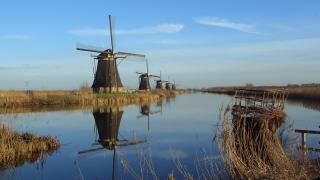
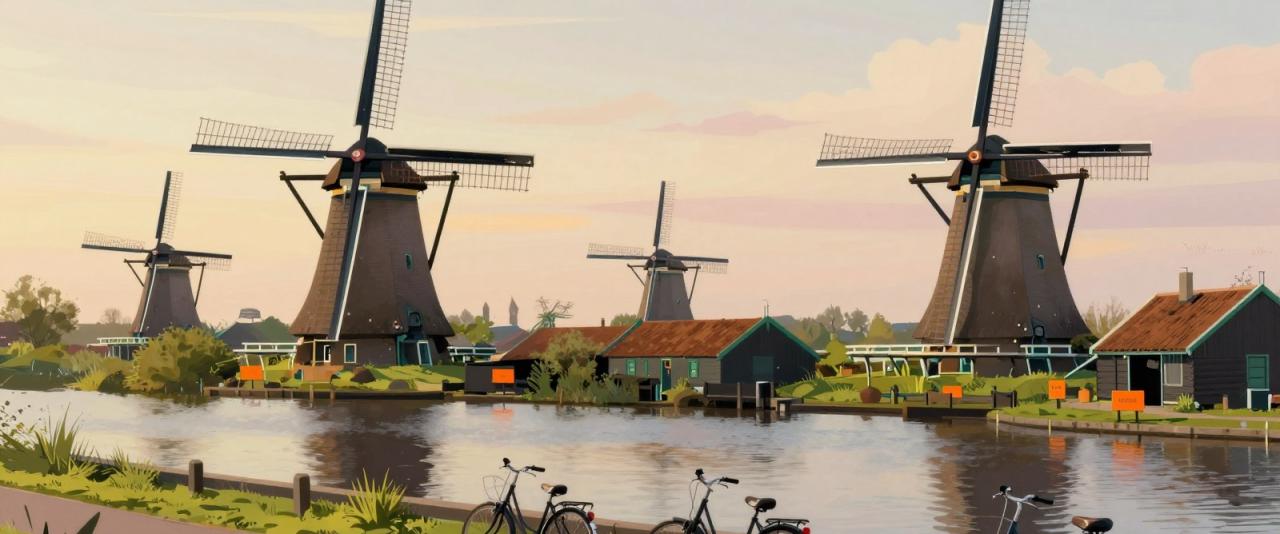
Kinderdijk, about 15 km east of Rotterdam in the Alblasserwaard polder, has the largest group of old windmills in the Netherlands. Nineteen mills were built around 1740 to pump water out of the low-lying polder into storage basins, from which it could be let into the river when the water level allowed. The site was inscribed as a UNESCO World Heritage Site in 1997. Two diesel pumping stations now do most of the work, but some mills still turn.
For photographers the appeal is simple: long rows of mills reflected in straight drainage channels, flat land and big skies. Early morning, when wind is often lower and the water calmer, gives the best chance of clean reflections.
Visitor Sites Versus the Mill Paths
It helps to understand what the paid ticket covers. Admission gives entry to the visitor locations: the museum mills that can be visited inside, the Wisboom pumping station, the film and exhibition and the tour boat. Children up to 3 go free and children aged 4 to 12 pay a reduced rate; buying online is about 10% cheaper than at the ticket office.
In 2026 the visitor locations open from 09:00 to 17:30 between 6 March and 1 November, and from 10:30 to 16:00 from 2 November to 31 December, closed on Christmas Day. The organisation states that visitor locations are not open after closing time.
The paths along the mills are used by walkers and cyclists outside these hours, and they are where most sunrise photographs are taken. Access rules and parking can change, so check the current situation on kinderdijk.nl before planning a pre-dawn visit, and respect any closures or private property signs.
Choosing a Season
Sunrise time changes the whole plan. In June the sun rises before 05:30 in the western Netherlands, which means a very early start. From mid-November into winter it rises after 08:00, so a sunrise shoot needs no very early alarm and can be followed by the visitor sites when they open.
Autumn and winter also bring mist over the polder on calm mornings, which suits the subject well. Spring and summer offer green grass and reeds along the channels, but more visitors later in the day. Frosty, still mornings in winter often give the clearest reflections.
Light and Composition
The classic view is down one of the long channels with mills on either side, using the water as a leading line. A short telephoto lens compresses the row and makes the mills look closer together; a wide lens gives more sky and reflection. Look for single mills against a clear horizon as well as the familiar groups.
Wind is the main enemy of reflections. Check the forecast the night before and aim for the first half-hour after sunrise, when the air is often stillest. A sunrise and sunset app helps you work out where the sun will appear relative to the rows you want to shoot, as the light falls differently on the different stretches.
Drones and Other Rules
Flying a drone at Kinderdijk is generally not allowed. Only professional pilots can apply for a permit, through the Haaglanden Environmental Service, and flying without permission can bring a fine of €410. Dogs are welcome on a leash, including on the tour boat. The mills are working buildings and some are lived in, so do not enter gardens or approach doors outside the visitor routes.
Getting There Early
By car, parking arrangements depend on the season. From 16 March to 1 November 2026, cars park at the transferium at Kabelbaan 1 in Alblasserdam, with a shuttle bus to Kinderdijk running daily from 09:00 to 18:00. Outside that period, parking is at the entrance at Nederwaard 1. Car parking costs €9.75 and requires an admission ticket. These hours do not suit a pre-dawn arrival in high season, so check current parking options before you rely on a car.
Cycling is the most flexible option. Good cycle paths lead to the entrance area, there is secure bicycle parking at the visitor centre, and bikes can be hired nearby, including at Tourist Information Kinderdijk. The WaterShuttle connects Rotterdam with Kinderdijk in about 30 minutes and allows bikes on board, though its first departures will not reach the mills by sunrise on summer mornings. Many photographers combine a dawn shoot with a visit to the museum mills when they open.