How a Factory Town Became a Design City
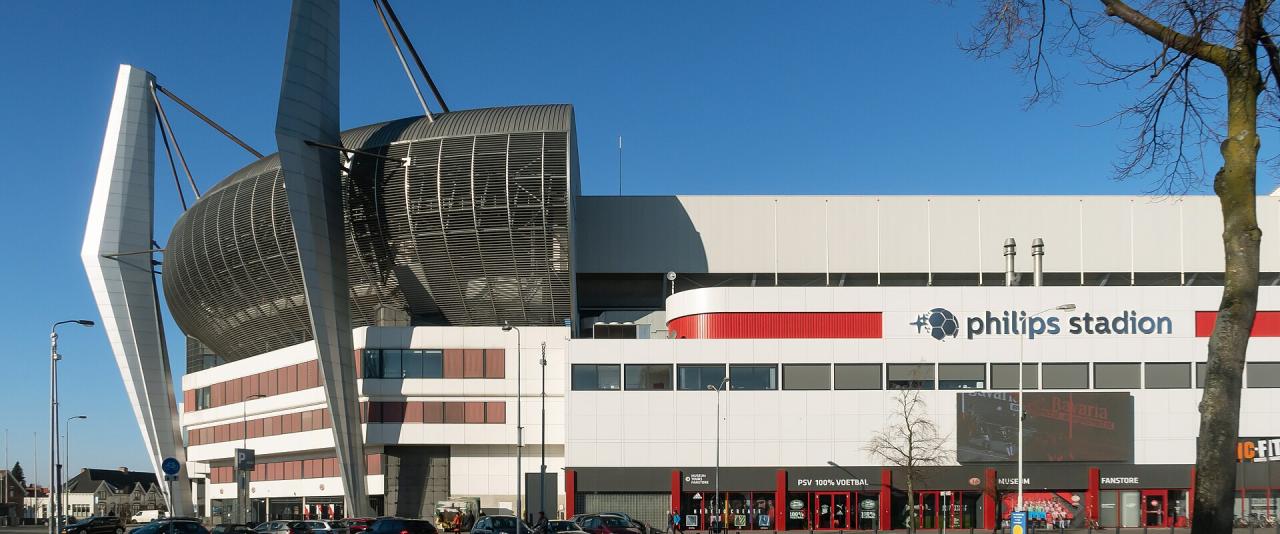
Eindhoven is the fifth-largest city in the Netherlands, with about 249,000 residents, and its modern history is tied to one company. Gerard and Anton Philips opened a light bulb factory here in 1891, and over the 20th century Philips grew into a global electronics firm that built whole districts of the city: factories, laboratories, worker housing and sports facilities, including the PSV football club and its Philips Stadion.
When Philips moved its headquarters to Amsterdam and sold off much of its Eindhoven property, the city reused those buildings for design schools, studios and tech companies. Today the region markets itself as Brainport, a cooperation between local government, industry and the Eindhoven University of Technology (TU/e). For visitors, this means design is not confined to a museum: it is in the reuse of the factories themselves.
Strijp-S: The Old Philips Complex
Strijp-S, west of the centre, is the place to start. Philips built its first factory here in 1916, and the site produced lamps, radios and televisions. The land was sold in 2002 and Philips had left completely by 2006. Since then the buildings have been converted under the motto "Old Buildings, New Ideas".
Key buildings:
- Klokgebouw: the former factory with a clock tower, now a large event venue and the hub of Dutch Design Week.
- Natlab: Philips' former physics research laboratory.
- Veemgebouw: a 1942 warehouse that once stored radios and televisions, now offices, lofts and the Vershal Het Veem food hall.
Strijp-S also has skate and bouldering facilities and a monthly market, the FeelGood Markt, on the third Sunday of the month. It has its own railway station, Eindhoven Strijp-S, one stop from Eindhoven Centraal.
Dutch Design Week
Dutch Design Week (DDW) is the largest design event in Northern Europe and the main reason many design-minded visitors come to Eindhoven. It runs for nine days around the last week of October and spreads across more than a hundred venues, with the Klokgebouw, Design Academy Eindhoven and the TU/e industrial design faculty among the main ones.
Expect graduate and student work alongside studio and industry projects, talks and a music programme at venues such as the Effenaar. Accommodation in Eindhoven fills quickly for that week, so book well in advance or stay in a nearby city with a direct train. Check the official DDW site for the year's dates, venues and ticket options, which change each edition.
GLOW and Other Events
GLOW is a light-art festival held each November, when installations are set along a walking route through the city centre and often in Strijp-S. It is a good fit for a city whose fortunes were built on the light bulb, and it is free to walk the route. Dates are announced on the festival's own site.
Museums and Buildings to See
- Van Abbemuseum: Eindhoven's museum of modern and contemporary art, with works by Picasso, Kandinsky, Mondriaan and Chagall alongside a strong contemporary collection. It sits beside the Dommel river in the centre.
- Philips Museum: in the city centre, telling the company's story from the first light bulbs to modern medical technology.
- De Witte Dame: a former Philips lamp factory that now houses the public library and Design Academy Eindhoven, a short walk from the station.
- Evoluon: a flying-saucer-shaped building opened by Philips in 1966 as a science museum, now used as a conference centre. It is worth seeing from outside even if you cannot go in.
Planning a Visit
One day: start at the Van Abbemuseum, walk through the centre past De Witte Dame and the Philips Museum, then take the train or a bike to Strijp-S for the afternoon and dinner.
Two days: add the Evoluon exterior, the TU/e campus and a half-day trip to Nuenen, the village just outside Eindhoven where Vincent van Gogh lived from 1883 to 1885. The Van Gogh cycle route links the two.
Getting There and Around
Eindhoven Centraal has direct intercity trains from Amsterdam, Utrecht and Rotterdam; from Amsterdam the journey takes roughly an hour and a half. Eindhoven Airport, west of the city, has bus connections to the station.
The city is flat and compact, and cycling is the easiest way to move between the centre, Strijp-S and the outer districts. Rental bikes and OV-fiets public transport bikes are available at the station. Use the 9292 journey planner or the NS app for current train and bus times.