







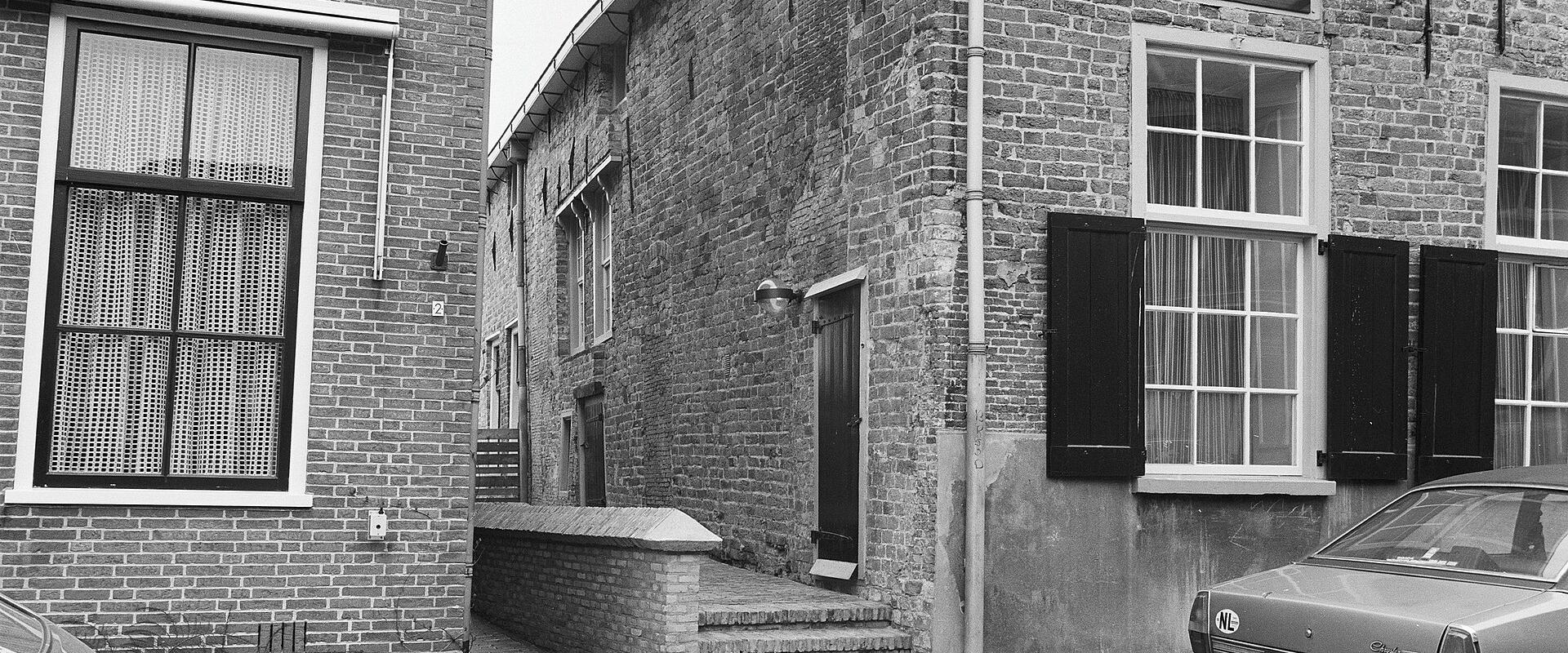
Historical walk along churches and monasteries
Historic churches and monasteries of Leeuwarden
- Where
- Leeuwarden, Friesland
- Directions
- Directions
Leeuwarden is the capital of Friesland, and its old centre is built on terpen, the artificial mounds that Frisians raised above the flood plain long before the dykes were built. The ground still rises gently in places, and a walk through the historic core follows those slight hills and the lanes around them. The churches and former monasteries of the town record centuries of religious life in a province that was Christian early, then Reformed, and always independent in spirit. A route linking them is an easy way to see the oldest parts of the city.
The Oldehove is the natural starting point. It is a tall brick tower, begun in the early sixteenth century as part of a planned great church, but the soft ground gave way beneath it and it began to lean, so the building work stopped. Today it is the most famous symbol of Leeuwarden, tilting visibly over its square, and it can be climbed in season for a view across the roofs and the flat Frisian countryside. Its unfinished form says a good deal about the ambition of the late medieval town and the problems of building on soft clay.
From there the walk leads towards the Grote or Jacobijnerkerk, a large Gothic church whose second name recalls the Jacobins, as the Dominican friars were known. Dominicans settled in the town in the Middle Ages, and a church and convent complex grew here, like those of other mendicant orders in Leeuwarden. After the Reformation, the church was taken over by the Reformed community and now serves a Protestant congregation. Its spacious, light interior and its organ are worth seeing, and concerts are held in it. The Waalse Kerk, built for the French-speaking Walloon community that settled here, and the Doopsgezinde Kerk, the Mennonite church, show how a tolerant trading town accommodated different faiths, each with its own architecture and history.
Of the former monasteries little remains in its original form, since many were closed at the Reformation and converted to other uses. Their traces can still be found in the street names, in courtyards and walls, and in the layout of blocks that once belonged to religious houses. Information plaques and guided walks explain the details, and local tourist information offers maps.
The walk is short, about an hour, and combines easily with the canals, the Fries Museum and the shopping streets. It suits history and architecture lovers and anyone curious about the origins of the Frisian capital. Check opening times for church interiors, as many are open only on certain days or for services.
Categories
More photos coming soon
Nearby Attractions
Other places to visit in Leeuwarden

AquaZoo
Zoo with 70+ species, dinosaurs, and water play
Zoos & Aquariums

Charming shopping streets
Historic canalside streets with boutique shops
Urban Exploration · Local Markets

City canals
Historic canals weaving through Leeuwarden cityscape
Coastal & Maritime · Urban Exploration

Fries Landbouwmuseum (Frisian Agricultural Museum)
Traditional Frisian farming heritage and rural life
Cultural Experiences · History & Heritage
Questions people ask
Quick Facts
Best Time to Visit
Late June to late August offers warm weather, lively festivals, and ideal conditions for exploring Leeuwarden’s canals, museums, and outdoor attractions.