A City of Museums and Contrasts
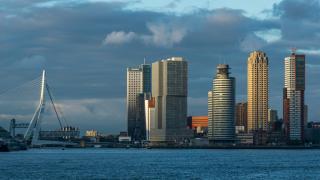
The Hague combines a medieval government quarter, aristocratic 17th- and 18th-century streets, and a modern skyline of offices and high-rise buildings around the central station. Its museums are among the best in the country, and several of them sit within a few minutes' walk of each other. This guide covers the essential art collections and the buildings worth seeing, with a suggested route at the end.
The Mauritshuis: Golden Age Masterpieces
The Mauritshuis is a 17th-century palace on the Hofvijver, built for Johan Maurits of Nassau-Siegen, and now home to one of the finest small collections of Dutch Golden Age painting. Its best-known works include Vermeer's Girl with a Pearl Earring and View of Delft, Carel Fabritius's The Goldfinch and Rembrandt's The Anatomy Lesson of Dr Nicolaes Tulp. The museum is compact enough to see properly in two hours. Book a timed ticket online in busy periods.
The Binnenhof and Ridderzaal
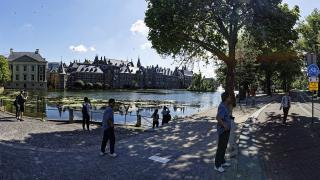
Right beside the Mauritshuis stands the Binnenhof, the seat of Dutch politics, centred on the 13th-century Gothic Ridderzaal. The complex is closed for a large-scale renovation expected to last until 2031, so you can only see it from outside. The view across the Hofvijver remains the city's classic postcard image.
Kunstmuseum Den Haag: Mondrian and Modern Art
The Kunstmuseum Den Haag is housed in a building by the architect H.P. Berlage, completed in 1935, with brick facades, long galleries and a reflecting pond. It has the world's largest collection of works by Piet Mondrian, tracing his development from Hague School landscapes to abstraction and ending with his last work, Victory Boogie Woogie. The museum also holds modern art, decorative arts and fashion. The Fotomuseum Den Haag is on the same site.
Escher, Mesdag and the Hague School
Escher in Het Paleis occupies the former winter palace of Queen Emma on the Lange Voorhout and shows prints and drawings by M.C. Escher, including his famous impossible staircases and tessellations, plus interactive optical illusions. It is open Tuesday to Sunday. Its café has been closed since January 2026, and the city has plans for a new museum building on the Lange Voorhout in the longer term.
Panorama Mesdag, painted in 1881 by Hendrik Willem Mesdag and others, is a huge circular painting of the sea, dunes and fishing village of Scheveningen. You view it from a raised platform with real sand in the foreground, and the effect of standing in the 19th-century landscape is remarkable. Mesdag was a leading painter of the Hague School, whose grey, atmospheric landscapes and seascapes you can see at The Mesdag Collection, his former home museum, and at the Kunstmuseum.
Buildings Worth Seeing
- Peace Palace (1913). Built with funding from Andrew Carnegie to house international arbitration, the neo-Renaissance building now hosts the International Court of Justice. The visitor centre is free; interior tours are limited and must be booked online.
- Gevangenpoort. A medieval gatehouse on the Buitenhof, used as a prison from 1428 and now a museum of crime and punishment.
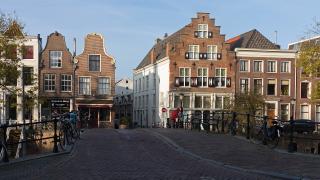
- Lange Voorhout. A tree-lined avenue of 18th-century mansions and embassies, one of the most elegant streets in the Netherlands.
- City Hall (Stadhuis). Designed by Richard Meier and completed in 1995, the white building around a vast glass-roofed atrium earned the nickname "the Ice Palace". The atrium is accessible during opening hours.
- Amare. The performing arts centre on Spuiplein, completed in the early 2020s, houses the Nederlands Dans Theater, the Residentie Orkest and the Royal Conservatoire under one roof. Its curved facade is meant to evoke stage curtains.
A One-Day Route
Start at the Mauritshuis when it opens, then walk around the Hofvijver to the Buitenhof and the Gevangenpoort. Continue along the Lange Voorhout to Escher in Het Paleis. After lunch, take a tram or walk about 20 minutes to Panorama Mesdag, then on to the Peace Palace for the visitor centre. Finish at the Kunstmuseum, which is a short tram ride away and best left for a full afternoon if you are a Mondrian fan. End the day with a look at the City Hall atrium and Amare near the Spui.
Most museums accept the Museumkaart, and many close on Mondays, so check opening days before you go.