Why the Jordaan Works in the Evening
The Jordaan is the neighbourhood on the western side of Amsterdam's canal ring, bounded by the Prinsengracht to the east, the Brouwersgracht to the north, the Leidsegracht to the south and the Lijnbaansgracht/Singelgracht to the west. It was laid out from 1612 as housing for workers and craftspeople, and its streets follow old ditches and field paths, which is why they run at an angle to the grand canals next door.
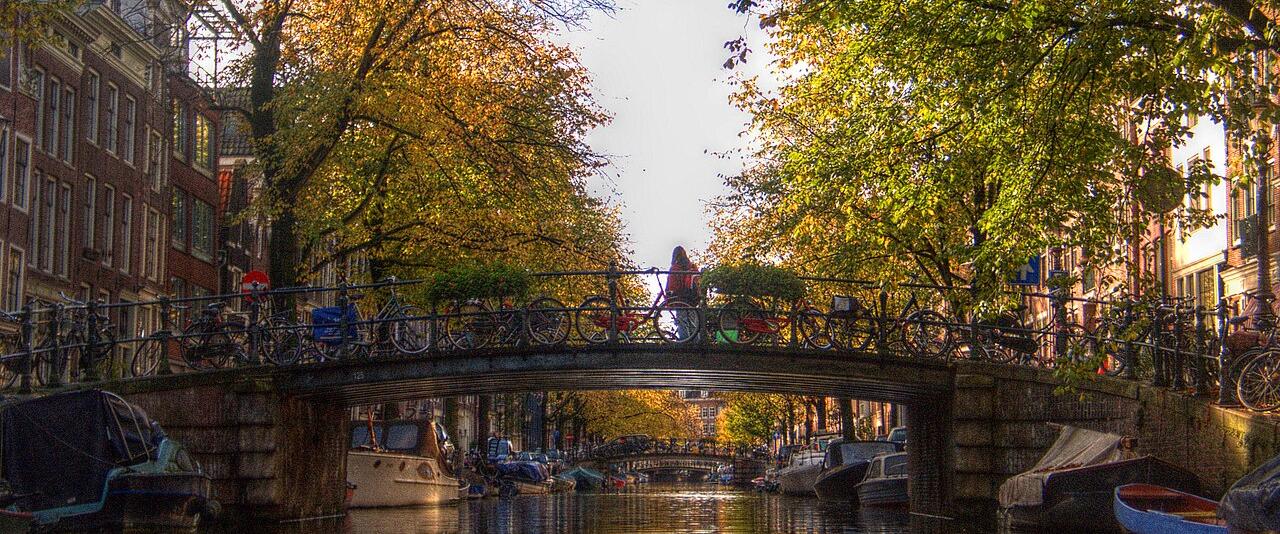
That history explains its character after dark. The houses are smaller, the side canals are narrower, and most streets carry little through traffic. Once the day visitors drift back towards Dam Square and the shops close, the Jordaan becomes a residential area with a lot of small restaurants and cafés, which is exactly what most couples want from an evening walk.
When to Go
Aim to arrive about an hour before sunset. In June that means around 21:00; in December the light is gone before 17:00. A late-afternoon start gives you the canals in daylight, dusk on the water and the lit windows of the canal houses afterwards.
Weekday evenings are noticeably calmer than Friday and Saturday. Saturday daytime is busy because of the markets (see below), so if you want quiet streets, come on a Sunday to Thursday evening.
A Suggested Route
This loop is about 3 km and takes 1.5 to 2 hours at an easy pace with stops.
- Westerkerk. Start at the church on the corner of the Prinsengracht and Rozengracht, just outside the Jordaan. Rembrandt, who spent his last years on the Rozengracht, was buried here in an unmarked grave. The Anne Frank House is a few doors north on the Prinsengracht; tickets are sold online for fixed time slots and often sell out weeks ahead, so book early if you want to include it before dinner.
- Egelantiersgracht and Bloemgracht. Cross into the Jordaan and walk west along these two side canals. They are among the quietest and best preserved in the area, with gable stones above many doors showing the trade or family sign of earlier occupants.
- Westerstraat and Noordermarkt. Head north to the Westerstraat, a broad street that was once a canal, and on to the Noordermarkt square by the Noorderkerk. The February strike of 1941 against the deportation of Jews began with meetings on this square.
- Brouwersgracht. Finish along the Brouwersgracht at the northern edge, a wide canal lined with former warehouses and houseboats. It is a good stretch for the last light of the day and is close to several older cafés.
Hofjes: Look, but Quietly
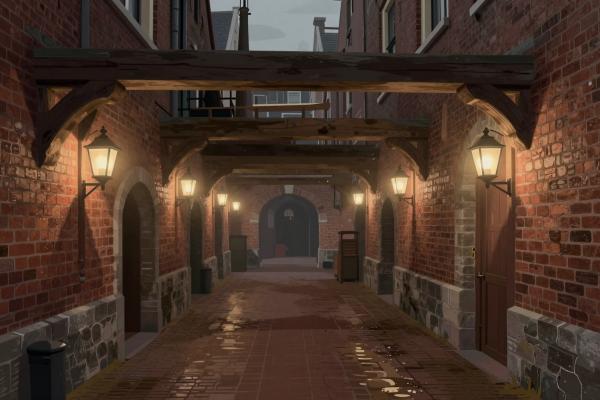
The Jordaan has the highest concentration of hofjes in Amsterdam. These almshouse courtyards were founded by wealthy citizens as housing for elderly women, and today they are homes to residents, often students, artists and older people. A few have gates that are open during the day; most are closed in the evening.
If you find an open entrance, step in quietly, keep voices low and do not photograph windows. In summer some hofjes host free Sunday concerts, known as hofjesconcerten, which are a better way to see the inside of one than trying a gate at night.
Dinner and Drinks
The Jordaan has a dense mix of small restaurants, from Dutch and Indonesian to Italian and modern European, many with only a dozen or so tables. Reserving is sensible for any evening, and close to essential on Friday and Saturday. Kitchens in the Netherlands often take last orders earlier than in southern Europe, commonly around 21:30 to 22:00, so do not leave dinner too late.
For a drink afterwards, look for the brown cafés (bruine kroegen): traditional pubs named for their tobacco-darkened wood interiors. Several on the canal corners have operated for a very long time. They are informal places where you order at the bar, and in good weather tables spill onto the quayside.
Markets if You Arrive Earlier
If you visit on a Saturday, come earlier and fold a market into the day. The Noordermarkt hosts a farmers' market on Saturdays and a flea market on Monday mornings, and the Lindengracht has a large general street market on Saturdays. The Westerstraat hosts a textile and general market on Monday mornings. These close in the afternoon, so they belong to the start of a day rather than the evening itself.
Practical Notes
- Getting there: From Amsterdam Centraal it is about a 15-minute walk west to the Brouwersgracht. Trams run along the Rozengracht to the Westermarkt stop by the Westerkerk.
- Bikes: Locals cycle through the area in large numbers. Walk on the pavement, not the cycle lanes, and look both ways at every crossing.
- Noise: This is a residential neighbourhood with strict expectations about noise late at night. Keep conversations down on the bridges and quaysides after about 22:00.
- Footwear: Streets are brick and cobblestone, and kerbs along the canals have no railings. Flat shoes are the better choice.
- Music: The Jordaan has a long tradition of sentimental Dutch song. The Jordaanfestival celebrates it each year, and statues of local singers stand at the corner of the Prinsengracht and Elandsgracht.