Why Cycling Is the Best Way to Get Around
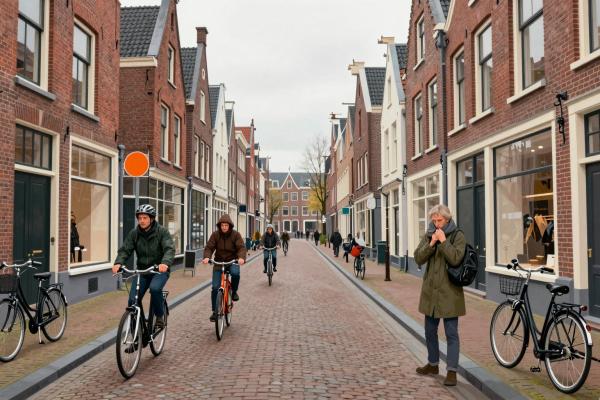
In most Dutch cities, a bike is quicker than a bus or a car for short trips. Bike paths are separated from traffic, traffic lights have their own cycle phases, and there is parking at every station. Groningen is one of the clearest examples: since a traffic plan introduced in 1977, its centre has been divided into sectors that cars cannot drive directly between, while cyclists and pedestrians can cross freely. The result is a city centre where bikes clearly dominate.
For visitors, the challenge is not the infrastructure but the pace and the unwritten rules. Locals ride fast and expect others to be predictable. This guide covers what you need to know before you set off.
Renting a Bike
Rental shops are found in every city, usually near the main station. In Groningen, for example, Fietsverhuur Groningen is a few minutes' walk from the central station, and there are several others in the centre. Expect:
- A standard city bike (upright, often with a basket or rack). Many have a coaster brake, meaning you brake by pedalling backwards. If you are not used to this, ask for a bike with hand brakes.
- E-bikes for longer rides or windy days, at a higher daily rate.
- ID and a deposit. Most shops ask for identification and a credit card or cash deposit.
- Locks included. Make sure you get a key for the frame lock and, ideally, a chain lock as well.
Day prices for a standard bike typically sit in the range of about 10 to 20 euros, with discounts for longer rentals. The OV-fiets bikes at railway stations are designed for residents and require a Dutch public transport card linked to a Dutch bank account, so most tourists use commercial rental shops.
The Legal Essentials
Dutch law sets some basic requirements for every bike and rider:
- Lights. When it is dark or visibility is poor, you need a white or yellow front light and a red rear light. Riding without lights is one of the most common reasons for a fine.
- Reflectors and a bell. Bikes must have reflectors and a working bell, and working brakes.
- No phone in your hand. Since 1 July 2019 it has been illegal to hold a phone while cycling. A phone in a handlebar mount for navigation is allowed.
- Alcohol. Cyclists are subject to the same alcohol limits as drivers.
- Helmets are not required for ordinary bikes, and few Dutch adults wear them, though you are free to. Fast speed pedelecs (up to 45 km/h) are a different category, with helmet and number-plate requirements.
Fines for these offences are substantial, and police do carry out checks, especially for lights in autumn and winter.
Rules of the Road
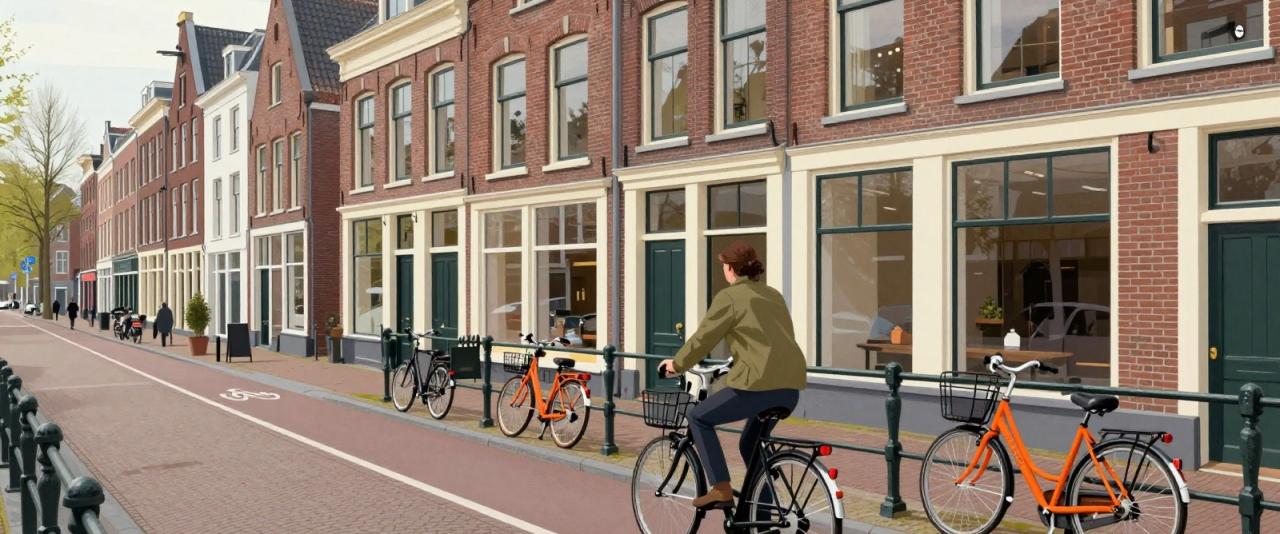
- Use the bike path. A round blue sign with a white bicycle means the path is mandatory. Paths are often surfaced in red asphalt.
- Keep right, overtake on the left, and ring your bell briefly before passing.
- Signal turns by holding out your arm in good time.
- Know who has priority. At junctions without signs, traffic coming from the right has priority. A row of white triangles ("shark's teeth") across your path means you must give way.
- Stop at red lights. Some junctions have separate cycle signals; obey them.
- Watch for tram rails. Cross them at a wide angle to avoid catching a wheel.
- On a fietsstraat (bike street), cars are allowed but are "guests" and must not overtake recklessly.
- Mopeds and scooters may share some paths, so expect faster traffic behind you.
Habits That Keep You Safe
- Do not stop suddenly in the middle of a path to check a map. Pull over to the side first.
- Ride at most two abreast, and go single file when someone wants to pass.
- Look over your shoulder before changing lanes or turning left; cyclists may be overtaking you.
- Pedestrians: as a visitor on foot, never walk on bike paths. This is the most common cause of near-misses involving tourists.
- Be extra careful in busy centres such as Amsterdam, where cyclists, scooters, pedestrians and trams share tight spaces.
Parking and Locking
Bike theft is common. Use both locks: the frame lock immobilises the back wheel, and a chain lock should attach the frame to a fixed rack or post. Park only in designated racks or bike garages. Big stations, including Groningen, Utrecht and Amsterdam Centraal, have large guarded or staffed bike parking facilities, often free for the first 24 hours. In busy areas, bikes left outside designated spots may be removed by the municipality, and retrieving them costs time and money.
Good First Rides
If you are nervous, start in a smaller city such as Groningen, Leiden or Delft rather than central Amsterdam. Ride outside rush hours, follow a local at a steady distance to learn the rhythm, and use the national junction network (knooppunten) for quiet routes into the countryside. From Groningen, an easy ride south leads to the Paterswoldsemeer lake.