
Do You Need Dutch at All?
Most people in the Netherlands speak English well, and in cities, hotels, museums and tourist areas you can get by entirely in English. Surveys regularly place the Dutch among the strongest non-native English speakers in the world.
Still, a few words of Dutch are useful. Signs, menus in smaller places, train announcements and supermarket labels are often in Dutch only, and a greeting or a thank-you in Dutch is noticed and appreciated. Do not be surprised if people reply in English as soon as they hear an accent; it is usually meant as helpfulness rather than a judgement.
Pronunciation Basics
Dutch spelling is fairly regular once you know a few sounds:
- g and ch: a throaty sound made at the back of the mouth, like the "ch" in Scottish "loch". Goedemorgen starts with this sound.
- ij and ei: roughly like the "ay" in "day" or the "i" in "bike", depending on the region.
- ui: no English equivalent; somewhere between "ow" and "oy". Practise with huis (house).
- oe: like "oo" in "food". Goed (good) sounds like "khoot".
- w: softer than English "w", close to a light "v".
- v: often close to an "f" sound, especially in the west.
Greetings and Courtesy
- Hallo - hello
- Hoi - hi (informal)
- Goedemorgen / goedemiddag / goedenavond - good morning / afternoon / evening
- Dag - hello or goodbye, a polite all-purpose word
- Doei - bye (informal)
- Dank je wel / Dank u wel - thank you (informal / formal)
- Alstublieft / Alsjeblieft - please, and also "here you are" when handing something over
- Sorry / Pardon - sorry / excuse me
- Ja / Nee - yes / no
- Spreekt u Engels? - do you speak English?
Use u (formal "you") with older people and in formal situations, and je with people your age or in casual settings. In practice the Dutch use the informal form widely.
Dutch conversation is often described as direct. People tend to say plainly what they think or need, and a short answer is rarely meant as rude. Small talk with strangers is brief, and when you enter a small shop or a café, a simple goedemorgen or hallo to the staff is normal and polite.
Cafés and Restaurants
- Mag ik de menukaart? - may I have the menu?
- Een koffie, alstublieft - a coffee, please
- Een biertje - a beer
- Water uit de kraan - tap water
- Mag ik afrekenen? - may I pay?
- Pinnen - to pay by debit card
- Lekker - tasty, nice; used for food and much else
- Proost - cheers
Many places in the Netherlands are card-only, signposted with "Wij pinnen alleen" or "Geen contant geld" (no cash). Contactless cards work almost everywhere, but some smaller businesses do not accept credit cards, so a debit card is useful.
Shops and Supermarkets
- Hoeveel kost dit? - how much does this cost?
- Ik kijk alleen even - I'm just looking
- Een tasje - a bag (shops charge for plastic bags)
- Aanbieding - special offer
- Open / Gesloten - open / closed
- Kassa - checkout
Numbers are worth learning if you shop at markets: een, twee, drie, vier, vijf (one to five), tien (ten), twintig (twenty), honderd (a hundred). Dutch reads compound numbers back to front, so vijfentwintig is literally "five-and-twenty" for 25. Prices are written with a comma, as in €2,50.
Trains, Buses and Directions
- Station - station
- Spoor - platform (track)
- Vertrek / Aankomst - departure / arrival
- Vertraging - delay
- Rijdt niet - cancelled (literally "is not running")
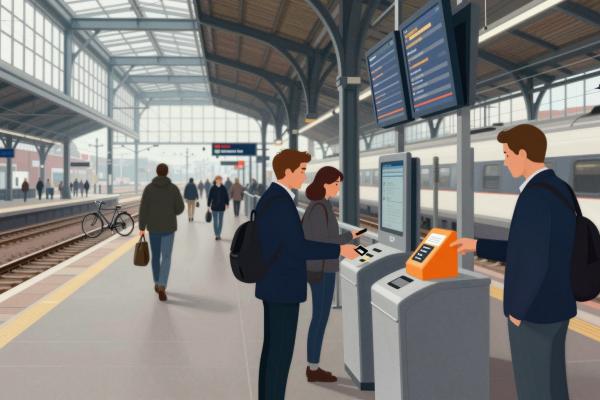
- Inchecken / Uitchecken - check in / check out with your card at the gate or reader
- Waar is...? - where is...?
- Links / Rechts / Rechtdoor - left / right / straight on
- Fietspad - cycle path (do not walk on it)
- Ingang / Uitgang - entrance / exit
Remember to check out at the end of a journey on trains, trams and buses; if you forget, the maximum fare may be charged.
Emergencies and Everyday Words
- Help! - help!
- Ik heb een dokter nodig - I need a doctor
- Apotheek - pharmacy
- Ziekenhuis - hospital
- Politie - police
The emergency number in the Netherlands, as across the EU, is 112.
A few more words you will hear everywhere:
- Gezellig - cosy, pleasant, sociable; the Dutch use it for places, evenings and company
- Even - "just" or "for a moment", softens requests: Mag ik even...?
- Prima - fine, OK
- Klopt - that's right
- Hè? - what? / pardon?
Learning dank je wel, alstublieft and gezellig will go further than a long phrasebook. Use them with a smile, and switch to English whenever it makes the conversation easier for both sides.