




The Short Version for Visitors
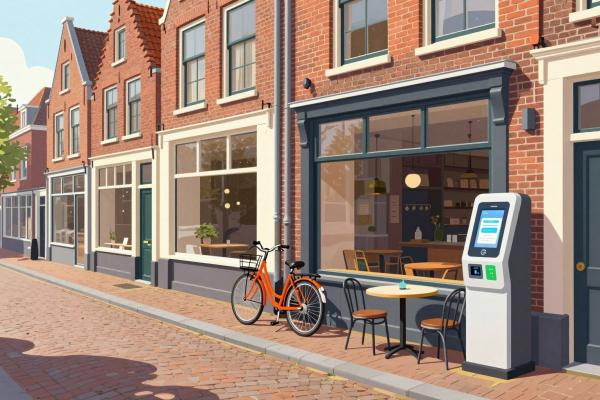
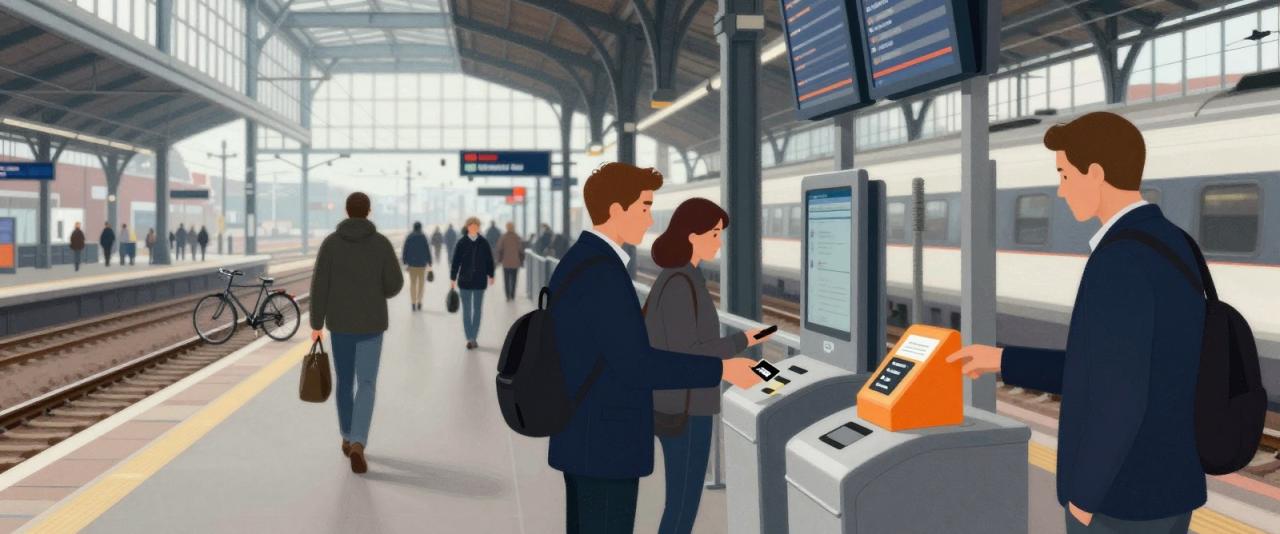
For most visitors, the simplest way to pay for public transport in the Netherlands is to tap a contactless bank card or phone at the card readers. This system, called OVpay, has worked on all trains, trams, metros and buses since 2023. You check in when you start a journey, check out when you finish, and the fare is charged to your card afterwards.
The older OV-chipkaart, the blue plastic travel card the country has used for nearly two decades, is being phased out. Its successor, the OV-pas, went on sale in late 2025, and the OV-chipkaart is due to stop working at the end of 2027. If you already have one, it remains valid until then.
Paying With OVpay
OVpay accepts most contactless debit and credit cards (Visa, Mastercard, Maestro and V Pay) as well as cards stored in Apple Pay or Google Pay.
A few rules make it work smoothly:
- Use the same card or device to check in and out. If you check in with your phone and out with the physical card, the system sees two incomplete journeys.
- One card per person. Each traveller needs their own card or phone.
- Always check out. If you forget, you are charged a higher default fare.
- Expect delayed charges. The fare usually appears on your statement a day or two later.
OVpay charges full fare. Discounts such as off-peak reductions are linked to Dutch subscriptions, so they generally do not apply to visitors paying by bank card.
The OV-Chipkaart and the New OV-Pas
The anonymous OV-chipkaart, which tourists used to buy at stations, stopped being sold on 1 July 2026. Cards already in circulation keep working until the scheme ends at the end of 2027. If you have one with credit on it, use it up rather than topping it up again. Remember that on trains it needs a minimum balance of €20 to check in.
The new OV-pas costs €6 and stores travel data in an online account rather than on the card, and it can also be added to a phone. It is mainly aimed at regular travellers and residents; a short-stay visitor with a contactless bank card does not need one.
Paper and e-tickets still exist. The NS app sells train e-tickets, which are useful for travellers without a contactless card, and NS ticket machines at stations still issue tickets.
Intercity or Sprinter
NS, the national railway, runs two main types of domestic train:
- Intercity: Stops only at larger stations. Use it between cities such as Amsterdam, Utrecht, Rotterdam, The Hague and Eindhoven.
- Sprinter: Stops at every station on the line. Slower over long distances, but it is the only train that serves many small towns and suburbs.
The fare is the same for both on the same route, so take whichever leaves first and stops where you need. Departure boards show the train type, platform and stops. First class is available on most trains for a higher fare; the simplest way to use it as a visitor is to buy a first-class e-ticket in the NS app.
Apps That Help
- NS app: Train times, platform changes, delays and e-tickets.
- 9292: A national journey planner that combines trains, trams, buses, metros and ferries, with live departure information.
- OVpay app: Lets you see your trips and charges if you register your bank card.
Platform changes are common at busy stations, so check the screens or the app before boarding.
Peak Hours and Travelling With Bikes
Weekday peak hours are roughly 06:30 to 09:00 and 16:00 to 18:30, when trains between the big cities fill up with commuters. Travelling outside those times gets you more space, especially with luggage or children.
Bicycles can be taken on most trains with a separate bike ticket, but not during weekday peak hours (except in July and August). Folding bikes, folded, travel free.
Practical Tips
- Schiphol Airport has its own station, with frequent trains to Amsterdam Centraal, Leiden, The Hague and Utrecht.
- Check in at the card readers on the platform or at the station gates, not on the train. Trams and buses have readers on board.
- If you change from train to tram or bus, check out of the train first, then check in again on the next vehicle.
- International trains such as Eurostar and ICE need separate tickets; OVpay does not cover them.