Why Utrecht Is Built for Cycling
Utrecht is one of the most bike-friendly cities in the Netherlands. Separate cycle paths, cycle streets where cars are guests, and traffic lights timed for bikes make it easy to get around, and a large share of local trips are made by bicycle. For visitors, cycling is the fastest way to link the old centre with the Rietveld Schröder House, the Utrecht Science Park and the countryside just outside town.
The flip side is volume. At rush hour the main routes around the station and the centre are crowded with fast, confident local cyclists. Take it gently at first, and keep to the quieter streets until you are used to the flow.
Renting a Bike
Rental shops are clustered around Utrecht Centraal and in the city centre. Standard Dutch city bikes, with an upright riding position and back-pedal or hand brakes, are the norm; e-bikes and child seats are often available too. Book ahead in summer and on weekends.
Before riding off, check the brakes, the lights, the tyres and how the lock works. Ask whether the bike has back-pedal (coaster) brakes, which take a moment to get used to.
The yellow-and-blue OV-fiets public bikes at stations are cheap, but they require a Dutch NS account linked to a personal travel card, so most short-term visitors use a rental shop instead.
Traffic Rules and Etiquette
- Use the cycle path. Red asphalt or a bike symbol marks cycle paths, and they are compulsory where present.
- Keep right and overtake on the left, after checking behind you.
- Signal turns by holding out your arm, and look over your shoulder before moving across.
- Obey traffic lights. Many junctions have separate lights for bikes.
- Lights after dark are required, front white and rear red.
- No phone in your hand while cycling; it is illegal and fined.
- Ride at most two abreast and move into single file when others need to pass.
- Watch for pedestrians stepping off the pavement, especially tourists near the Oudegracht.
Parking at the Station
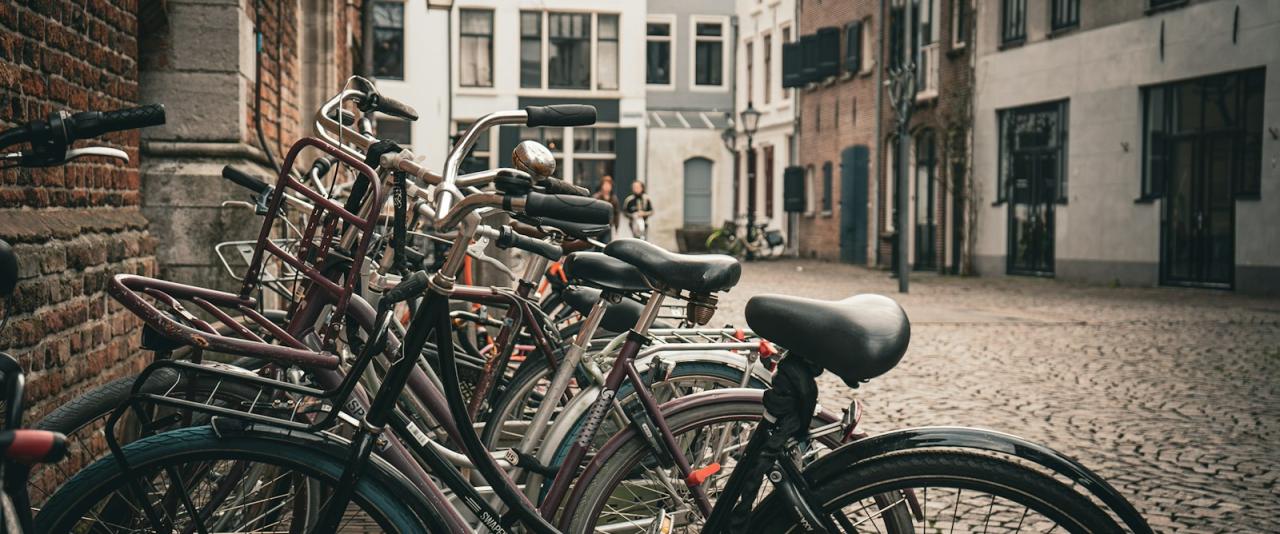
Utrecht Centraal has the world's largest bicycle parking garage, under Stationsplein, with space for 12,500 bikes. It is open around the clock, and the first 24 hours are free; you check in and out at the gates with a public-transport card, and pay a small daily fee after that. Electronic signs show which rows have free spaces. Several other guarded garages in the centre work the same way.
Do not leave a bike against railings or in non-designated spots near the station; bikes parked outside the racks there are removed.
Locking Up
Bike theft is common in Dutch cities. Rental bikes usually come with a built-in wheel lock; use it every time, and also use a chain or second lock to fix the frame to a rack or fixed object. Park in busy, well-lit places or a guarded garage overnight, and never leave the key in the lock. If a rental bike is stolen, report it to the rental shop and the police, as you may be liable for part of the cost.
Easy Rides Out of the City
The Dutch cycle-node network (knooppunten) uses numbered junctions and green signs, so you can plan a route by listing numbers.
- Amelisweerd and the Kromme Rijn: Head east to the Amelisweerd estate, with old woods along the winding Kromme Rijn river. Continue to Bunnik or further towards Wijk bij Duurstede for a longer ride.
- The Vecht: Ride north from the centre along the Vecht river through Maarssen towards Breukelen, past country houses and gardens built by wealthy merchants.
- Kasteel de Haar: Northwest of the city near Haarzuilens, the largest castle in the Netherlands has a park that makes a good half-day ride.
Before You Set Off
Check the weather and the wind direction; a headwind on the way home on open roads is tiring. Carry a light rain jacket, as showers are frequent. Above all, ride predictably. Utrecht's cycling works because everyone signals clearly, keeps to their lane and does what other riders expect.