







- Where
- Utrecht, Randstad
- Directions
- Directions
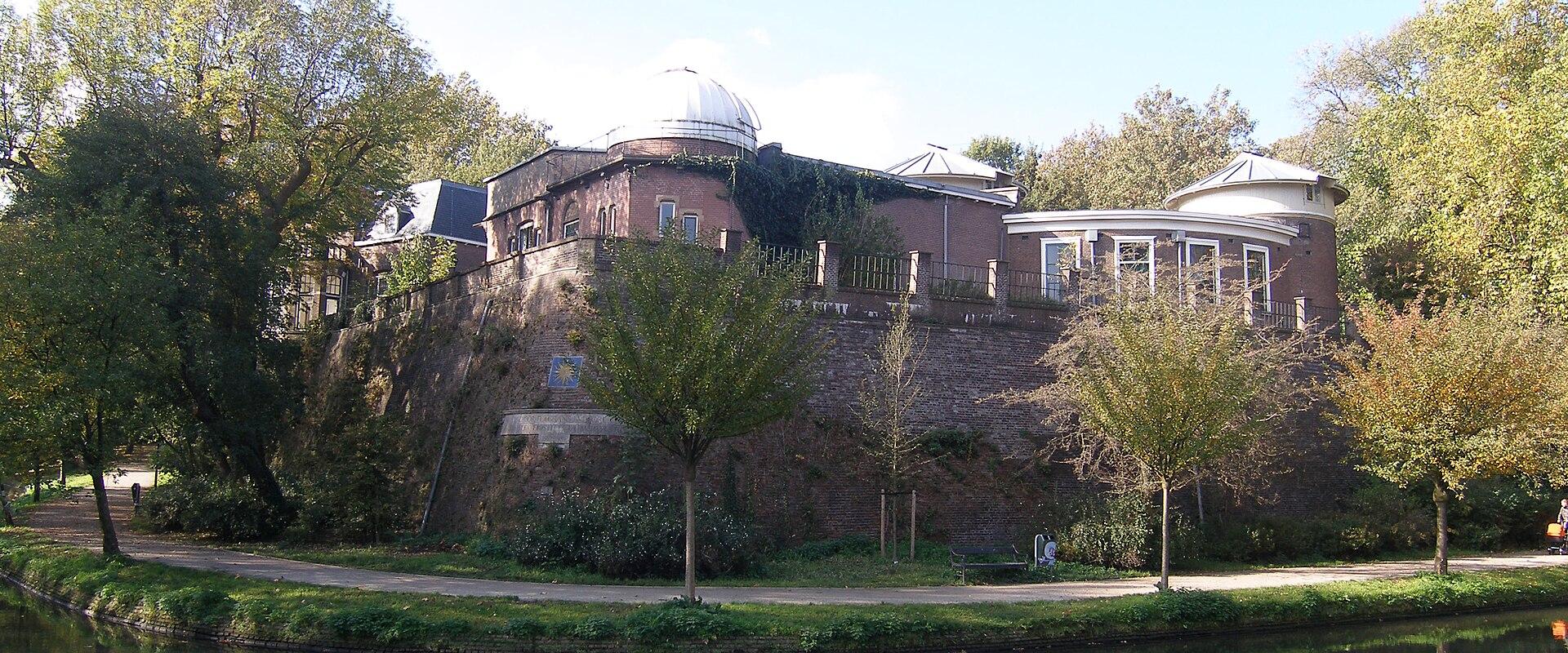
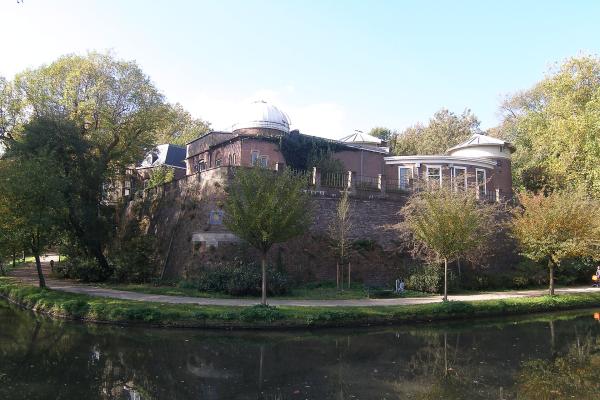
Sonnenborgh is an observatory and museum in Utrecht, built on one of the old bastions of the city's defences. The bastion was named Zonnenburg, and the name has stuck, in the slightly different spelling used for the observatory. In the nineteenth century, when the defensive walls of the city were no longer needed, many were turned into parks and public buildings. Here, in the middle of the century, a building was erected on the bastion as an astronomical observatory, with a dome for a telescope and rooms for instruments. The location, on high ground above the moat and away from the lights of the town, was well chosen for its time.
The building has an important place in Dutch scientific history. In 1854, the Royal Netherlands Meteorological Institute, the KNMI, was founded in Utrecht under the direction of the physicist Christophorus Buys Ballot, who worked at the university and the observatory. Buys Ballot is known for a law about the relationship between wind direction and air pressure, which is still taught, and he was a pioneer of weather forecasting and of the international cooperation needed to make forecasts possible. The observatory was one of the places where such measurements and calculations were made, and the building reflects that history.
Today it works as a museum and an active observatory for the public. The museum shows a collection of historical instruments, among them telescopes, sundials, clocks and navigation equipment, which illustrate how people have looked at the sky and measured time over the centuries, and exhibitions explain astronomy, the sun and the solar system in an accessible way. The dome houses telescopes that visitors can look through, and the staff and volunteers who run the observatory are generally enthusiastic about explaining what is on view.
A programme of events makes the site special. On certain Sundays there are safe sun-viewing sessions, using special filters, to look at sunspots and solar activity, and in the cooler months of the year evening stargazing sessions are held, with guided observation of the moon, planets and stars when the sky is clear. Some sessions are in English. Booking may be required, and the weather affects what can be seen, so it is wise to check the schedule and conditions before going. The museum has regular daytime opening hours and is closed on a number of public holidays.
The observatory suits families, students and anyone curious about the sky. It is a short walk from the centre of Utrecht, and the park around it is pleasant to walk in. A visit takes about an hour.
Categories
More photos coming soon
Nearby Attractions
Other places to visit in Utrecht

Busiest train station in the Netherlands (Utrecht Centraal)
Netherlands' busiest rail hub with 1000+ daily departures
Urban Exploration · City Centers

Canals of Utrecht
Historic canals lined with wharves and terraces
Cultural Experiences · Urban Exploration

Cathedral Square
Historic Gothic square with the Netherlands’ tallest chur...
Cultural Experiences · Urban Exploration
Centraal Museum
Utrecht museum housing Gerard van Honthorst
From €10 Art Museums · History Museums
Questions people ask
Quick Facts
Best Time to Visit
Late June to early September offers mild weather, long days, and ideal conditions for exploring Utrecht’s canals, museums, and historic city center.