- Where
- Venlo, Limburg
- Directions
- Directions
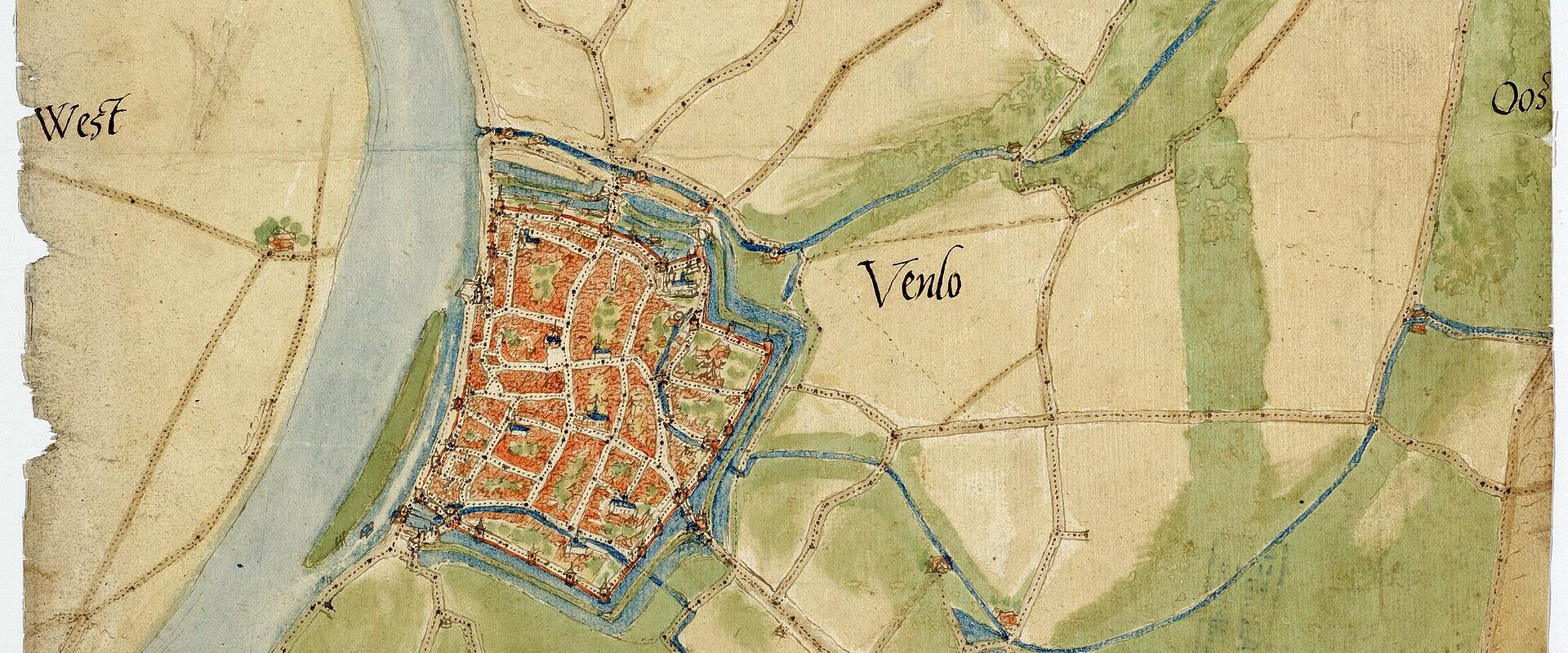
Venlo was once a strongly fortified city on the Maas, but most of its walls are gone, and the city walls are now a matter of tracing a line through the streets and noticing the traces that remain. Unlike the complete fortress towns of Naarden or the extensive remains in Maastricht, Venlo had its fortifications taken down in the nineteenth century to make room for the growing town, and today the visitor reads the old defences in the street plan, in the names of squares and roads and in a few surviving pieces of masonry. This makes the history less visible than elsewhere, but it is still worth knowing.
The city's strategic importance explains the effort that went into its defences. Venlo stood on the Maas, a river crossing on the route between the Rhine and the Low Countries, and it was fought over many times during the Middle Ages and the early modern period, passing between the dukes of Guelders, the Spanish and the Dutch. The ramparts and bastions that surrounded the centre, with a moat and gates, were rebuilt several times to follow the changing methods of warfare. Much of the town was damaged during the Second World War, in particular in 1944, and the postwar rebuilding altered the centre again, so the old picture has largely vanished.
The city hall, the Stadhuis, on the Markt, is the best surviving monument of the old town. Its origins go back to a medieval structure, and the present building, in Dutch Renaissance style, dates from the end of the sixteenth century, around 1597, with a handsome facade and a tower, and it has the look of a small castle, which fits the military character of the city. The area around it and along the Maas gives a good idea of the boundaries of the old centre. The Maasboulevard, the riverside promenade, now occupies land that was once part of the harbour and the defences, and a walk along it ties the story together.
Other sights help to fill out the picture. The Limburgs Museum covers the history of the region, Museum De Schatkamer shows church treasures, the Sint-Martinuskerk, St. Martin's Church, is the main church, and the Vrijthof is a historic square. De Bunker recalls wartime history, Beatrixpark provides green space, and the Floriade of 2012 left a large site on the edge of town.
The walk suits history lovers and those who enjoy detective work in the street plan. Allow an hour, and use a map or a guided tour of the centre to find the remnants.
Categories
More photos coming soon
Nearby Attractions
Other places to visit in Venlo

Beatrixpark
Car-free Venlo park with pond, sports areas, and fountains
Gardens · Walking Trails

De Schie
Historic canal in Venlo's industrial heritage district
Food & Gastronomy · Natural Wonders

Museum De Schatkamer
Venlo's cultural heritage museum in a former monastery
Historic Districts · History Museums

St. Martinus Church
Gothic church with stunning stained glass
Guided Tours · Historic Churches
Questions people ask
Quick Facts
Best Time to Visit
Visit in April to September for mild weather and vibrant outdoor activities, or October for autumn colors and fewer crowds.