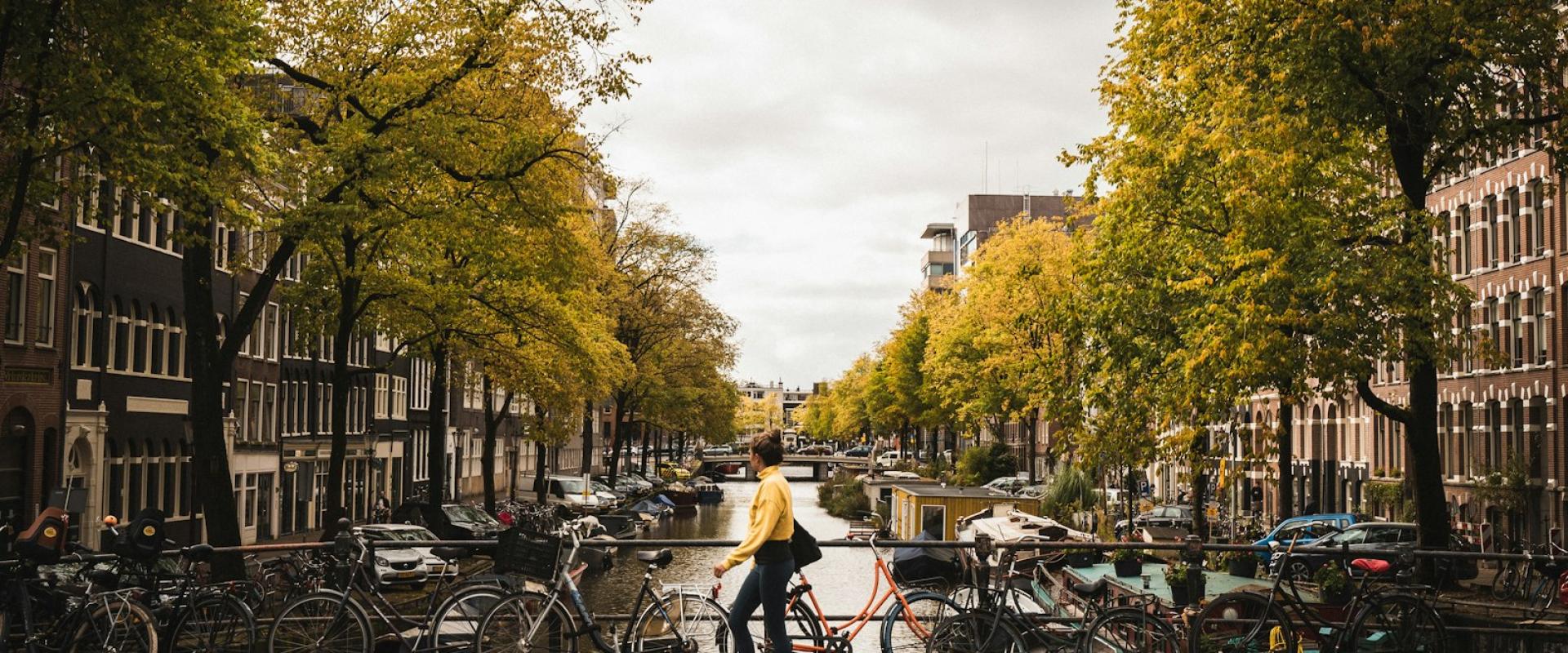
If you plan to cycle in the Netherlands, and most visitors do at least once, pack for riding in wind and rain: a waterproof jacket with a hood, rain trousers or water-resistant trousers, flat shoes with grip, and a small backpack or bag that fits on a bike. You do not need to bring a helmet, lights or a lock if you rent, because rental bikes come with the essentials.
How Dutch cycling changes what you pack
Cycling is everyday transport in the Netherlands, not a sport, so people ride in normal clothes. What matters is staying dry and keeping your hands free. Riders carry on in rain and wind; as the Dutch saying goes, je bent niet van suiker (you are not made of sugar). With the right gear, a shower is a minor inconvenience rather than a reason to stay indoors.
The two biggest factors are wind, which is strong and constant in this flat country, especially near the coast and on dikes, and rain, which arrives in short showers that a rain radar app such as Buienradar predicts to the minute.
Rain gear that works on a bike
Umbrellas and cycling do not mix; riding with one is unsafe and the wind destroys cheap umbrellas quickly. Instead, Dutch cyclists rely on:
- A waterproof jacket with a hood that fits under a cycling helmet if you wear one, and is long enough to cover your lower back when leaning forward.
- Rain trousers (regenbroek) that pull on over normal trousers. They are the single most useful item for a longer cycling trip.
- A rain poncho (regenponcho) designed for cycling, which covers you and the handlebars. Cheaper and quicker to put on than a jacket and trousers, though it catches the wind.
- Waterproof gloves in autumn and winter; cold, wet hands are the main discomfort on winter rides.
- Shoe covers or water-resistant shoes, since the front wheel sprays water onto your feet.
Rain gear is sold everywhere in the Netherlands, from the chain store HEMA to outdoor and bike shops, so forgotten items are easy to replace.
Clothes and shoes for riding
- Flat shoes with grip: trainers or ankle boots. Pedals get slippery in rain, and many city streets are paved with bricks and cobbles.
- Trousers that allow movement and do not catch in the chain. Wide trouser legs can be tucked into socks or held with a clip.
- Layers: cycling warms you up quickly; a windproof outer layer over a thin sweater is better than a heavy coat.
- Skirts and dresses are perfectly normal on Dutch bikes; many rental bikes have a step-through frame and a chain guard.
- Reflective items are useful in the dark months, from October to March, when it gets dark early.
Bags, backpacks and luggage
Most Dutch city bikes have a rear rack (bagagedrager) and often a front carrier, so bags go on the bike rather than on your back.
- A small backpack is the simplest option for day trips.
- Pannier bags (fietstassen) that clip onto the rear rack are standard for shopping and longer trips. Many rental shops lend or rent them.
- Bungee cords (snelbinders) are built into many Dutch bike racks to hold a bag in place.
- A waterproof cover or dry bag keeps electronics and documents dry inside a backpack.
Large suitcases are hard to manage in Dutch cities: narrow pavements, steep canal-house stairs and crowded trains all make a medium suitcase or a backpack more practical.
Renting a bike and what comes with it
Bike rental shops are found in every city and tourist area, often next to the railway station. A standard rental bike usually comes with a lock and front and rear lights, and many rental shops also offer e-bikes, children's seats and tandems. Typically you will need ID and either a deposit or a credit card.
The NS rental bike (OV-fiets) at railway stations is designed for Dutch commuters and requires a personal Dutch public transport card with an NS subscription, so it is rarely practical for short-term visitors; ordinary rental shops are the easier option.
What you do not need to pack:
- Helmet: not required by law for adults or children on ordinary bikes, and most Dutch cyclists do not wear one. If you prefer one, bring it or ask the rental shop.
- Lock: rental bikes include one. Always lock the frame, and use designated bike parking; bicycle theft is common in Amsterdam and other cities.
- Lights: front and rear lights are required by law when riding in the dark, and rental bikes have them fitted.
Bikes on trains and ferries
Taking a bike on Dutch trains is possible with a bicycle day ticket (Dagkaart Fiets) in addition to your own ticket. Bikes are not allowed in the weekday rush hours, roughly 06:30–09:00 and 16:00–18:30, except in July and August, when bikes may travel all day. Folding bikes travel free when folded. The bike day ticket is not valid on international trains.
On Amsterdam's free ferries across the IJ, bicycles ride free, and the ferries to the Wadden islands carry bikes for an extra charge. Many cyclists simply rent a bike at their destination instead.
Riding rules worth knowing
- Ride on the red cycle paths (fietspaden) where they exist, and keep to the right.
- Signal turns with your arm.
- Using a hand-held phone while cycling is illegal and fined.
- Do not ride on pavements, which are for pedestrians.
- Give way to trams, and cross tram rails at a sharp angle so wheels do not get stuck.
- Lock bikes only in marked parking areas; bikes left elsewhere can be removed.
Cycling packing checklist
| Item | Why |
|---|---|
| Hooded waterproof jacket | Rain and wind, often both at once |
| Rain trousers or poncho | Keeps legs dry on longer rides |
| Flat shoes with grip | Wet pedals and cobbles |
| Small backpack or pannier | Hands free, weight off your back |
| Dry bag or waterproof cover | Phone, documents and camera |
| Gloves and hat (October–March) | Cold, wet hands are the main discomfort |
| Reflective strip or vest | Short days in the darker months |
| Phone mount or offline map | Navigating the cycling junction network (knooppunten) |
The knooppunten network numbers junctions across the whole country; noting the sequence of numbers for a route on a slip of paper or a phone screen is the easiest way to navigate long rides.