







Salt marshes
Salt marshes at Noordpolderzijl with tidal wetlands and r...
- Where
- Noordpolderzijl, Groningen
- Directions
- Directions
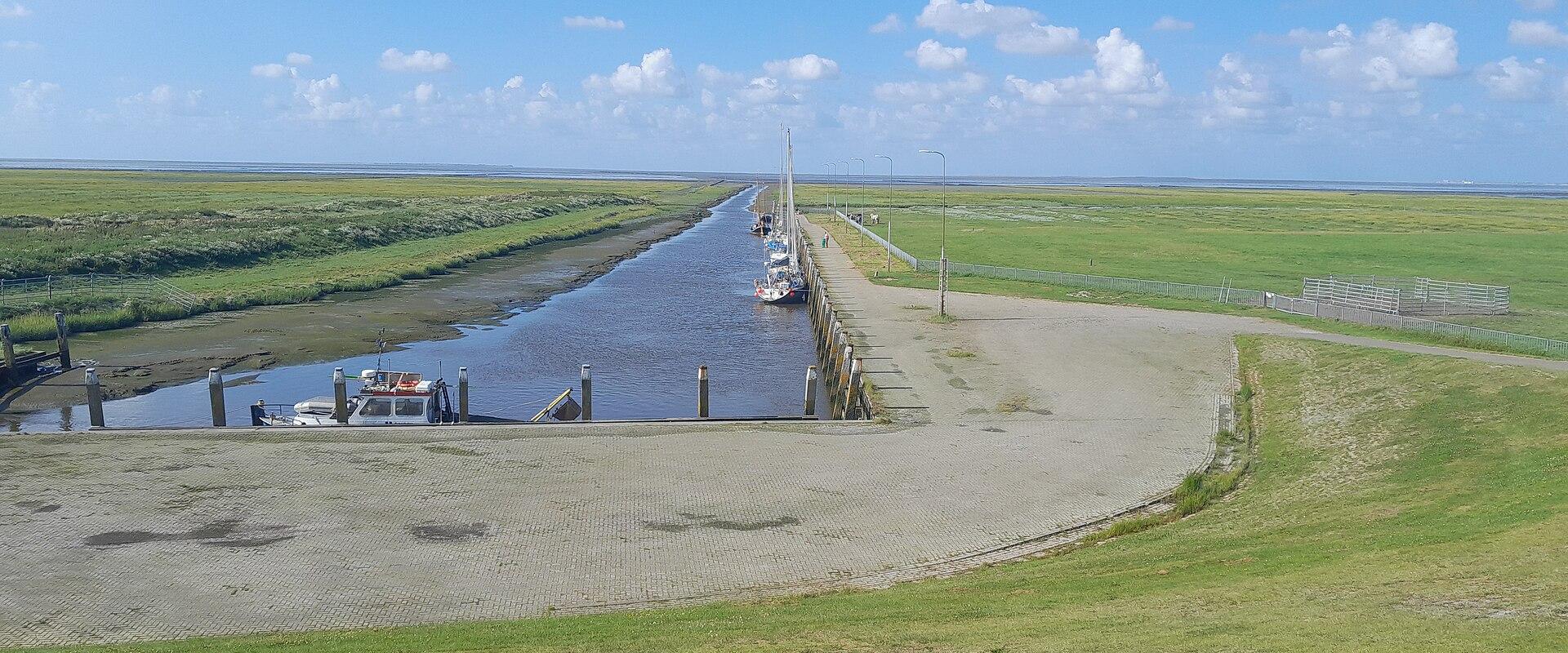
The salt marshes at Noordpolderzijl are on the Wadden Sea coast of Groningen, near the northernmost point of the province. A zijl is a sluice, and Noordpolderzijl takes its name from the sluice in the sea dike that drains the polder behind it. It is a tiny harbour village, one of the smallest on the coast, and it sits on the edge of a wide stretch of salt marsh that lies between the dike and the open sea. It is a good place to see one of the most distinctive coastal landscapes in northern Europe.
A salt marsh forms where fine silt settles out of tidal water behind sandbanks or islands, gradually building up land that is flooded only at high tides. Plants adapted to salt, such as glasswort, sea lavender and sea aster, colonise the mud, and their roots and stems trap more silt, so the marsh rises over time. Along the Groningen coast, people have long helped the process with ditches and brushwood barriers to speed the build-up of land, which could then be embanked and turned into farmland. The result is a landscape of wide flats, winding creeks and low vegetation that changes colour with the season, with the purple of sea lavender in late summer.
Birds are the main wildlife attraction. The marshes and mudflats are feeding and breeding grounds for curlews, redshanks, oystercatchers, avocets and many other waders, and in autumn and spring large flocks of geese and other migrants pass through or stay. Spoonbills sometimes feed in the creeks. The Wadden Sea, of which these marshes are part, is a UNESCO World Heritage site and one of the most important areas for migrating birds in the world, so even a short visit gives a taste of this importance. Binoculars are very useful.
A walk along the sea dike gives wide views over the marsh and the water, and paths lead onto the marsh itself in places, though visitors should keep to marked routes to avoid disturbing birds and damaging the plants. The tide changes the scene dramatically, with water filling the creeks at high tide and leaving mudflats at low water, so check the tide tables to plan your visit. The area is free to enter and open all year, but sturdy waterproof footwear is advisable. A small cafe at the harbour gives a place to warm up and have a drink after a walk.
The marshes suit birdwatchers, walkers, photographers and anyone who enjoys wide, quiet landscapes. Go in the evening or early morning for the best light and the most birds, and dress warmly, as the wind off the sea can be cold.
Categories
More photos coming soon
Nearby Attractions
Other places to visit in Noordpolderzijl

Questions people ask
Quick Facts
Best Time to Visit
June through August offers mild temperatures and lower rain chances for optimal coastal exploration.