







Ponds, marshlands, and heathlands
Raised bogs, ponds, and heathlands with rich birdlife
- Where
- Nationaal Park De Groote Peel, Limburg
- Directions
- Directions
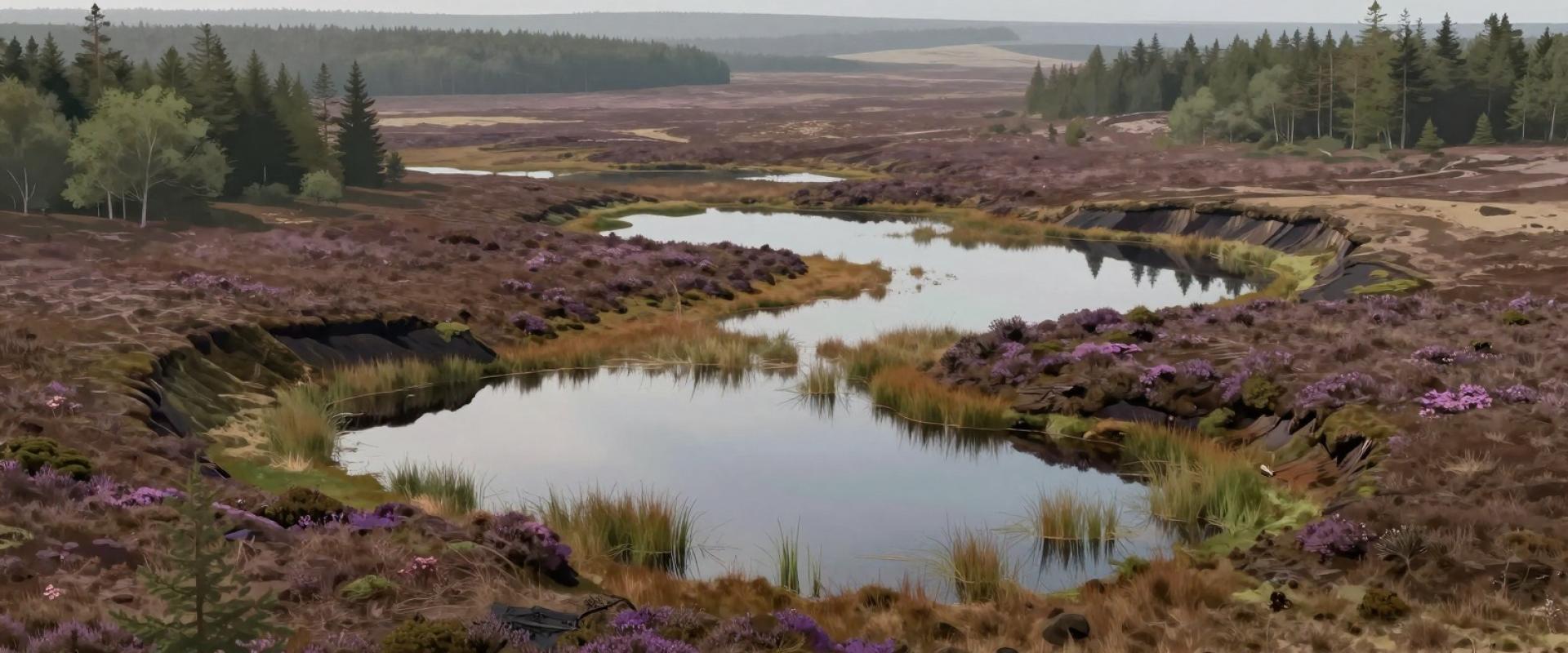
De Groote Peel is a national park on the border of North Brabant and Limburg, in the southeast of the Netherlands, and it protects one of the last remnants of the Peel, a vast raised bog that once covered a large part of the region. The peat that formed over thousands of years was dug for fuel, in a long process that ended in the twentieth century, and the landscape that is left, with its shallow ponds, wet areas and heath, is a mixture of what nature and people made. The result is a quiet, open place with a very particular character.
The ponds are former peat pits, filled with water and slowly colonised by plants, and between them lie strips of marshland, wet meadows, birch scrub and heath. A raised bog is a special kind of wetland that is fed mostly by rainwater, so it is poor in nutrients and supports specialised plants such as sphagnum mosses, cranberry, sundew and cotton grass, which are rare elsewhere in the country. The heath comes into bloom in late summer, with purple heather and a good deal of insect life, and the open water and reed beds provide shelter for many birds.
Birds are the main reason many people come. The park is important for breeding and migratory species, and herons, bitterns and many ducks and waders can be seen throughout the year. In autumn it is known for cranes, which gather in the evening to roost on the wet ground in large numbers, and their calls and the sight of them flying in at dusk is one of the great wildlife spectacles in the Netherlands. Observation towers and hides offer views over the landscape, and binoculars are essential.
A network of walking trails, including seventeen marked routes, covers the park, and many of them cross wet ground on boardwalks and paths. Information signs explain the ecology and the history of peat digging, and the trails vary in length so that you can choose a short stroll or a half-day walk. The paths are generally flat, but the ground can be wet, so waterproof footwear is advisable. Cycling is possible on selected routes outside the most sensitive areas, and the landscape of the surrounding Peel region has other nature reserves and small villages.
The park suits walkers, birdwatchers, photographers and anyone who enjoys quiet, open nature. Go in late summer for the heather, or in autumn for the cranes. Bring a rain jacket, insect repellent in summer and warm clothes in winter.
Categories
More photos coming soon
Nearby Attractions
Other places to visit in Nationaal Park De Groote Peel

Questions people ask
Quick Facts
Best Time to Visit
Visit in April to June or September to October for mild weather, blooming heather, and active birdlife.